
Wet cupping has a long tradition across cultures, and one question always sparks curiosity: “What exactly is in the blood that comes out during wet cupping?” Many people notice that wet cupping blood looks thicker, darker, or different from regular venous blood — and wonder whether it contains “waste” that the body has struggled to clear.
Modern understanding shows that wet cupping interacts with a very specific layer of circulation: the superficial capillary–interstitial zone. This is the area where metabolic byproducts, inflammatory molecules, and microstagnation tend to build up, especially in stiff or overworked tissues.
This article breaks down, in a balanced and science-informed way, what wet cupping blood contains and how this connects to local metabolic waste clearance.
Wet Cupping Targets a Unique Circulatory Layer: The Microcapillary Zone
When a cup is placed with negative pressure, it lifts the skin and underlying tissue. This creates a mechanical stretch that affects:
- superficial capillaries
- venules
- interstitial fluid pockets
- lymphatic capillaries
After small incisions are made, the blood that emerges is not deep venous blood. Instead, it is a mixture of:
- superficial capillary blood
- interstitial fluid
- plasma extravasates
- trapped metabolic molecules
This area functions like a traffic hub for blood flow, lymph movement, and metabolic exchange. When it becomes sluggish, waste buildup occurs — leading to tension, stiffness, or a “heavy” feeling in the tissue.
Wet cupping directly interacts with this micro-layer.
What’s Actually Inside Wet Cupping Blood?
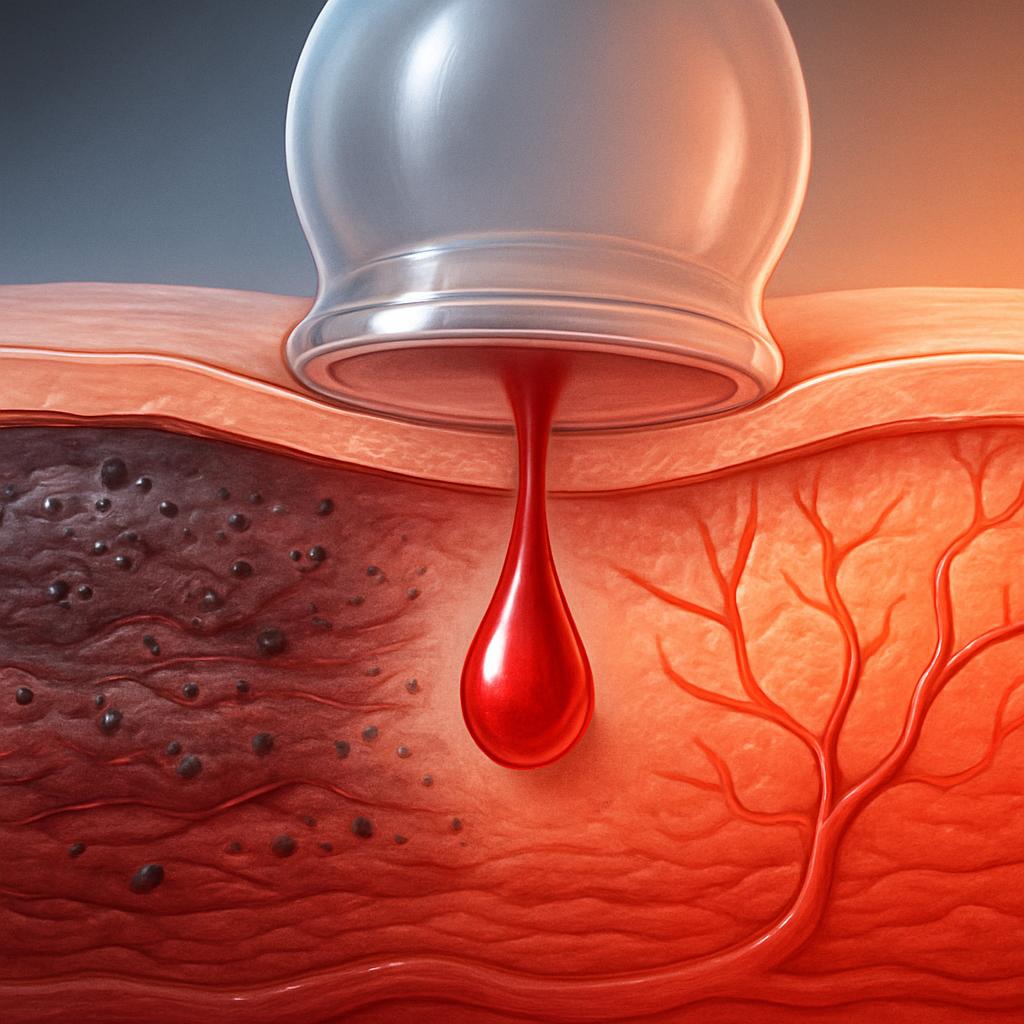
Wet cupping blood typically contains:
- Oxidized red blood cell fragments. Fragments of RBCs that have undergone mechanical stress or oxidative exposure in the tissue.
- Higher oxidative stress markers. Studies show wet cupping blood can contain more; reactive oxygen species (ROS), lipid peroxidation products, oxidized proteins compared to venous blood.
- Inflammatory mediators. Superficial blood often holds, prostaglandins, cytokines (IL-1β, IL-6, TNF-α), local immune signal. These molecules accumulate in areas of chronic tension or micro-inflammation.
- Metabolic byproducts. These include small molecules from muscle and connective tissue metabolism, lactate, hydrogen ions (H+), urea traces, creatinine fragments, degraded peptides. These substances reflect the local metabolic load of the tissue.
- Interstitial fluid components. Because negative pressure draws fluid from the extracellular space, the extracted blood often contains; tissue fluid,lymphatic residues, microclots, cellular debris
This combination makes wet cupping blood visibly different from standard venous blood.
Why the Capillary-Interstitial Layer Accumulates Waste
Daily movement, posture, and stress all impact how nutrients and waste move through tissues. Three factors slow metabolic clearance:
- Muscle tension. Tight muscles compress small vessels and lymph channels.
Common areas: upper trapezius, shoulders, neck. - Poor microcirculation. When capillary flow reduces, oxygen delivery drops and waste removal slows.
- Chronic low-grade inflammation. Inflammation changes vessel permeability and increases local metabolic “traffic”. Together, these create metabolic bottlenecks — pockets of tissue where; lactate accumulates, inflammatory molecules persist, oxygenation drops, stiffness increases. Wet cupping interacts with this exact layer.
How Wet Cupping Promotes Local Metabolic Waste Clearance
Wet cupping does not replace the liver, kidneys, or other systemic detox organs, but it does influence how metabolic waste moves through areas of tissue stagnation.
Negative Pressure Lifts and Decompresses Tissue
When the cup creates negative pressure, the skin and underlying layers are gently lifted. This lifting decompresses the tissue, encourages microcirculation, softens tight fascia, and reduces mechanical pressure on capillaries — essentially opening the area so blood and interstitial fluid can move more freely.
Superficial Blood Carries Local Metabolic Byproducts
Once small incisions are made, the superficial blood that emerges carries oxidative molecules, metabolic residues, and inflammatory byproducts that tend to accumulate when circulation is sluggish. This release functions as a localized unloading of stagnant material rather than a form of whole-body detox.
Fluid Shifts Transport Metabolic Molecules
The negative pressure also creates a fluid shift from the interstitial space toward the cup, pulling along ions, degraded proteins, and other small metabolic molecules. This explains why wet cupping blood often appears thicker or different from regular venous blood
Post-Cupping Perfusion and Tissue Recovery
After the stagnant fluid and superficial blood are removed, the body naturally sends fresh blood back into the area, restoring oxygen delivery, improving nutrient transport, and enhancing lymphatic uptake. Combined, these effects reset the local metabolic environment and create conditions that help the tissue recover more efficiently.
Why Wet Cupping Helps “Heavy” or Fatigued Areas
Areas with high metabolic stress — especially the upper back, neck, shoulders, and lower spine — often develop a familiar mix of soreness, tightness, heaviness, and a general “stuck” feeling. These sensations usually reflect a combination of slow metabolic waste clearance, mild micro-inflammation, reduced blood perfusion, and tension within the fascia that restricts normal fluid movement. Wet cupping helps interrupt this cycle by releasing superficial stagnation, encouraging fresh circulation to re-enter the tissue, reducing local inflammatory signals, and decompressing overloaded areas. After a session, people commonly describe the treated region as lighter, more open, warmer, less stiff, and noticeably more relaxed — a sign that the accumulated metabolic load in the tissue has begun to shift.
What Wet Cupping Does Not Do
To remain safe and accurate, it’s important to understand that wet cupping does not detoxify organs, remove systemic toxins, cleanse the blood in a medical sense, or cure metabolic diseases. Its effects are local and mechanical, primarily influencing circulation and tissue dynamics. By targeting areas with high metabolic waste accumulation, wet cupping helps improve microcirculation, relieve tension, and support the natural clearing of byproducts in the affected tissues, without claiming systemic detoxification or disease treatment.
Practical Signs of Local Metabolic Congestion
If a region has accumulated waste or stagnant microcirculation, the body may signal it through:
- persistent tightness
- reduced range of motion
- mild swelling
- dull aches
- sensitivity to touch
- slower post-exercise recovery
These are functional issues — not diseases — and respond well to improved microcirculation.
Wet cupping helps by creating a localized reset.
How This Connects to Stress and Daily Lifestyle
Stress, prolonged sitting, poor screen posture, and lack of movement all negatively affect microcirculation. These factors can lead to fascia dehydration, muscle guarding, sympathetic nervous system dominance, and tension in the upper back and neck. Together, they contribute to poor metabolic clearance, higher tissue load, and sluggish capillary flow. Wet cupping helps interrupt this cycle by improving local circulation, releasing tissue tension, and supporting microvascular flow. When combined with consistent lifestyle habits — such as staying hydrated, moving regularly, practicing deep breathing, and maintaining ergonomic posture — the benefits become longer lasting and the tissues remain more resilient over time.
A Balanced Takeaway
The blood extracted during wet cupping is unique because it comes from the microcirculatory and interstitial layers, which naturally accumulate:
- metabolic byproducts
- oxidative molecules
- inflammatory signals
- local waste residues
Wet cupping supports the body by:
- improving microcirculation
- decompressing tissue
- releasing superficial stagnation
- supporting local metabolic clearance
- restoring perfusion and oxygenation
It is not a systemic detox method — but it does act as a local physiologic reset, especially in tension-prone areas like the upper back, neck, and shoulders.
To learn more, wet cupping can be a supportive tool for anyone dealing with stiffness, fatigue, or mild inflammation, especially when incorporated into a natural, evidence-informed self-care plan.