
When people think of wet cupping, the focus usually stays on what we see from the outside — the cup, the marks, and the gentle release of superficial blood. But the real story lives much deeper: inside your inflammatory pathways, microcirculation networks, and the stress–hormonal system known as the HPA axis. These internal systems shape how your body feels, heals, and responds to tension or fatigue.
This article explains, in simple science-based language, how wet cupping influences these internal mechanisms and why certain individuals experience measurable relief afterward.
How Wet Cupping Interacts With Local Inflammatory Responses
Inflammation is not always harmful. Your body uses it as a communication tool — a signal that repair, cleanup, or adaptation is needed. Many people dealing with upper-back or shoulder tension actually experience micro-inflammation, tiny pockets of irritated tissue caused by prolonged sitting, repetitive posture, or stress.
- Negative pressure improves fluid movement. The suction from the cup gently lifts the top layers of the skin and fascia. This decompression increases interstitial fluid mobility, allowing oxygen and nutrients to circulate more efficiently. Areas that once felt dense or stuck often begin to soften.
- Micro-incisions activate a controlled repair response. The small, superficial incisions trigger a mild immune response. Macrophages and other repair cells move into the area, helping to clear metabolic waste and reduce local stagnation. This process resembles the controlled inflammation seen in micro-needling or trigger-point therapies.
- Potential reduction of local oxidative stress. Although research is still developing, some observations suggest that removing a thin layer of metabolically stressed superficial blood may help reduce local pressure or oxidative load. Many people describe the post-session sensation as “lighter” or “less congested.”
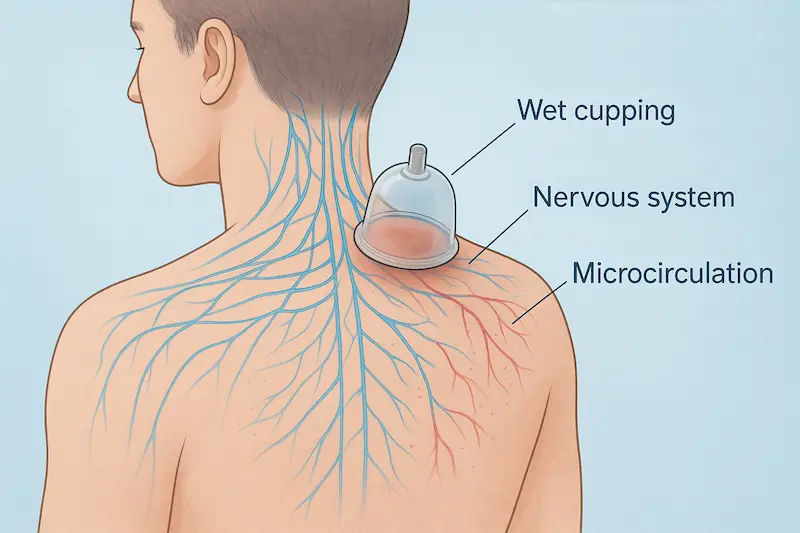
How Wet Cupping Affects the Stress–Hormonal System (HPA Axis)
The HPA axis — the hypothalamus, pituitary gland, and adrenal glands — manages your stress response. When life is busy or the body is inflamed, this system becomes hyperactive, raising cortisol levels and keeping the nervous system in a fight-or-flight mode.
- Reduced muscle tension decreases sympathetic signals. Stiff muscles constantly send stress-like signals to the brain. Wet cupping can reduce this tension, lowering the frequency of signals that activate the sympathetic nervous system. This helps the body feel less alert and more grounded.
- Parasympathetic rebound promotes calmness. Many people feel noticeably relaxed afterward. This shift suggests the parasympathetic system — the “rest and recover” branch — becomes more active once the body receives fewer tension-driven signals.
- Short-term cortisol modulation. Some early studies note minor reductions in cortisol levels after cupping-based interventions. While not a treatment for hormonal disorders, this temporary shift may contribute to the calmer, clearer feeling people report.
Why the Upper Back and Shoulder Region Responds Strongly
The upper trapezius, levator scapulae, and cervical regions are among the most tension-prone areas in the body. These muscles carry both physical load and emotional stress. Long sitting, screen work, and poor posture compress nerves and restrict circulation around C7–T1.
When wet cupping is applied here, it can:
- relieve nerve irritation
- loosen the myofascial web
- improve venous flow
- reduce pressure on cervical mechanoreceptors
Because this area plays a key role in sympathetic activation, releasing tension here often leads to a broader nervous system calming effect.
The Relationship Between Microcirculation and Stress Relief
Microcirculation refers to the movement of blood through capillaries — the smallest vessels in the body. Chronic tightness restricts this flow, creating a low-oxygen environment that the body interprets as stress.
Wet cupping supports microcirculation through:
- mechanical stretch
- temporary hyperemia (increased blood flow)
- improved lymph movement
- tissue reoxygenation
When your microcirculation improves, your nervous system receives fewer danger signals, contributing to a more balanced HPA axis response.
How Controlled Tissue Disruption Supports Recovery
The tiny scratches made during wet cupping produce a controlled form of tissue disruption. This is mild and superficial, but it triggers the release of cytokines and growth factors responsible for repair.
This mild disruption helps:
- restart stalled tissue healing
- improve fibroblast activity
- encourage collagen remodeling
- release natural analgesic compounds
It is similar to how the body responds to acupuncture or micro-needling: the small disturbance encourages the body to restart its natural recovery cycle.
Why People With Stress-Related Tension Often Feel Better
People with chronic neck or shoulder tightness often live in a loop of muscle tension → micro-inflammation → sympathetic activation. Breaking this loop manually is difficult. Wet cupping interrupts it by reducing pressure, improving circulation, and calming the nervous system.
This is why individuals often notice improvements in:
- stress-triggered headaches
- neck stiffness
- shoulder heaviness
- sleep quality
- tension that worsens with long sitting
- jaw tightness
- “wired but tired” sensations
None of these effects replace medical care, but they fit the pattern of better tissue mechanics and a calmer stress system.
Who Responds Well to This Process?
Those who typically benefit share common traits:
- desk jobs or long hours sitting
- high stress or irregular routines
- repetitive tension in the upper back
- shallow breathing habits
- sympathetic overactivation
- micro-inflammation from posture or stress
Wet cupping acts as a reset — mechanical, circulatory, and neurological — giving the body a chance to reestablish balance.
Download the free guide “Natural Reset: Wet Cupping Made Easy” to learn safe techniques and science-backed ways to calm your nervous system naturally.