
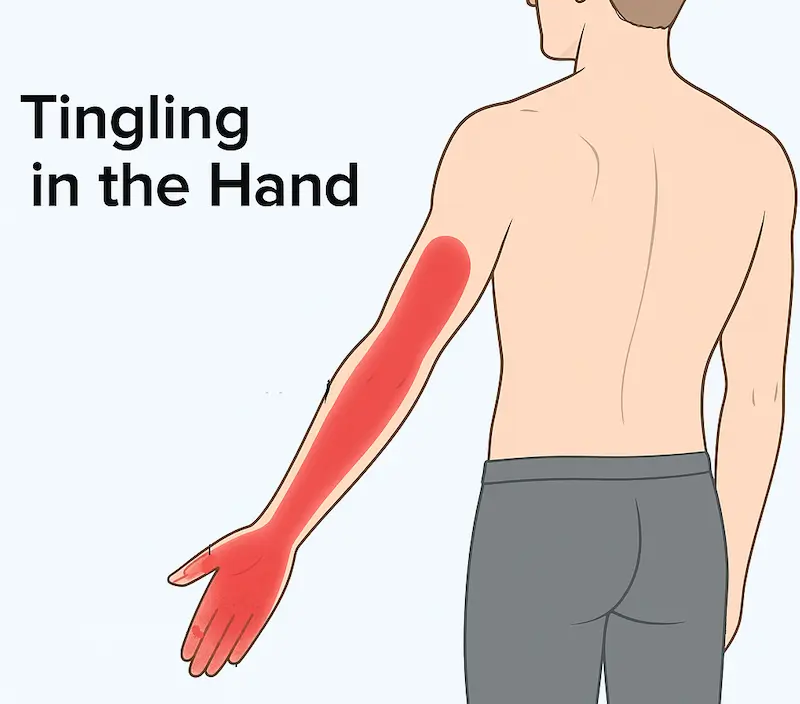
Hand tingling—whether it feels like light buzzing, pins and needles, or intermittent numbness—can interfere with everything from typing to gripping objects. Many people assume the sensation is always caused by a pinched nerve in the neck or wrist, but in real practice, the source often lies in the forearm’s soft tissue mechanics, especially along the extensor line where multiple nerve branches travel toward the hand.
Wet cupping offers a structured way to reduce tension, improve microcirculation, and decompress nerve pathways that commonly trigger the tingling sensation. Instead of forcing the muscles to stretch or relying on massage, wet cupping creates a decompressive effect that restores glide between tissues—something particularly helpful for people who type all day, grip tools repeatedly, or experience repetitive strain.
This article explains the physiological chain behind hand tingling and how wet cupping helps relieve it.
Why Hand Tingling Happens: The Physiological Chain
Tingling in the hand is almost always a sign that a nerve is being irritated somewhere along its path. The hand receives sensation from multiple nerves—including the median, ulnar, and superficial radial nerve—and each of these can experience subtle compression along the forearm or wrist.
Here are the main physiological contributors:
Forearm Tightness Around the Radial Side (Brachioradialis Region)
The upper forearm, particularly on the radial (thumb-side), is one of the most overlooked sources of hand tingling. The superficial radial nerve passes through this region, and when the tissues around it become tight—often from repetitive gripping, lifting, or using a mouse—nerve signaling becomes disrupted.
Symptoms often include:
- Tingling on the back of the hand
- Electric sensations around the thumb or index finger
- Forearm heaviness after computer work
- Increased discomfort when extending the wrist
When the brachioradialis region is relieved, the entire nerve line downstream becomes smoother and less irritated.
Mid-Forearm Congestion Along the Extensor Line
The extensor digitorum and the extensor carpi ulnaris (ECU) help lift the fingers and stabilize the wrist. These muscles often tighten in people who type for long periods, lift weights, or perform repetitive hand tasks. When they become dense or congested, they place mechanical stress on the nerve and tendon pathways running through the dorsal forearm.
This does not always cause intense pain; instead, it produces:
- Diffuse tingling
- Forearm stiffness
- “Tired wrist” sensations
- Delayed recovery after gripping activities
Releasing this region helps extend tissue glide from the upper forearm down toward the wrist.
Compression at the Dorsal Wrist Band (Extensor Retinaculum)
Perhaps the most common cause of hand tingling is compression at the dorsal wrist. The extensor retinaculum is a thick ligament-like band that holds the extensor tendons in place. Because it is a tight, narrow anatomical “tunnel,” even mild inflammation or soft-tissue congestion can irritate the nerve branches running underneath.
Typical symptoms include:
- Tingling that worsens during typing
- Numbness upon waking
- Reduced grip comfort
- A wrapped or “tight-band” sensation around the wrist
This area responds extremely well to decompression-style therapy.
Micro-Restriction Across the Dorsal Hand (Lumbrical Region)
The lumbrical muscles are small but essential for finger coordination. Repetitive typing, fine motor tasks, and instrument playing often cause mild tightening in this region, which subtly restricts blood flow and irritates the tiny nerve endings across the dorsal hand.
Symptoms include:
- Tingling at the base of the fingers
- Subtle numbness
- A feeling of “electric dust” on the hand
- Discomfort spreading between the knuckles
Wet cupping can help open these web spaces and restore circulation.
How Wet Cupping Helps Relieve Hand Tingling
Wet cupping reduces tingling through three primary physiological mechanisms:
Decompression of Nerve Pathways
Negative pressure lifts the superficial layers of fascia, reducing the mechanical stress placed on the superficial radial nerve and other small sensory branches. Once the compressed tissues soften, nerve conduction becomes smoother.
Improved Microcirculation Across the Forearm and Dorsal Hand
Stagnation in the forearm and wrist reduces oxygen delivery and slows tissue recovery. Wet cupping improves blood flow—especially in areas where movement does not naturally create circulation, such as the dorsal forearm or wrist band.
Better circulation = better nerve health.
Deep Release of Stubborn Muscle Tension
Typing, gripping, and repetitive movements create “silent stiffness.” Stretching often does not reach the deep layers where tension accumulates.
Wet cupping releases this layer effectively, allowing tissues to glide rather than compress the nerves.
Reduced Fascial Friction at the Wrist
Because the extensor retinaculum is a fixed, non-stretching structure, even a small increase in tissue pressure creates a big effect on the nerves passing beneath it.
Wet cupping helps reduce the local congestion and soft-tissue density that contribute to this entrapment.
Restored Finger Mobility and Hand Lightness
When the dorsal hand and lumbrical region are decompressed, finger movement feels smoother and more coordinated. Tingling decreases as blood flow normalizes.
Key Takeaways: Hand Tingling & Wet Cupping
Hand tingling is rarely random—it almost always comes from subtle compression along the forearm and wrist, especially around the radial side, the extensor line, the dorsal wrist band, and the lumbrical region of the hand. These areas often tighten from typing, gripping tools, lifting, or repetitive strain, creating mechanical pressure that irritates nerve pathways.
Wet cupping provides a decompression-based approach that directly addresses these underlying issues. By lifting the fascia, improving microcirculation, and softening deep muscular tension, wet cupping helps restore smoother nerve conduction and reduces the “buzzing,” “electric,” or “pins and needles” sensations many people feel in their hands.
The main physiological benefits include:
- Releasing nerve compression along the brachioradialis and extensor line
- Improving blood flow in areas with natural circulation bottlenecks
- Softening deep, stubborn tension that stretching or massage often cannot reach
- Reducing fascial pressure at the wrist’s extensor retinaculum
- Restoring finger coordination and hand lightness through dorsal hand decompression
Most people feel improvement after the first session, especially when tingling is caused by soft-tissue tension rather than major nerve entrapment. Additional sessions further improve nerve glide, reduce stiffness, and normalize hand sensation.
Bottom line:
Hand tingling often comes from local soft-tissue tension, not just neck or wrist problems. Wet cupping helps by decompressing the exact pathways that affect nerve flow, making the hand feel lighter, clearer, and more responsive.
Hand tingling often comes from tension and nerve compression along the forearm and wrist. Wet cupping helps decompress these pathways, restore microcirculation, and ease the buzzing sensations in your fingers. For the full precision point system, explore it in our upcoming e-book — and learn how to perform wet cupping safely at home in our free Natural Reset: modern wet cupping made simple guide.