
Feeling lightheaded for a few seconds when you stand up—like the room shifts, your vision dims, or your head feels suddenly “empty”—is more common than you think. Most people experience it at least a few times a week, especially if they sit for long periods, stay dehydrated, or move too quickly.
In most cases, this sensation is temporary and not dangerous. But understanding why it happens, what your body is trying to do, and how to stop it can make a big difference in daily comfort and energy.
What’s Actually Happening When You Stand Up?
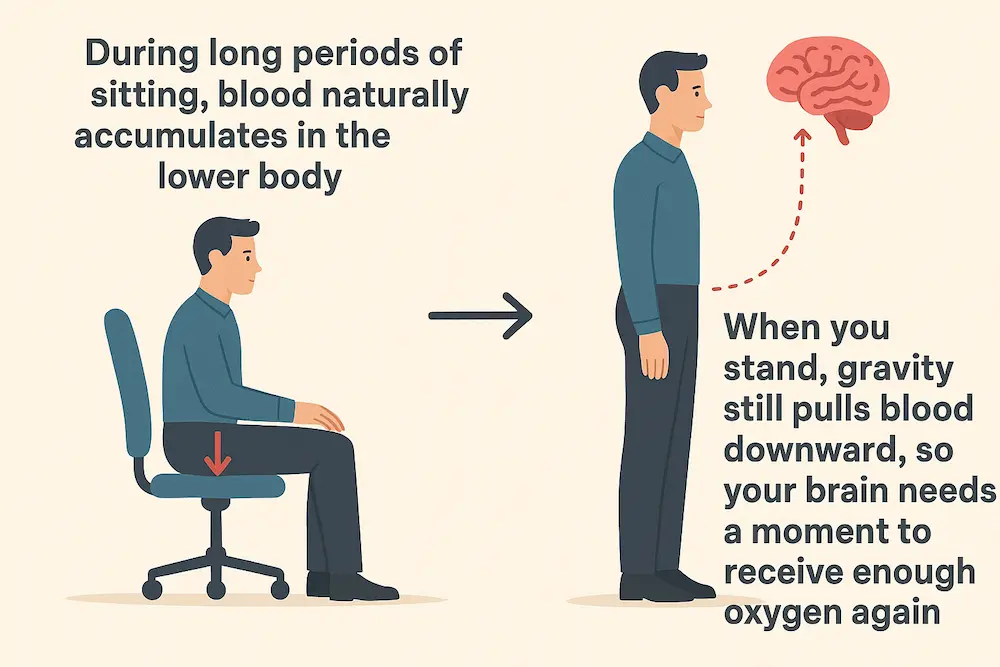
When you rise from sitting, your body must perform a rapid, coordinated adjustment. Blood, which pools in the legs while sitting, suddenly needs to move upward—against gravity—to reach the brain. Your cardiovascular and nervous systems quickly respond to make this happen.
If this adjustment is slow, you get temporary reduced blood flow to the brain, causing lightheadedness, dimmed vision, or wobbliness.
This moment is known as orthostatic adjustment.
The Main Causes of Lightheadedness When Standing
Blood Pooling in the Legs (Most Common Cause)
During long periods of sitting, blood naturally accumulates in the lower body. When you stand, gravity still pulls blood downward, so your brain needs a moment to receive enough oxygen again.
Your body fixes this by:
- tightening blood vessels
- increasing heart rate
- activating the autonomic nervous system
If the response is slightly delayed, you’ll feel lightheaded.
Dehydration or Low Fluid Intake
Even mild dehydration reduces total blood volume, making it harder for your circulatory system to push enough blood back to the brain when you stand.
Signs your body lacks fluid include:
- dry mouth
- darker urine
- fatigue
- morning lightheadedness
Hydration directly influences blood thickness and circulation speed.
Low Blood Sugar (Skipping Meals)
When you skip meals or eat very little, glucose levels drop. Your brain relies heavily on glucose, so any dip can trigger:
- lightheadedness
- shakiness
- low energy
- difficulty focusing
Standing up makes the demand more sudden, amplifying the experience.
Weak Circulation From Sedentary Habits
Sitting too long means leg muscles aren’t contracting. But these muscles act like “pumps” that push blood upward.
When they stay inactive:
- venous return slows
- circulation becomes sluggish
- oxygen delivery decreases
This combination makes standing transitions harder.
Stress and Sympathetic Nervous System Activation
Even without feeling anxious, low-level stress can keep your sympathetic system “on,” tightening muscles and changing blood vessel behavior.
This can create:
- slower circulatory response
- increased tension in the neck
- faster but less efficient heartbeat
The result is a brief wave of lightheadedness when standing.
Shallow Breathing or Poor Posture
Sitting with a slouched posture compresses the diaphragm. This encourages:
- shallow breathing
- reduced oxygen intake
- slower gas exchange
When you stand quickly, the brain briefly experiences a mismatch between oxygen need and supply.
How to Reduce or Prevent Lightheadedness
Stand Up Gradually, Not Abruptly
Pause for a second before fully rising. Give your blood pressure time to adjust.
Eat Balanced Meals at Regular Times
Skipping meals or eating too little causes glucose dips that worsen lightheadedness.
Combine:
- complex carbs
- protein
- healthy fats
This stabilizes blood sugar and improves brain energy.
Move Every 30–45 Minutes
Even small movements help:
- leg pumps
- ankle circles
- walking to refill your water
- standing stretches
These re-activate circulation and prevent blood pooling.
Support Microcirculation With Wet Cupping
Wet cupping on the upper back, trapezius, and cervical muscles can help:
- improve blood flow
- reduce tension
- support autonomic balance
- enhance oxygen delivery
This can reduce the frequency of sudden lightheaded episodes, especially for people who sit long hours.
Improve Breathing and Posture
Straighten the spine, expand the chest, and allow the diaphragm to move freely. Try:
- slow nasal breathing
- chest-opening stretches
- posture resets
Better breathing → better oxygenation → less lightheadedness.
When Is It Not Normal?
Lightheadedness is usually harmless, but you should be cautious if it comes with:
- chest discomfort
- fainting
- irregular heartbeat
- severe shortness of breath
These cases need medical evaluation
If you want a natural, science-based way to improve circulation, reduce tension, and support clearer energy throughout the day, learn free e-book Modern Wet Cupping Made Simple