
The Science of Stagnant Blood: When Tradition Meets Modern Physiology
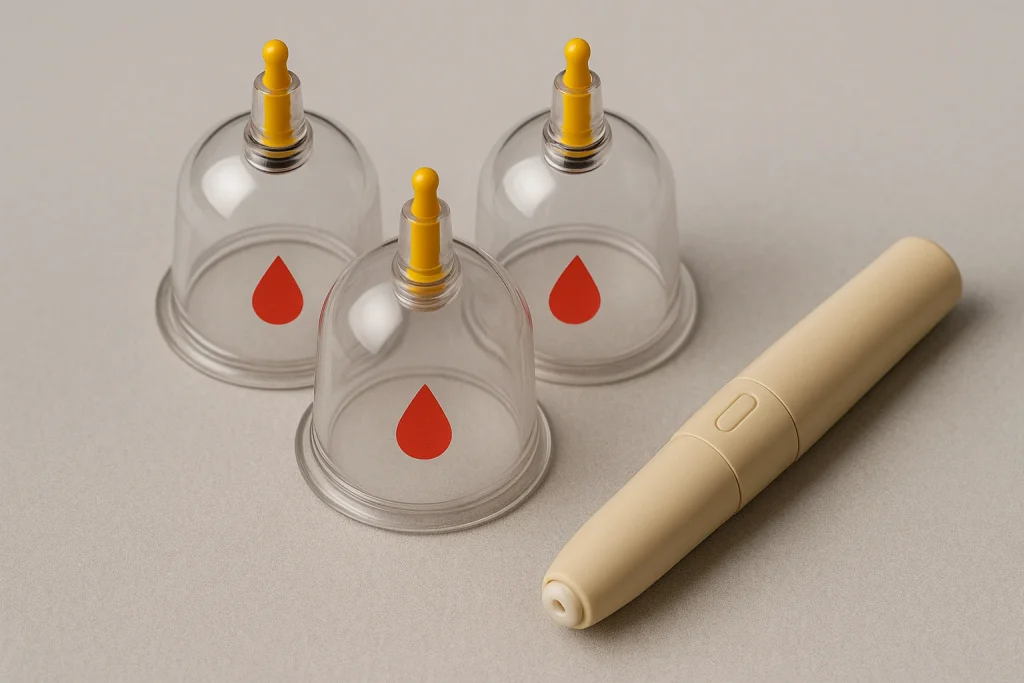
For centuries, traditional medicine has spoken about “dirty” or stagnant blood — the type that no longer nourishes tissues properly and causes pain, fatigue, or dull skin. In modern physiology, this concept finds surprising parallels in the study of microcirculation, blood rheology, and oxidative stress.Wet cupping, or hijama, is one of the few natural methods designed specifically to address this stagnation — not by mystical means, but by directly influencing how blood flows, renews, and detoxifies itself. What Traditional Healers Mean by “Stagnant Blood” In many Eastern and Middle Eastern healing systems, stagnant blood represents a condition where circulation slows, waste accumulates, and vital energy flow is blocked. The symptoms are recognizable even today: heaviness, tension, dull aches, and fatigue without an obvious medical cause. Traditional cupping practices view this stagnation as a form of internal “congestion.” The goal of wet cupping is to draw out small amounts of that thickened, old blood — the dark, tar-like substance that often appears in the cups — and stimulate renewal through improved microcirculation. While ancient language used metaphors, modern research reveals that these descriptions correlate closely with measurable physiological phenomena. Modern Physiology — The Circulatory Reality Behind “Stagnation” When scientists study blood rheology — the science of how blood flows — they find that under chronic stress, poor diet, or inflammation, red blood cells can lose flexibility. This makes them stick together (rouleaux formation) and move sluggishly through capillaries, reducing oxygen delivery to tissues.This is essentially what ancient physicians observed: blood that moves too slowly to nourish properly. At the same time, modern studies show that oxidative stress and free radicals can damage cell membranes, further worsening viscosity and impairing tissue repair. These micro-level changes contribute to fatigue, slow recovery, and chronic pain — all symptoms traditionally linked with “bad” or “dirty” blood. Wet cupping acts as a mild micro-depletion therapy: by removing a small portion of stagnant peripheral blood, it triggers a controlled regenerative response. The body compensates by producing fresh, oxygen-rich blood cells, improving overall hemorheology. Oxidative Stress and the Hidden Chemistry of Fatigue Oxidative stress is a key player in modern diseases — from cardiovascular issues to metabolic disorders. It occurs when free radicals (reactive oxygen species) outnumber antioxidants, leading to tissue damage and inflammation.When blood stagnates, oxidative byproducts and inflammatory mediators can accumulate in localized regions, particularly in the skin, fascia, and muscle layers. This accumulation mirrors what traditional healers call “heat” or “toxicity.” Interestingly, studies have found that after wet cupping, there’s a measurable decrease in serum malondialdehyde (MDA) — a marker of oxidative stress — and a rise in antioxidant enzymes such as superoxide dismutase (SOD).These results suggest that the “cleansing” effect described in traditional cupping may correspond to a biochemical reduction in oxidative load. Microcirculation — The Missing Link The smallest blood vessels, called capillaries, are where oxygen and nutrients actually exchange with tissues. When capillaries become clogged by sticky red blood cells or local edema, cells don’t receive enough oxygen. This creates a cycle of local hypoxia, inflammation, and pain. Wet cupping enhances local microcirculation by breaking that loop. The suction draws interstitial fluid and sluggish blood toward the surface, and the controlled incisions allow a small amount to exit. Once the pressure normalizes, fresh capillary flow returns, flushing metabolic waste and delivering nutrients more efficiently. In this sense, wet cupping is less about “removing dirty blood” and more about resetting local circulation — allowing the body’s repair systems to function again. From Tradition to Science — A Shared Language When viewed through modern physiology, traditional cupping wisdom doesn’t appear outdated — it appears observationally correct.Where ancient texts spoke of “bad blood,” we now recognize stagnant microcirculation and oxidative stress.Where they described “cooling” or “detoxifying,” we now see inflammation modulation and restored tissue perfusion. This bridge between old and new understanding helps demystify cupping for modern readers while respecting its cultural roots. The Takeaway — Renewal Through Circulatory Reset Stagnant blood isn’t a mystical concept; it’s a poetic way to describe measurable changes in how our blood behaves under chronic strain.Wet cupping works not by draining life, but by stimulating renewal — helping the body restart its natural rhythm of flow, oxygenation, and balance. So next time you hear someone speak of “dirty blood,” you might think of blood rheology, oxidative load, and capillary oxygen exchange — the modern science behind an ancient truth.Wet cupping unites these worlds — a traditional ritual now understood through the lens of microcirculation and cellular health. If you’re ready to understand wet cupping on a deeper, more practical level, visit our Bookstore. You’ll get a free foundational eBook complete with video guidance — plus a collection of comprehensive wet cupping books designed to help you learn with confidence.