
If you wake up tired, feel drained by afternoon, or move through the day with a “low-battery” sensation, you’re not alone. Millions of people search for “why am I always tired” every month, hoping to find one clear explanation. While many factors can influence daily energy—sleep quality, stress, lifestyle habits—there’s a lesser-known contributor that often flies under the radar:
Micro-inflammation and tension buildup around the upper back.
This area includes the base of the neck, the shoulder tops, and the mid-upper back zone where posture stress tends to accumulate. When these tissues tighten, circulation slows, nerves become irritated, and your body shifts into a subtle stress response. The result? A constant feeling of fatigue—even on days when you don’t do much.
Below is the breakdown of how this mechanism drains your energy, and how wet cupping can help support natural recovery.
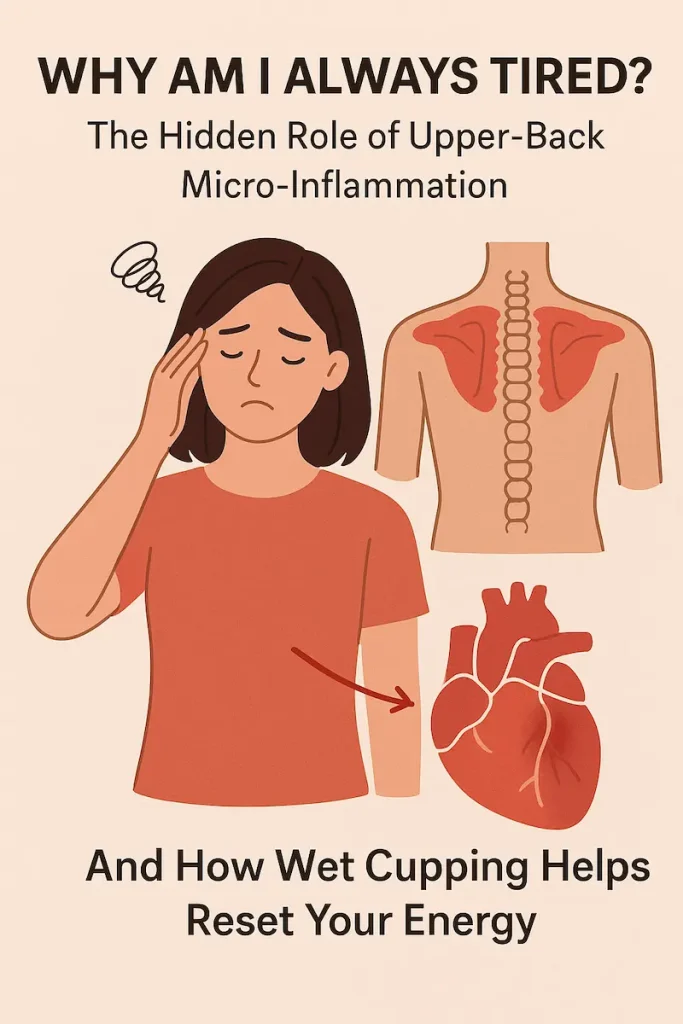
The Upper-Back “Energy Hub” — Why Tension Here Makes You Tired
Many people assume fatigue only comes from internal factors like poor sleep or stress hormones. But your upper back is one of the body’s most important structural hubs:
- It supports the weight of your head
- It stabilizes breathing-related muscles
- It houses numerous blood vessels that feed the brain and shoulders
- It influences the nervous system’s stress-relax balance
When this area becomes tight or overloaded from sitting, screen use, or forward-head posture, the tissues around it switch into “protection mode.” This triggers:
- low-grade micro-inflammation
- reduced blood flow
- stiffness along the neck–shoulder line
- compensatory muscle activation
All these signals create a background stress on the body. Even if you’re mentally calm, your physiology is working harder than you think—leading to persistent, unexplained tiredness.
Daily Stress and Cortisol Disruption
You don’t need clinical hormonal problems for cortisol to influence your energy. Everyday stressors are enough:
- multitasking
- shallow breathing
- long sitting hours
- emotional pressure
- poor recovery habits
These factors make cortisol fluctuate more than it should. When this “stress rhythm” becomes irregular, people commonly describe:
- afternoon crashes
- brain fog
- unrefreshing sleep
- low motivation
- feeling tired despite resting
Upper-back tightness amplifies this effect. Tight muscles around the neck and shoulders signal the brain to stay in alert mode, keeping your stress chemistry slightly elevated.
It’s a loop:
Stress → upper back tight → more stress → more fatigue.
Poor Circulation: The Most Overlooked Reason for Daily Fatigue
When the upper back becomes stiff, micro-circulation slows down. This affects:
- the small vessels feeding the neck
- oxygen delivery to local tissues
- lymphatic flow around the shoulders
- mobility of the thoracic region
Poor circulation in this area often feels like:
- heaviness behind the neck
- shoulders that tire quickly
- a “foggy” or “sluggish” sensation
- reduced stamina
- constant need to stretch
This circulation issue doesn’t just affect the muscles—it influences how energised your whole body feels.
How Wet Cupping Helps Reset the Upper-Back System
Wet cupping works on three key mechanisms that directly relate to daily fatigue:
Releasing stagnation in the upper-back hub
By targeting the base of the neck, the shoulder tops, and the upper-back tension zone, wet cupping helps ease tissue congestion that forms from prolonged sitting or poor posture.
Improving micro-circulation
The gentle negative pressure increases local blood movement, allowing the tissues to receive more oxygen and nutrients. Many people describe a “lighter” feeling immediately after the session.
Supporting the body’s natural relaxation response
When tension in the neck–shoulder complex decreases, the nervous system shifts from “fight or flight” toward “rest and recovery.” This supports more stable energy throughout the day.
Wet cupping is not a medical treatment for disease—but it is a supportive recovery method for lifestyle-related fatigue tied to posture, stagnation, and daily stress.
When to Consider Upper-Back Wet Cupping for Fatigue
You may benefit from focusing on this area if you often feel:
- tired despite 7–8 hours of sleep
- heaviness at the base of the neck
- tight shoulders after using your phone or laptop
- tension spreading to the upper chest or back
- low-grade fatigue that worsens during long sitting
- “tired but wired” at night
If these patterns sound familiar, your fatigue may be coming from the physical stress stored in your upper-back hub.
If constant tiredness keeps slowing you down, supporting your upper-back health may be the easiest first step.
Learn how to perform safe wet cupping at home—including exact positions, timing, and hydration support—so you can boost circulation and reset daily energy naturally.