
Understanding Chronic Conditions Beyond Symptom Control
Chronic health conditions are often discussed as if treatments must choose between addressing root causes or managing symptoms. In reality, this division oversimplifies how biological interventions work. Most effective interventions influence specific underlying mechanisms, and symptom improvement emerges as a downstream result of those changes.
Wet cupping fits this biological model. Rather than acting as a purely symptomatic measure, wet cupping engages identifiable physiological processes that contribute to chronic discomfort, fatigue, and functional imbalance.
Understanding wet cupping through its mechanisms—rather than through ideological labels—provides a clearer, more accurate scientific picture.
What Are “Root Mechanisms” in Chronic Conditions?
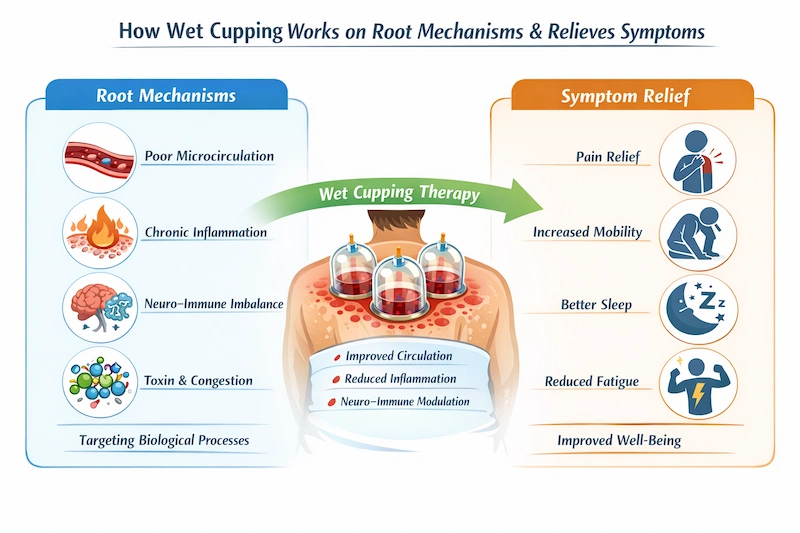
In many chronic complaints, the “root” is not a single cause but a set of recurring biological patterns, such as:
- impaired local microcirculation
- tissue congestion and stagnation
- persistent low-grade inflammation
- autonomic nervous system imbalance
- altered neurovascular signaling
These mechanisms are widely recognized in biomedical literature and are involved in conditions ranging from musculoskeletal pain to stress-related fatigue and tension disorders.
Interventions that influence these processes are, by definition, acting at a root-mechanism level, even if they do not address every contributing factor simultaneously.
How Wet Cupping Influences These Mechanisms
Wet cupping applies controlled negative pressure followed by superficial micro-bleeding at targeted areas of the body. This combination produces several biologically relevant effects:
1. Microcirculatory Reset
Wet cupping improves local blood flow dynamics by reducing stagnant blood accumulation and encouraging fresh perfusion. Enhanced oxygen and nutrient delivery supports tissue recovery and metabolic balance.
2. Modulation of Local Inflammation
Research suggests that wet cupping influences inflammatory mediators and immune signaling in treated areas. This helps interrupt cycles of chronic low-grade inflammation that often persist without obvious acute injury.
3. Neurovascular and Autonomic Regulation
Stimulation of skin and subcutaneous receptors affects autonomic nervous system activity. This is particularly relevant in conditions associated with chronic stress, muscle guarding, and tension-related pain.
These are not surface-level effects. They represent upstream biological shifts that alter how tissues and regulatory systems function over time.
Why Symptom Relief Follows Mechanistic Change
When root mechanisms change, symptoms often improve naturally.
After wet cupping sessions, individuals frequently report:
- reduced pain or stiffness
- improved range of motion
- decreased fatigue
- better sleep quality
- a sense of physical lightness or relaxation
Importantly, these outcomes are not isolated or accidental. They are secondary effects of improved circulation, reduced inflammatory signaling, and restored neurovascular balance.
In this context, symptom relief is not the goal alone—it is the observable consequence of deeper physiological modulation.
Moving Beyond the “Root Cause vs Symptom” Debate
No biomedical intervention—pharmaceutical, procedural, or otherwise—acts universally across all diseases or all individuals. Each operates within defined biological domains.
Wet cupping should be evaluated using the same scientific standard:
- What mechanisms does it influence?
- Under what conditions?
- With what measurable outcomes?
When assessed this way, wet cupping occupies a clear and legitimate position:
a targeted biological intervention that modifies root-level processes while delivering meaningful symptom improvement. This framing avoids exaggeration, rejects false limitations, and reflects how modern physiology understands complex systems.
A Mechanism-Based Perspective on Wet Cupping
Labeling wet cupping as “only symptomatic” ignores documented physiological effects. Presenting it as a universal cure would also misrepresent evidence.
The most accurate position is grounded in mechanism-based science. Wet cupping works by influencing specific biological processes—particularly those related to circulation, inflammation, and regulation—and symptom relief emerges as a direct and measurable outcome of those changes.
Final Thoughts
Chronic conditions rarely respond to single-factor solutions. Progress comes from understanding how different interventions influence different layers of biology. Wet cupping contributes at the level of local and regulatory mechanisms, offering both functional improvement and symptom relief without relying on speculative claims.
This is not an alternative narrative—it is a mechanistic one.
Curious how wet cupping targets specific biological mechanisms rather than just masking symptoms? Explore our in-depth guides on wet cupping points, safety, and physiological effects to understand how this approach fits into a modern, mechanism-based health strategy. Explore how to appply wet cupping at home by downloading our free e-book with video guide Natural Reset : Wet Cupping Made Simple.