
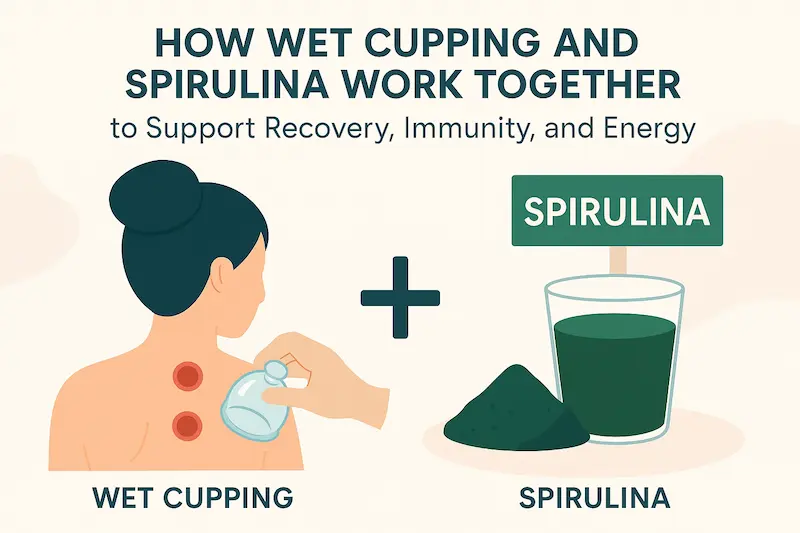
When people look for natural ways to boost their energy, support immune balance, or recover from chronic fatigue, two methods often appear in different corners of wellness: wet cupping and spirulina.
Individually, they offer different benefits. But used together — in a safe, structured, evidence-informed way — many people report better stamina, clearer focus, and more stable recovery patterns.
This article breaks down how the two work, why the combination feels synergistic, and what to expect safely.
What Wet Cupping Does (In Simple Physiology)
Wet cupping uses negative pressure followed by light skin pricks to help release stagnant blood from areas that feel heavy, tense, or inflamed.
Evidence suggests it may influence:
- Microcirculation
- Local inflammatory load
- Muscle tension
- Perceived stress and fatigue
People often describe feeling “lighter” around the upper back, shoulders, or neck — especially when stagnation has built for years.
But wet cupping doesn’t add nutrients. It helps with unloading, not replenishing. And this is where spirulina becomes interesting.
What Spirulina Contributes — A Dense Blood-Supporting Nutrition Source
Spirulina is a freshwater algae rich in:
- Iron and B vitamins
- Protein and essential amino acids
- Phycocyanin (studied for antioxidant effects)
- Minerals needed for red blood cell production
- Chlorophyll compounds associated with detox-supportive activity
Its iron bioavailability is higher than many plant-based sources, and multiple studies show spirulina can help improve hemoglobin levels in mild anemia, support immune activity, and maintain energy metabolism.
Where wet cupping focuses on draining, spirulina focuses on rebuilding.
Why They Feel Synergistic for Many People
Unloading + Replenishing = Balanced Support
After wet cupping, circulation in the treated area becomes more responsive.
Users often report:
- Easier breathing
- Warmer hands/feet
- Less heaviness around the upper back
Introducing nutrient-rich spirulina during this window may support recovery by providing iron, protein, and antioxidants that help the body rebuild and replace what’s been stagnant.
Micro-Inflammation vs. Nutrient Deficiency
Many symptoms overlap:
Symptom | Could be due to stagnation | Could be due to nutrient gaps |
Fatigue | ✓ | ✓ |
Shoulder heaviness | ✓ | — |
Low stamina | ✓ | ✓ |
Frequent colds | — | ✓ |
Wet cupping addresses the local stagnation, spirulina addresses the systemic gaps.
Immune Modulation
Some early studies suggest spirulina may help modulate immune pathways and support antiviral defense. Combined with wet cupping’s impact on stress load and circulation, many people report:
- More stable energy
- Fewer “crashes”
- Better resilience in stressful weeks
For People With Anemia Tendencies
Wet cupping is not a treatment for anemia.But many people with borderline anemia describe:
- Feeling clearer
- Sleeping better
- Recovering faster
When spirulina is added, the iron + B-vitamin density may complement the subjective benefits felt after cupping.
Important Safety Notes
This combo can be supportive, but requires mindful use:
- People with severe anemia, bleeding disorders, or ongoing cancer treatment must consult a clinician before doing wet cupping.
- Spirulina may interact with autoimmune conditions or heavy metal sensitivities depending on source quality.
- Avoid sugar excess and artificial additives — not because they “block cupping,” but because they increase systemic inflammation.
Use this combination as part of a lifestyle pattern, not as a replacement for medical care.
How to Combine Them Safely (General Guidelines)
- Timing: Most people take spirulina daily, while wet cupping is done every 2–4 weeks.
- Dosage: Standard spirulina dose ranges 1–3 grams/day, depending on tolerance.
Start low, increase slowly. - Hydration: Both methods work better when overall hydration improves circulation and recovery.
- Focus areas for cupping: For fatigue, immune stress, or neck-back heaviness, common target zones include:
- Upper back (C7–T3)
- Shoulder girdle
- Paraspinal thoracic zones
- Consistency matters more than intensity.
Bottom Line
Wet cupping helps remove what weighs the body down. Spirulina helps rebuild what the body needs. Together — when applied carefully and safely — they create a complementary pattern: unload, replenish, and rebalance.
Discover how to maximize your recovery and energy naturally — read our full guide on Integrative Vascular Support Drinks to complement wet cupping and spirulina.