
If your upper back often feels heavy, tight, or tired—even on days when you don’t do much—there’s a good chance you’re dealing with something called micro-inflammation. It’s subtle, easy to miss, and rarely reaches the level of obvious pain. But its impact on energy, posture, and daily comfort can be surprisingly big.
For many people, the C7–T1 region (the small “hump” area at the base of the neck) becomes the main location where this slow-burning irritation builds up. And when it stays there too long, everything from shoulder mobility to stress levels can be affected.
Here’s what’s actually happening inside those tissues—and how wet cupping helps reset the system.
What Micro-Inflammation Actually Is
Micro-inflammation is a low-grade, chronic form of inflammation that develops slowly over time. It doesn’t cause the classic signs of injury—no swelling, no sharp pain, no dramatic heat. Instead, it sits beneath the surface, quietly affecting circulation, fascia, and muscle function.
Unlike acute inflammation, which appears after injury and brings strong, noticeable symptoms, micro-inflammation is more like a persistent “background irritation.”
It:
- reduces local oxygenation
- disrupts microcirculation
- increases tissue density and stiffness
- triggers protective muscle guarding
Because it doesn’t shout, most people ignore it for months or years. Yet its effects accumulate: heavier shoulders, more fatigue, more stiffness, and slower recovery after sitting or working for long periods.
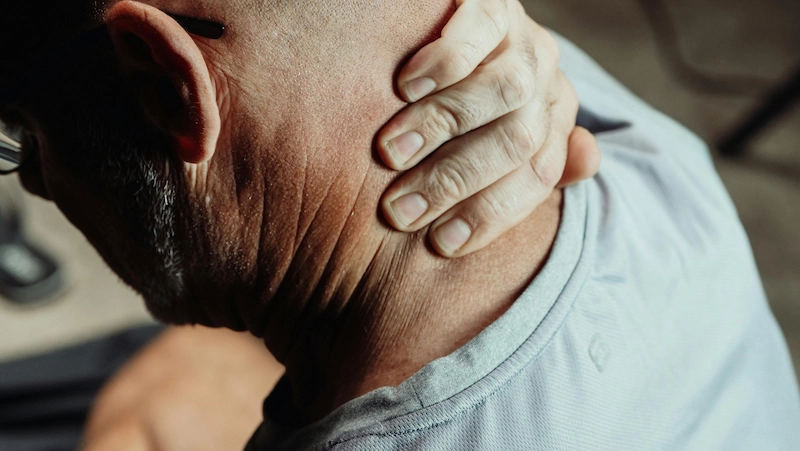
Why the Hump (C7–T1) Region Is So Prone to Micro-Inflammation
Forward Head Posture Overloads This Area
For every centimeter your head moves forward, the load on C7–T1 increases dramatically—sometimes up to three or four times its normal stress. This constant pressure irritates the tissues around the base of the neck.
Stagnant Fascia and Lymph Flow
The upper back is a major intersection of fascia layers and small lymph vessels. When movement is minimal (such as hours of sitting), these fluids move slower:
- fascia becomes dense
- lymph collects
- metabolic waste accumulates
This stagnation directly fuels micro-inflammation.
Static Load from Long Sitting
Even if you’re not lifting anything heavy, sitting for long periods places a static workload on the upper trapezius, levator scapulae, and thoracic muscles. Static load means the muscles contract slightly but continuously, preventing proper blood flow.
Stress-Driven Muscle Guarding
The upper trapezius is one of the first muscles to tighten during stress, anxiety, or lack of sleep. Chronic guarding irritates small fibers and creates low-grade inflammation in the C7–T1 region.
Signs You Might Have Micro-Inflammation
Even without major pain, the symptoms can be surprisingly clear when you know what to look for:
Shoulder Heaviness
A dull heaviness, especially after sitting or looking down at a phone.
Easy Fatigue in the Neck and Upper Back
The tissues become inefficient, so they fatigue faster than usual.
Mini Headaches
The irritation around C7–T1 can affect nerve pathways toward the head, creating brief headaches that come and go.
Warm or Tender Spots
Pressing certain points produces mild soreness or warmth—typical signs of low-grade inflammation.
Slow Recovery After Sitting
Standing up after long sitting feels stiff, tight, or “compressed,” and it takes a while before you feel normal again.
How Wet Cupping Helps Reduce Micro-Inflammation
Wet cupping is uniquely effective for this region because it acts on both the fluid systems (blood + lymph) and the fascial layers—two major components behind micro-inflammation.
Negative Pressure Improves Microcirculation
The gentle suction lifts the skin and superficial fascia, increasing blood flow to areas that are usually compressed or stagnant.
This brings:
- new oxygen
- fresh nutrients
- better waste removal
It’s a direct reset for microcirculation.
Gentle Blood Removal Reduces Local Irritants
Removing a small amount of superficial blood helps decrease:
- inflammatory mediators
- metabolic waste
- local heat buildup
Many people describe a “lighter” feeling after cupping for this reason.
Fascia Decompression Reduces Pain Signals
When the fascia becomes stiff, it compresses nerves and sends constant low-level pain signals.
Cupping:
- lifts the fascia
- restores glide
- reduces compression
- calms pain receptors
This helps muscles stop overprotecting themselves.
Why Upper Traps, C7, T1, and Shoulder Points Matter
These points are strategic because they sit right on:
- major lymphatic drainage pathways
- cervical–thoracic nerve glide routes
- the postural “crossroads” that carry head weight
- areas of maximum daily stiffness
Releasing them makes the entire neck-shoulder complex feel lighter and more balanced.
Complementary Habits to Keep Micro-Inflammation Low
Wet cupping gives a strong reset, but daily habits determine whether the tissues stay healthy or return to stiffness.
- Hydration
Fluid balance improves lymph flow and helps prevent tissue stagnation.
- Micro-Movement Breaks
Standing up, rolling shoulders, or extending the spine for 10–20 seconds every 30–45 minutes acts as a natural pump that prevents inflammation from building.
- Thoracic Extension
Opening the chest and upper back reduces the load on C7–T1 and improves posture-related strain.
- Breathing Patterns
Slow diaphragmatic breathing lowers sympathetic tension, reduces muscle guarding, and supports recovery.
Relieve upper back tension and boost energy—explore simple wet cupping steps you can safely try at home!