
Severe constipation can be uncomfortable and persistent, especially when dietary changes or laxatives provide only temporary relief. A surprisingly effective approach combines rapid hydration with wet cupping along the paraspinal points at L1.
This method leverages physiology: hydration softens stool and supports intestinal motility, while wet cupping at L1 stimulates local circulation, parasympathetic tone, and fascia relaxation. The result is improved bowel function without over-reliance on medication.
Why Severe Constipation Responds to Hydration
Many constipation episodes are linked to:
- Mild dehydration
- Reduced intestinal motility
- Tight fascia around the lumbar spine
- Stress-induced parasympathetic underactivity
Rapid Hydration Supports Intestinal Transit
Drinking about 1.5 liters of water in 5–10 minutes can:
- Expand plasma volume
- Hydrate intestinal tissues, softening stool
- Improve microcirculation in the gut area
- Activate reflexes that support bowel movement
People often notice faster relief within hours, particularly when the colon is sluggish due to low fluid intake. Rapid hydration “primes” the system, making other interventions like cupping more effective.
Fascia and Muscle Tension Affect Gut Function
The thoracolumbar fascia and paraspinal muscles at L1–L2 connect to the colon via fascial and neural pathways. Tight fascia can:
- Compress sections of the colon
- Reduce local blood flow
- Limit parasympathetic signaling
Hydration combined with wet cupping helps relax these tissues, enabling intestines to move more freely.
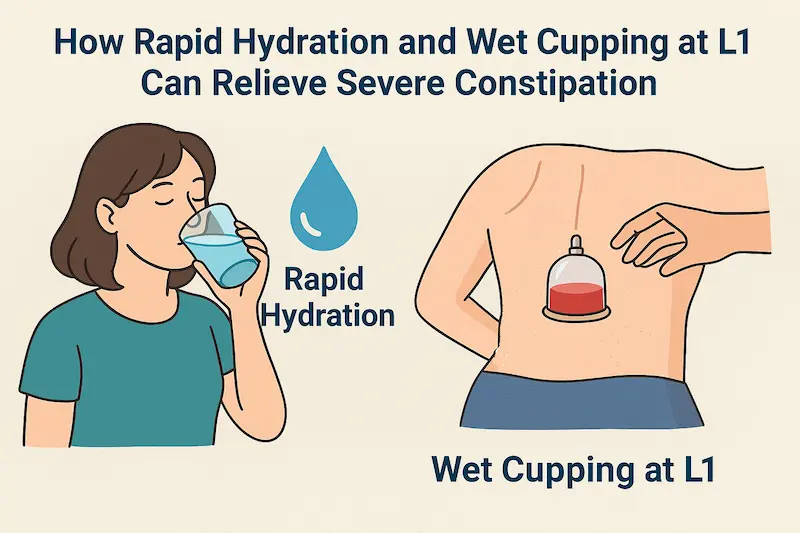
Wet Cupping at L1: How It Helps Constipation
For constipation, cups are placed bilaterally at L1, approximately 2–3 finger-widths lateral to the spine. This placement:
- Stimulates parasympathetic activity, supporting gut motility
- Improves local circulation in the upper lumbar region
- Enhances tissue responsiveness to hydration
Hydrated tissues respond more effectively to the negative pressure, making cupping more comfortable and improving outcomes.
Local Circulation Boost
Wet cupping draws blood to the surface, unloads congested capillary beds, and encourages lymphatic and interstitial fluid movement. This helps relieve tissue tension that may slow bowel movements. Improved circulation also supports the removal of local metabolic byproducts that can contribute to fascial stiffness.
Fascia Relaxation Supports Gut Motion
Cupping over well-hydrated fascia at L1 allows tissue planes to glide more freely. Muscles that were reflexively guarding due to dehydration or stress relax, enabling the intestines to contract more efficiently. This subtle release can make bowel movements smoother without forcing the system.
Rapid Hydration Protocol for Constipation
- Drink about 1.5 liters of water within 5–10 minutes, preferably on an empty stomach
- Perform wet cupping at L1 afterward
- Expect increased urination (normal)
- Repeat for 1–3 days during episodes of sluggish bowel
Many people describe feeling lighter, warmer, and more mobile in the abdominal and lower-back region, often noticing bowel movement within hours to a day.
Who Benefits Most
People likely to notice rapid improvement include those who:
- Forget to drink water regularly
- Experience chronic constipation
- Sit for long hours or work in air-conditioned environments
- Are older adults with diminished thirst response
These factors often coincide with slow intestinal transit and dehydration, making hydration plus L1 cupping particularly effective.
Safety Considerations
- Rapid hydration is generally safe for healthy adults
- Avoid or consult a doctor if you have heart failure, kidney disease, uncontrolled hypertension, or fluid restrictions
- Wet cupping should always be performed by trained practitioners
Following these precautions ensures both hydration and cupping are beneficial and comfortable, without adverse effects.
How This Simple Method Works
The combination of rapid hydration + wet cupping at L1 addresses constipation on three levels:
- Systemic – Increases plasma volume, reduces blood viscosity, and improves circulation
- Local – Cupping clears congestion in paraspinal tissues affecting the gut
- Fascial – Hydration restores tissue glide; cupping decompresses tight planes
The synergy of these actions explains why some people experience surprisingly fast relief—not through laxatives, but by physiology working in their favor.
Ease constipation naturally! Try L1 wet cupping with rapid hydration to boost digestion, relieve tension, and feel lighter today