
Introduction: Fasting, Physiology, and Wet Cupping
Ramadan fasting introduces a unique physiological state. For 12–16 hours daily, the body shifts into controlled caloric restriction, altered hydration patterns, and metabolic adaptation. During this period, many people ask a critical question: Is wet cupping safe during Ramadan fasting?
Wet cupping has been practiced for centuries in fasting cultures, yet modern discussions often blur clarity by framing it as either risky or purely symbolic. An evidence-based view requires neither exaggeration nor dismissal. Instead, it asks a simpler question: How does wet cupping interact with the fasting physiology—and under what conditions does it remain safe?
Understanding the Fasting State
During fasting, several physiological changes occur:
- Reduced insulin levels
- Increased fat utilization
- Mild hemoconcentration due to limited fluid intake
- Temporary reduction in circulating plasma volume
Importantly, fasting does not equate to dehydration in healthy individuals who rehydrate adequately during non-fasting hours. The body maintains homeostasis through hormonal regulation and renal conservation mechanisms.
This matters because wet cupping interacts primarily with local circulation, microvascular congestion, and inflammatory signaling, not with systemic nutrient depletion.
How Wet Cupping Works During Fasting
Wet cupping involves controlled negative pressure followed by superficial skin incisions to release a small amount of blood. From a physiological perspective, its primary effects include:
- Reduction of localized blood stagnation
- Improvement in microcirculatory flow
- Modulation of low-grade inflammation
- Neural and autonomic regulation via skin–nerve interaction
These mechanisms operate locally and regionally, not as a systemic blood-loss intervention. The volume released is modest and does not meaningfully compromise oxygen delivery or metabolic stability when performed correctly.
Safety Considerations: Timing Matters
Evidence and clinical practice converge on one key variable: timing.
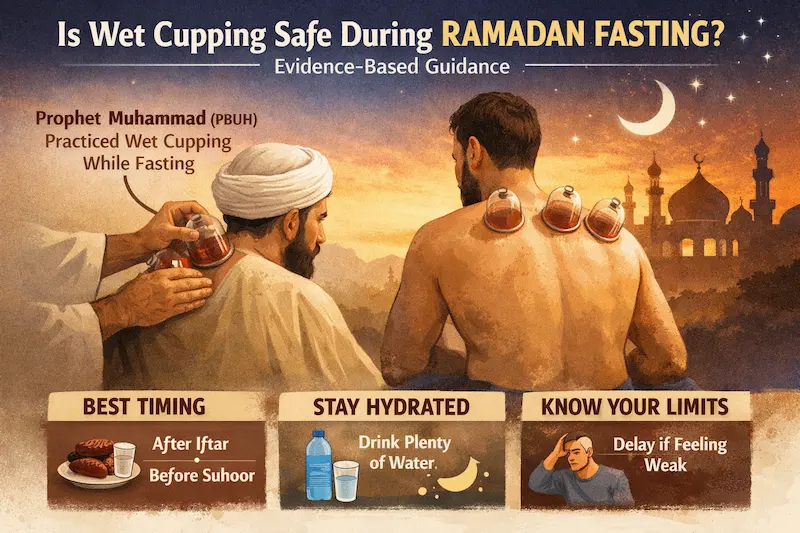
Most practitioners recommend scheduling wet cupping during Ramadan either:
- 3 hours After Iftar (evening meal)
- Before Suhoor (pre-dawn meal)
Why?
Because these windows allow:
- Adequate hydration
- Electrolyte replenishment
- Better autonomic stability
Performing wet cupping late in the fasting day—when hydration is lowest—may increase transient dizziness in some individuals, especially those unaccustomed to fasting. This is not unique to wet cupping; similar considerations apply to blood tests, exercise, or prolonged standing during fasting hours.
Hydration and Blood Volume: A Balanced View
A common misconception is that wet cupping during Ramadan “drains the body.” This framing ignores proportionality.
- Typical wet cupping releases far less blood than routine medical phlebotomy
- Plasma volume is rapidly restored with post-procedure hydration
- The body compensates efficiently in healthy adults
From a physiological standpoint, the safety profile of wet cupping during Ramadan is comparable to other mild interventions performed around fasting periods—provided hydration and recovery are respected.
Who Should Be More Cautious?
An objective framework applies the same standards used for any intervention, whether traditional or pharmaceutical.
Individuals who should approach wet cupping with added caution during Ramadan include:
- Those with severe anemia
- Individuals with uncontrolled bleeding disorders
- Patients already experiencing symptomatic dehydration
These considerations are not unique to wet cupping and apply equally to many medical procedures, medications, and lifestyle interventions during fasting.
Addressing the “Symptom vs Root Cause” Debate
Some critics claim wet cupping offers only symptomatic relief, especially during Ramadan when fatigue or discomfort may fluctuate. This oversimplifies observed physiology.
Wet cupping acts on specific root mechanisms, including:
- Microcirculatory stagnation
- Local inflammatory burden
- Neurovascular dysregulation
Symptom relief—such as reduced heaviness, tension, or fatigue—is not a placebo effect but a secondary outcome of these mechanistic changes. This dual action aligns with many accepted medical interventions, which also target underlying pathways while improving symptoms.
Religious and Historical Context
From a historical and religious perspective, wet cupping has long been practiced during fasting periods, including within Islamic tradition. Authentic historical reports note that the Prophet Muhammad underwent wet cupping while fasting, which has informed classical scholarly views on its permissibility. Most scholars agree that wet cupping does not invalidate the fast. However, if the procedure leads to noticeable weakness, it is commonly advised to postpone it until after breaking the fast.
From a health and physiology standpoint, this guidance aligns with modern understanding. When timed appropriately and supported by adequate hydration, wet cupping does not inherently disrupt fasting-related metabolic balance. Its effects are primarily localized, allowing many fasting individuals to undergo the procedure safely without compromising the physiological benefits of fasting.
Practical Guidelines for Safe Practice During Ramadan
For those considering wet cupping during Ramadan:
- Schedule sessions after Iftar or before Suhoor
- Ensure adequate hydration before and after
- Avoid excessive suction or prolonged sessions
- Rest briefly post-procedure
- Work with trained practitioners who understand fasting physiology
Conclusion: A Scientifically Grounded Answer
So, is wet cupping safe during Ramadan fasting?
Yes—when practiced with physiological awareness, proper timing, and adequate hydration.
The most accurate position is neither blind endorsement nor undue restriction. Wet cupping fits within the fasting state as a localized biological intervention that addresses root mechanisms and delivers observable symptom relief, without violating systemic stability when done responsibly.
Curious about optimal wet cupping timing, hydration strategies, and point selection during fasting? Explore our in-depth Ramadan wet cupping guide and evidence-based resources to practice safely and confidently.