
Wet Cupping vs Massage: Which One Works Deeper for Detox and Pain Relief?
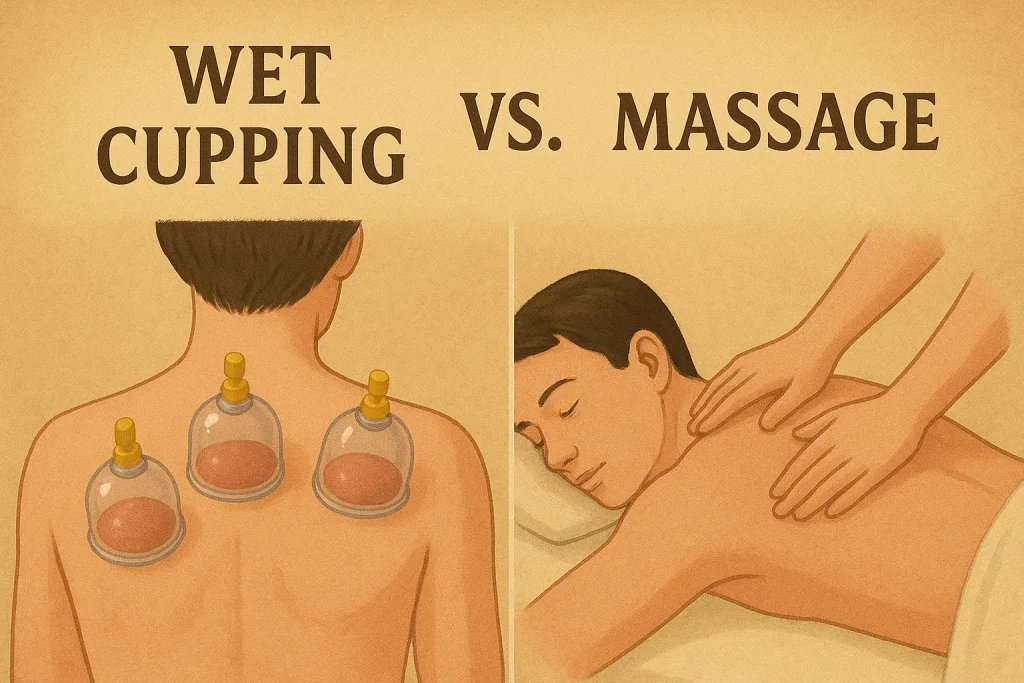
When it comes to relaxation, pain relief, and detoxification, both wet cupping and massage are popular therapies. While they share some goals, they work through different mechanisms. Understanding the differences in depth, circulation effects, and recovery outcomes can help individuals choose the right therapy for their needs. Superficial Relaxation vs Deep Detox Massage primarily targets the muscles and soft tissue, using pressure, kneading, and stretching to: Relieve tension and tightness in superficial muscles Improve flexibility and joint mobility Promote relaxation and stress reduction Wet cupping, on the other hand, combines negative pressure and controlled microbleeding, which: Pulls stagnant blood to the surface Stimulates deeper microcirculation and lymphatic drainage Encourages detoxification at the tissue and cellular level While massage provides immediate relaxation, wet cupping often reaches deeper layers of tissue and blood flow, addressing both muscular and circulatory congestion. Wet cupping and massage offer complementary benefits when used together Muscle, Circulation, and Nerve Stimulation Both therapies impact muscles and nerves but in different ways: Massage: Mechanical manipulation relaxes fascia, stimulates sensory nerves, and improves local circulation in targeted muscles. Wet cupping: Suction and microbleeding activate reflex pathways, enhance oxygenation in deeper tissues, and trigger subtle inflammatory modulation to promote healing. These mechanisms explain why wet cupping can sometimes offer more profound pain relief and detoxification, especially in areas with chronic tension or poor circulation. Wet Cupping vs Massage: When to Choose One Over the Other For relaxation and stress relief: Massage may be preferable for its immediate calming effects and broad coverage. For deep tissue recovery and detox: Wet cupping can complement massage or stand alone, especially for athletes or individuals with chronic stagnation. For combined benefits: Many wellness centers integrate both therapies in sequence — massage first to loosen superficial tissues, followed by wet cupping to address deeper circulation and stagnant blood Safety and Integration Tips Qualified practitioners: Both therapies require trained professionals to maximize benefits and avoid injuries. Timing considerations: Avoid intense physical activity immediately after wet cupping to allow tissue recovery. Hydration and aftercare: Drinking water and applying natural oils can support detoxification and skin healing after wet cupping. By integrating massage and wet cupping thoughtfully, individuals can optimize pain relief, circulation, and overall wellness. Key Takeaway Massage and wet cupping serve complementary purposes. Massage excels in superficial relaxation and immediate relief, while wet cupping works deeper by enhancing microcirculation, mobilizing stagnant blood, and supporting detoxification. Understanding these differences allows you to choose the therapy—or combination—that best aligns with your wellness goals. Get the free at-home wet cupping tutorial — an easy-to-follow e-book with videos, featuring the 5 essential points every wet cupping practitioner must know — inside Natural Reset: Modern Wet Cupping Made Simple.
Why Wet Cupping Is Different from Bloodletting or Leech Therapy?
When exploring traditional therapies that involve blood, it’s easy to confuse wet cupping with historical bloodletting or the use of leeches. While all three share a common theme — controlled removal of blood — their mechanisms, safety, and purposes differ significantly. Wet cupping uses precise suction and superficial microbleeding under trained supervision, focusing on circulation, detoxification, and muscle relaxation. Unlike leech therapy or historical bloodletting, it avoids excessive blood loss and systemic risk. Understanding these differences helps clarify why wet cupping remains a safe, targeted, and effective practice in modern wellness and complementary medicine. Controlled Microbleeding vs Open Bloodletting Leech Therapy Bloodletting, used for centuries in Western medicine, involved removing large amounts of blood to treat various illnesses. Physicians believed that eliminating “bad blood” could balance the body’s humors. However, the procedure often led to excessive blood loss, fainting, or even death. Leech therapy, on the other hand, uses the saliva of leeches, which contains anticoagulants, to extract blood gradually. While leeches can be precise, they are limited to small localized areas and carry risks of infection if not managed properly. Wet cupping, by contrast, uses controlled microbleeding. After applying suction, the skin is lightly pricked, allowing only a small, measured amount of blood to be drawn. The process targets stagnant blood in localized areas without compromising overall circulation. This precision ensures safety and aligns with both traditional wisdom and modern physiological understanding. Safety and Modern Equipment One of the key distinctions of contemporary wet cupping is the use of modern, sterile equipment. Cups are made from glass, silicone, or plastic with controlled suction mechanisms. Practitioners follow strict hygiene protocols, including sterilizing tools and using single-use blades for micro-incisions. Compared to historical bloodletting, which often reused instruments and relied on manual judgment, modern wet cupping minimizes infection risk and ensures predictable outcomes. Many clinical studies highlight its safety profile when performed by trained professionals, making it a viable alternative to more invasive practices. Another advantage is the adjustable suction intensity, allowing therapists to tailor the procedure to the patient’s comfort and medical history. This control is absent in bloodletting and leech therapy, which can be less precise and more stressful for the patient. How It Balances Ancient and Modern Practice Wet cupping strikes a unique balance between traditional knowledge and modern medical principles. Its roots trace back thousands of years, respected in cultures ranging from Chinese medicine to Islamic Hijama practices. Yet, today’s protocols incorporate scientific insights about circulation, oxygenation, and immune modulation. By combining ancient wisdom with modern safety standards, wet cupping offers benefits similar to bloodletting — such as improving circulation and relieving localized stagnation — but without the associated risks of uncontrolled blood loss. For this reason, it’s often considered a bridge between traditional therapy and contemporary integrative medicine. For example, a session may help alleviate muscle tension, improve local blood flow, or support recovery from minor injuries — all without the dramatic, systemic effects that characterized historical bloodletting. Modern practitioners also emphasize patient comfort, hygiene, and individualized treatment, making wet cupping a safe introduction for beginners interested in traditional therapies. Key Takeaway While wet cupping, bloodletting or leech therapy all involve drawing blood, wet cupping is a controlled, precise, and safe method that combines centuries-old knowledge with modern clinical practices. By targeting stagnant blood in specific areas, it supports circulation, relieves tension, and promotes wellness without the risks of excessive blood loss. If you’re considering wet cupping for the first time or comparing it to other traditional therapies, always ensure the procedure is conducted by a trained professional and follow guidelines outlined in “Is Wet Cupping Safe?”. This approach ensures both safety and the maximum therapeutic benefit.