
When it comes to relaxation, pain relief, and detoxification, both wet cupping and massage are popular therapies. While they share some goals, they work through different mechanisms. Understanding the differences in depth, circulation effects, and recovery outcomes can help individuals choose the right therapy for their needs.
Superficial Relaxation vs Deep Detox
Massage primarily targets the muscles and soft tissue, using pressure, kneading, and stretching to:
- Relieve tension and tightness in superficial muscles
- Improve flexibility and joint mobility
- Promote relaxation and stress reduction
Wet cupping, on the other hand, combines negative pressure and controlled microbleeding, which:
- Pulls stagnant blood to the surface
- Stimulates deeper microcirculation and lymphatic drainage
- Encourages detoxification at the tissue and cellular level
While massage provides immediate relaxation, wet cupping often reaches deeper layers of tissue and blood flow, addressing both muscular and circulatory congestion.
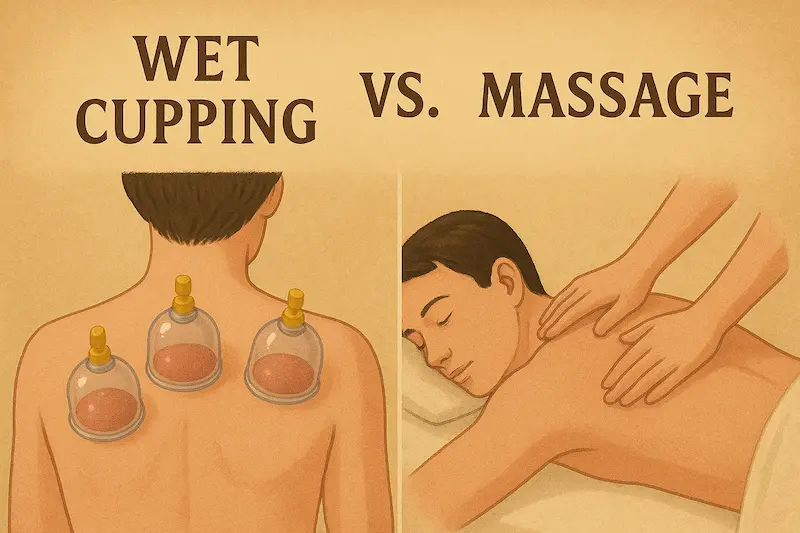
Muscle, Circulation, and Nerve Stimulation
Both therapies impact muscles and nerves but in different ways:
- Massage: Mechanical manipulation relaxes fascia, stimulates sensory nerves, and improves local circulation in targeted muscles.
- Wet cupping: Suction and microbleeding activate reflex pathways, enhance oxygenation in deeper tissues, and trigger subtle inflammatory modulation to promote healing.
These mechanisms explain why wet cupping can sometimes offer more profound pain relief and detoxification, especially in areas with chronic tension or poor circulation.
Wet Cupping vs Massage: When to Choose One Over the Other
- For relaxation and stress relief: Massage may be preferable for its immediate calming effects and broad coverage.
- For deep tissue recovery and detox: Wet cupping can complement massage or stand alone, especially for athletes or individuals with chronic stagnation.
For combined benefits: Many wellness centers integrate both therapies in sequence — massage first to loosen superficial tissues, followed by wet cupping to address deeper circulation and stagnant blood
Safety and Integration Tips
- Qualified practitioners: Both therapies require trained professionals to maximize benefits and avoid injuries.
- Timing considerations: Avoid intense physical activity immediately after wet cupping to allow tissue recovery.
- Hydration and aftercare: Drinking water and applying natural oils can support detoxification and skin healing after wet cupping.
By integrating massage and wet cupping thoughtfully, individuals can optimize pain relief, circulation, and overall wellness.
Key Takeaway
Massage and wet cupping serve complementary purposes. Massage excels in superficial relaxation and immediate relief, while wet cupping works deeper by enhancing microcirculation, mobilizing stagnant blood, and supporting detoxification. Understanding these differences allows you to choose the therapy—or combination—that best aligns with your wellness goals.
Get the free at-home wet cupping tutorial — an easy-to-follow e-book with videos, featuring the 5 essential points every wet cupping practitioner must know — inside Natural Reset: Modern Wet Cupping Made Simple.