
For centuries, people across civilizations have used cupping as a way to restore health, balance, and energy. Yet today, two main approaches dominate the modern conversation — dry cupping and wet cupping. Both methods may look similar on the surface, but what happens inside your body tells a very different story.
In this guide, we’ll explore how these two techniques evolved, how they actually work in your circulation, and which one might suit you best — according to both traditional insights and modern research.
The Origins of Cupping — From Heat to Healing
Cupping isn’t a new wellness trend. Its earliest traces reach back more than 3,000 years to ancient Egypt, China, and Persia, where healers used heated cups to draw out what they called “bad blood” or “stagnant wind.” The technique then spread through Greek medicine under Hippocrates and was later refined in Islamic civilization as Hijama — the wet cupping we know today.
According to Ernst and Lee (2011), the historical rationale behind cupping was rooted in balance — physically removing stagnation to allow the body’s natural flow to resume. Modern medicine may use different language, but the core concept of improving circulation and reducing pressure remains remarkably relevant.
Today, cupping has evolved from fire-lit glass cups to sterile, medical-grade tools. What remains unchanged is the principle: stimulate the skin’s surface to influence deeper systems — blood, lymph, and neural pathways.
How Dry Cupping Works (No Blood, More Pressure)
Dry cupping is the simpler and more popular form, often seen in spas, sports clinics, and physiotherapy centers. Here, the practitioner creates suction on the skin using vacuum pumps or briefly heated cups. The pressure pulls the skin and underlying tissue upward for several minutes.
From a physiological standpoint, this suction:
- Increases microcirculation in the affected area
- Stimulates local nerve endings
- Encourages interstitial fluid exchange and cellular metabolism
In their review, Ernst and Lee (2011) noted that this negative pressure acts much like deep tissue massage but in reverse — lifting instead of pressing. It relaxes fascia, relieves muscle tightness, and promotes blood flow to oxygen-starved areas.
That’s why athletes like swimmers and runners often favor dry cupping: it offers quick relief without skin incisions or bleeding.
However, the effect of dry cupping is mostly surface-level. It mobilizes stagnant fluids and relaxes tension, but it doesn’t expel any blood or metabolic waste directly.
How Wet Cupping Works (Gentle Blood Release)
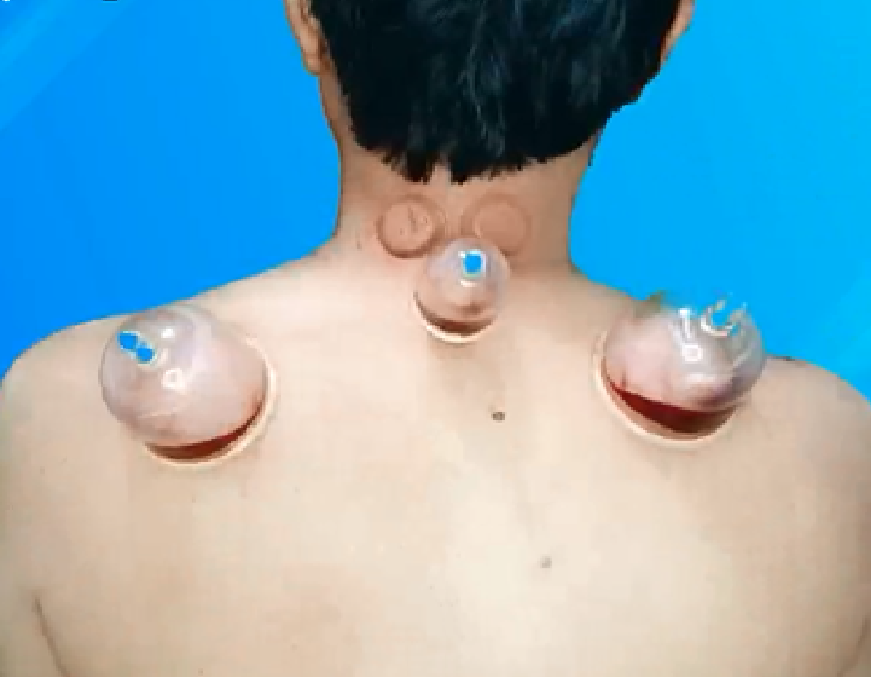
Wet cupping, on the other hand, adds a crucial step. After creating mild suction, the cups are removed, and the skin is lightly pricked with sterile lancets before being re-applied. This allows a small amount of blood — usually 1 to 5 milliliters per point — to flow out through controlled micro-bleeding.
According to Tagil et al. (2014), this process leads to a measurable increase in local blood flow and oxygenation, along with improved tissue perfusion. In other words, the body doesn’t just redistribute old blood — it replaces it.
During the short session, suction draws out venous and capillary blood that may contain metabolic byproducts or inflammatory markers. Once removed, fresh, oxygen-rich blood rapidly refills the area, resetting the local circulation cycle.
This is why practitioners of Hijama often describe it as a “manual reset for your body’s internal traffic.” You aren’t merely stimulating pressure — you’re helping your system unload stagnant congestion that dry cupping can’t fully reach.
Dry vs Wet Cupping: Why Blood Extraction Matters
Modern researchers such as Al-Bedah et al. (2016) classify wet cupping as a form of controlled micro-bloodletting, distinct from ancient open bloodletting or leech therapy. The bleeding is minimal and localized, but it triggers a cascade of physiological benefits:
- Improved microcirculation – Old, deoxygenated blood is replaced by fresh arterial supply.
- Reduced oxidative stress – Several studies show decreased markers of free radicals post-session.
- Inflammation modulation – Mild suction activates the body’s natural anti-inflammatory mechanisms.
- Neuro-hormonal balance – The nervous system responds by releasing endorphins and calming stress pathways.
The logic is simple yet elegant: by removing the “old,” the body is encouraged to regenerate the “new.” Traditional healers used to call this “removing bad blood.” Today, physiology would describe it as enhancing microvascular exchange and tissue oxygenation.
Which Method Fits You Best?
The choice between dry and wet cupping depends on your goals — relaxation, rehabilitation, or restoration.
Goal | Recommended Method | Why |
Muscle relaxation & recovery | Dry cupping | Enhances local circulation, ideal for athletes |
Detoxification & metabolic reset | Wet cupping | Promotes removal of stagnant blood and waste |
Stress relief & nervous balance | Wet cupping (gentle points) | Encourages hormonal and circulatory balance |
Cosmetic & fascia release | Dry cupping | Safe, non-invasive, surface stimulation |
If you’re new to cupping, dry cupping is a safe entry point. It introduces you to the sensation and circulation changes without blood involvement. But if you seek deeper detoxification, many people — and modern studies — suggest that wet cupping provides a more comprehensive effect.
Both methods, when practiced correctly, complement rather than compete. As Al-Bedah et al. (2016) emphasize, each type of cupping has its own role: dry cupping stimulates flow, wet cupping completes the cycle.
Bridging Ancient Wisdom and Modern Science
For centuries, healers relied on observation: they saw better complexion, clearer mind, and reduced pain after cupping. Modern science now provides language to explain those outcomes — improved blood rheology, nitric oxide regulation, and reduced oxidative load.
When you compare dry vs wet cupping, you’re really comparing two stages of the same process:
- Dry cupping awakens circulation.
- Wet cupping renews it.
Together, they represent a continuum of healing — from stimulation to purification. And that’s the real difference inside your body. Learn our article how to apply wet cupping safely at home.