
Tingling in the foot—whether it feels like pins and needles, electric zaps, or intermittent numbness—can be deeply distracting. For many people, the sensation seems harmless at first, but over time it becomes bothersome, especially when standing, walking, or waking up in the morning. While most people assume it comes from a pinched nerve in the lower back, a large portion of foot tingling actually begins locally, especially along the front of the shin and the top of the foot where critical nerves pass through narrow anatomical tunnels.
Wet cupping offers a unique, physiologically grounded approach to easing this tingling by releasing tension, improving microcirculation, and reducing nerve irritation in the areas that commonly trigger these sensations. The technique does not treat nerve disorders directly—but it supports tissue relaxation and fluid movement in a way that reduces compression along the peroneal–tibial pathway, often delivering relief faster than stretching or massage alone.
Why Tingling Happens: The Physiological Chain Behind the Sensation
To understand why wet cupping helps, it’s important to look at what causes tingling in the first place. The foot depends on a network of nerves—especially branches of the deep peroneal nerve—that travel down the shin, through a tight band near the front of the ankle, and spread out across the top of the foot. Along this route, several structures can become tense or congested, interrupting nerve signaling.
Here are the three most common physiological contributors to foot tingling:
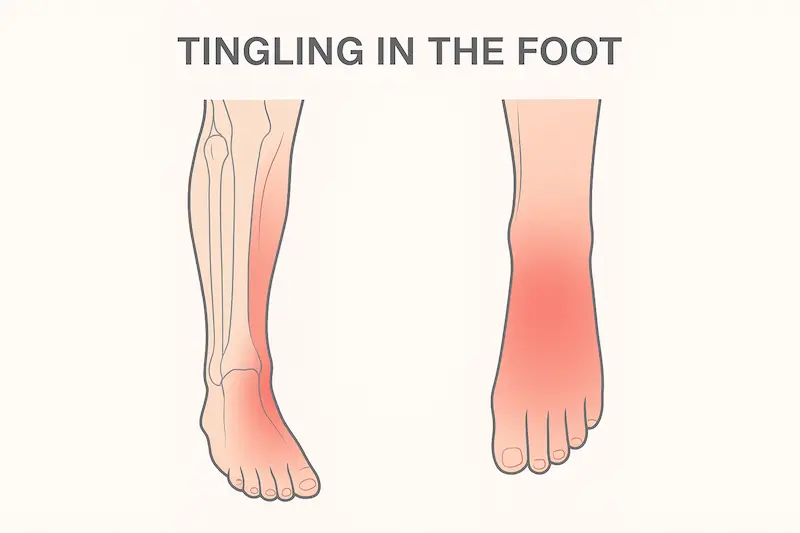
Tightness in the Anterior Shin Muscles
The muscle group that lifts your foot during walking is often under constant low-grade tension. When these muscles become overly tight—due to standing long hours, running, uphill or downhill walking, or even prolonged sitting with your ankles bent—they create mechanical pressure around the nerve branches.
This tension is enough to cause:
- Irritated nerve pathways
- Delayed microcirculation
- Localized inflammation
- Electrical sensations toward the toes
For many people, this is the true source of the “mysterious tingling” they assume comes from the spine.
Compression Near the Front of the Ankle
The front of the ankle contains a rigid anatomical structure that functions like a strap, guiding several tendons and nerves into the foot. Because the space is narrow, even slight swelling, tightness, or mechanical congestion can create a “pinched” feeling along the deep peroneal nerve.
Symptoms often include:
- Tingling between the big toe and second toe
- Numbness that worsens when pointing or flexing the foot
- Electric sensations during walking or stair climbing
This area is extremely responsive to decompression-based therapies like wet cupping.
Circulation Restriction on the Top of the Foot
The dorsal side of the foot is packed with small nerves and blood vessels that can easily become irritated by:
- Tight footwear
- Standing for long periods
- Reduced venous return
- Micro-inflammation in the connective tissues
This often results in a “light numbness” that spreads across the toes or central foot.
Wet cupping helps restore fluid movement here, allowing both the nerves and soft tissue to recover.
How Wet Cupping Helps Relieve Foot Tingling
Wet cupping works through a combination of negative pressure, microcirculatory activation, and fascial release. When applied to the shin, ankle, or dorsal foot (with proper knowledge of safe, precise points), it supports recovery through several physiological mechanisms:
Reducing Pressure on Local Nerves
Gentle blood release plus suction creates a decompressive effect that reduces stiffness in the surrounding tissues.
This helps ease mechanical irritation around the nerve branches responsible for tingling sensations.
Improving Blood Flow Along Congested Zones
The technique increases microcirculation in areas where blood flow is typically slow—especially the front of the shin and the top of the foot.
More circulation = better oxygenation = less nerve irritation.
Releasing Chronic Muscle Tension
The anterior shin often holds tension that normal stretching cannot reach. Wet cupping helps soften this region deeply, relieving the “pulling” effect on the nerves.
Supporting Natural Nerve Recovery
When tight tissues relax and circulation improves, the nerves can fire more normally, reducing:
- Pins and needles
- Buzzing sensations
- Foot heaviness
- Intermittent numbness
Enhancing Ankle and Foot Mobility
Restricted mobility can worsen tingling. By releasing congestion, wet cupping improves the glide of the soft tissues—making the foot feel lighter and more responsive.
Keys Takeaway
Foot tingling is rarely random—it almost always follows a specific mechanical and physiological chain involving tension along the anterior shin, compression at the front of the ankle, and restricted microcirculation across the top of the foot. These areas form narrow passages where the deep peroneal nerve becomes susceptible to irritation, especially in people who walk long distances, stand for hours, or wear tight footwear.
Wet cupping helps not by masking symptoms but by directly addressing the tissue stiffness and fluid stagnation that irritate these nerve pathways. Through decompression, improved microcirculation, and deep fascial release, it restores lightness, reduces buzzing sensations, and supports healthier nerve flow throughout the lower leg and foot. For many individuals, this combination delivers relief faster than stretching or massage alone—especially when paired with hydration and gentle ankle mobility.
In short: when the shin, ankle, and dorsal foot relax, tingling naturally fades. Wet cupping simply accelerates that process.
Foot tingling often comes from tension along the shin and compression at the front of the ankle. Wet cupping helps decompress these pathways, restore microcirculation, and bring lightness back to your step. Discover the precise point system in our upcoming e-book — and learn how to perform wet cupping safely at home in our free Natural Reset: Modern wet cupping made simple guide.