
Heart palpitations are one of the most disturbing symptoms of anxiety. They can feel like:
- fast, fluttering, or pounding heartbeat
- a sudden “kick” in the chest
- a strong thump when inhaling
- a heartbeat you suddenly become overly aware of
The good news: when doctors have confirmed that your heart is healthy, anxiety-related palpitations are generally harmless. But understanding why they happen is the key to calming them.
Anxiety activates the sympathetic nervous system, the same system responsible for “fight or flight.” When this switches on, adrenaline rises, breathing becomes shallow, and your brain becomes hypersensitive to internal sensations—including your heartbeat.
Upper-Back Tension: The Hidden Trigger Nobody Talks About
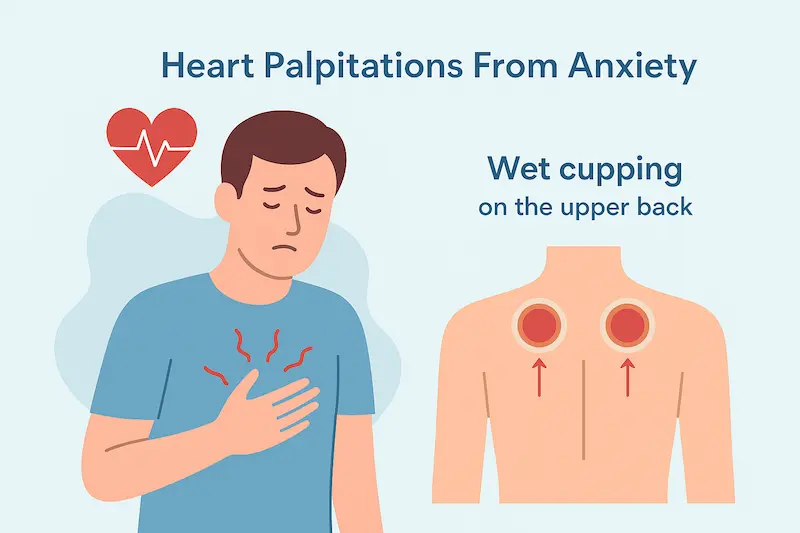
Most people think heart palpitations come purely from “stress in the mind,” but the body plays an equally big role—especially the upper-back area, which is deeply connected to breathing efficiency and stress signaling.
When this region becomes tight from prolonged sitting, screen posture, or worry, three things happen:
Breathing becomes shallow without realizing it
Tight muscles around the ribs reduce the freedom of rib movement. The result? You breathe higher in the chest instead of deeper into the diaphragm.
This sends a message to the brain that the body is under stress—even if you’re not.
Restricted breathing increases heart awareness
When the upper back or rib cage is tight, the heart has less “space” to move freely with each breath. This can make each heartbeat feel louder, sharper, or more noticeable.
You feel the same beat—but your brain perceives it as stronger.
Stress signals rise through the sympathetic chain
Upper-back tension increases the load on nerves that regulate stress response. This keeps the body in “alert mode,” making palpitations easier to trigger during anxiety episodes.
Why Palpitations Get Worse During Anxiety
Anxiety pushes your breathing rhythm and heart rhythm out of sync. This is why:
- you breathe faster
- carbon dioxide drops
- your chest tightens
- your heartbeat feels erratic
Even though the heart itself is healthy, the interaction between breath, posture, and stress hormones becomes disrupted.
This explains why some people feel palpitations even when sitting still, lying in bed, or trying to relax.
How Wet Cupping on the Upper Back Helps (After Medical Clearance)
Once a doctor confirms that palpitations are non-cardiac, wet cupping may help by targeting the physical tension patterns that make anxiety symptoms worse.
Reduces deep-seated upper-back tightness
Wet cupping helps release stagnant tension around the region that influences breathing mechanics.
This supports rib mobility, making each breath smoother and deeper.
Improves micro-circulation in stressed tissues
Better blood flow helps the muscles around the rib cage relax. When breathing muscles ease up, the whole chest area feels lighter and less compressed.
Helps regulate the stress response
Upper-back cupping indirectly reduces sympathetic overactivity—the same system that fires during anxiety.
This creates:
- calmer breathing
- slower heart rhythm perception
- less internal “alarm”
Helps break the cycle of anxiety → shallow breathing → palpitations
By improving upper-back openness and rib expansion, wet cupping can reduce how often anxiety snowballs into heart sensations.
Again, this is not a treatment for heart disease.
Wet cupping only supports the body after the heart has been medically confirmed to be normal.
When to Seek Medical Care First
Even if you’re certain your palpitations are anxiety-related, get checked if you experience:
- palpitations accompanied by chest pain
- fainting or near-fainting
- shortness of breath at rest
- a family history of heart conditions
- new palpitations that feel different from usual
Once the heart is cleared, you can confidently work on reducing the structural and stress-related factors behind the sensations.
Takeaway
Anxiety can make your heart feel loud, fast, or irregular—even when your heart is perfectly healthy. Tightness in the upper back, restricted breathing, and heightened stress response all play major roles in intensifying palpitations.
Supporting this region through wet cupping, posture awareness, and deeper breathing can significantly reduce how often these sensations occur.
Want to learn the simple home-based upper-back wet cupping method that helps reduce chest tightness, improve rib movement, and calm anxiety-driven palpitations?
Read: Wet Cupping for Heart Health