
Tension around the hump (C7 vertebra and T1)—the uppermost part of the thoracic spine—can do more than create physical discomfort. This area is a key junction where spinal nerves exit to communicate with the shoulders, upper back, and parts of the brain that govern focus and alertness. When tissue stagnation occurs here—meaning blood, lymph, and interstitial fluids are not circulating optimally—it can subtly undermine cognitive sharpness, mental energy, and even reaction times.
Why Tissue Stagnation Around C7 and T1 Matters
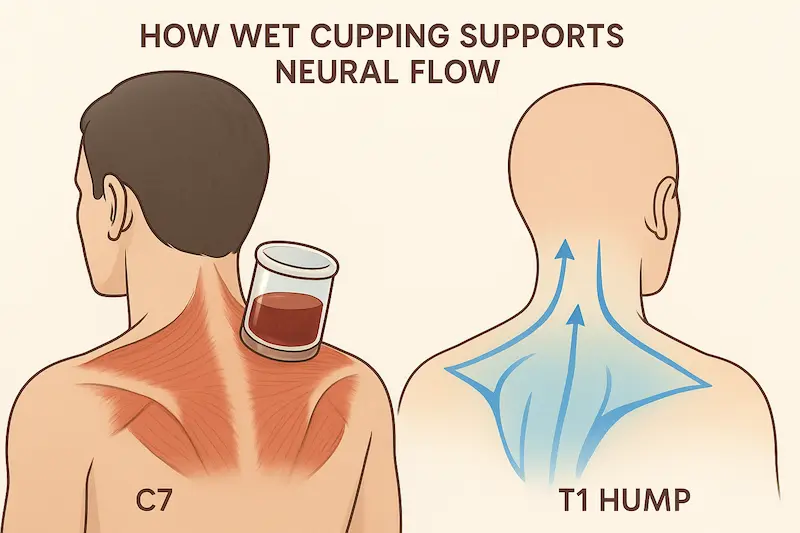
The C7-T1 junction marks the transition from the flexible cervical spine to the more rigid thoracic spine. Poor posture, prolonged sitting, or chronic stress often leads to a hump-like rounding in this area, which compresses muscles, fascia, and nerves. Consequences include:
- Muscle and fascial congestion: Tight trapezius, levator scapulae, and paraspinal muscles restrict blood flow and oxygen delivery.
- Nerve root compression: Minor pressure on the C7 and T1 spinal nerves can alter sensory input and motor signaling, creating subtle cognitive disruptions.
- Micro-inflammation: Accumulated metabolic waste irritates tissues, sending “fatigue-like” signals to the brain.
These combined factors may lead to brain fog, slowed cognitive processing, and perceived mental fatigue, even when overall sleep quality is adequate. Over time, the body’s stress response may increase cortisol levels, further affecting focus and alertness.
How Wet Cupping Supports Neural Flow in the C7-T1 Area
Wet cupping (bloodletting cupping) is a practical, evidence-informed technique to relieve tissue stagnation. By creating negative pressure on tight areas, it draws stagnant blood and interstitial fluids to the surface, improving circulation. When applied to the upper trapezius, C7, T1 hump, and adjacent shoulder points, wet cupping can:
- Enhance perfusion of spinal nerve roots: Better blood flow reduces compression, allowing clearer neural signals to reach the brain.
- Promote lymphatic drainage: Clearing metabolic waste and inflammatory byproducts reduces nerve irritation.
- Support sympathetic regulation: Localized reductions in tension can help modulate stress responses, indirectly improving cognitive function.
Clients often report improved alertness, reduced mental fog, and enhanced focus after sessions targeting the C7-T1 junction.
Integrating Wet Cupping Into a Neural Flow Routine
To maximize benefits, wet cupping works best alongside mindful posture and gentle mobility practices:
Postural alignment: Keeping the head properly stacked over the shoulders minimizes chronic compression at the C7-T1 hump. Maintaining awareness throughout daily activities—like sitting at a desk or using a phone—reinforces the effects of each cupping session.
Gentle stretching and movement: Targeted exercises for the upper trapezius, levator scapulae, and thoracic extension before or after cupping help improve tissue flexibility, reduce stiffness, and enhance circulation in the upper back and neck.
Hydration and micro-movement breaks: Regular water intake and short movement breaks support fluid dynamics and lymphatic flow, helping to sustain the benefits of wet cupping over the day.
Consistency matters. With repeated sessions and mindful support practices, many notice significant improvements in neck posture, shoulder tension, and mental clarity within 2–4 weeks. Over time, these small daily habits reinforce neural and muscular balance, making each wet cupping session more effective.
Beyond Neck Relief: Cognitive and Systemic Benefits
While wet cupping does not replace sleep, exercise, or nutrition, it addresses a unique pathway: clearing local congestion around critical neural junctions. For those struggling with subtle cognitive slowing, brain fog, or fatigue linked to neck and upper back tension, this approach can serve as a complementary tool to restore neural flow and enhance overall brain function
Feeling mentally foggy or noticing a rounded upper back? Targeted wet cupping around the (hump) C7-T1 can help reset neural flow and support sharper cognitive performance. learn our article about nervous system