
Toe tingling—whether it feels like tiny sparks, light pins and needles, or mild numbness—may seem like a small problem, but for many people it becomes surprisingly distracting. It affects balance, walking comfort, and even the ability to stand for long periods. While some assume it comes from nerve issues in the lower back, a large portion of toe tingling actually originates locally, especially across the top of the foot and the narrow space around the ankle where key digital nerves pass.
Wet cupping provides a decompressive, circulation-boosting approach that helps reduce the micro-compression responsible for toe tingling. Unlike stretching or massage—often too superficial for the tight dorsal tissues—wet cupping creates a negative-pressure lift that restores space around irritated nerves and helps the toes feel lighter and more responsive.
This article explains why toe tingling happens and how wet cupping helps restore nerve glide and digital comfort.
Why Toe Tingling Happens: The Physiological Chain Behind the Sensation
Toe sensation depends on small branches of the deep peroneal nerve and digital nerves that travel across tight anatomical zones. Along this pathway, three common problem areas frequently interrupt nerve flow.
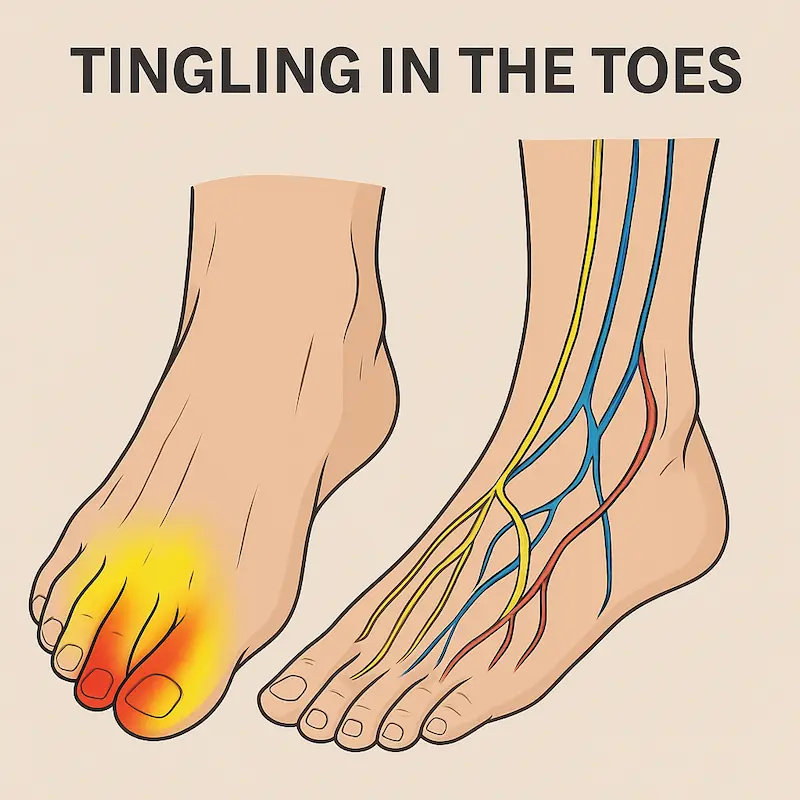
Micro-Compression Along the Digital Nerves (Top of Foot)
The dorsal foot contains a dense network of tiny nerves responsible for sensation in the toes. Tight footwear, prolonged standing, or walking on hard surfaces can create localized pressure throughout this region. Because the digital nerves are small and situated just beneath the skin and fascia, even mild congestion can trigger buzzing or numbness.
Typical symptoms include:
- Tingling spreading across the toes
- Light numbness when wearing shoes
- “Electric dust” sensations when wiggling the toes
- Difficulty sensing toe position during movement
Most people overlook this area because discomfort feels “in the toes,” even though the compression is occurring farther up the nerve line.
Tight Footwear Causing Dorsal Foot Congestion
Shoes that compress the midfoot—such as narrow sneakers, safety shoes, and high-performance athletic footwear—often lead to dorsal compression. Over time, the fascia and soft tissues stiffen, limiting circulation and irritating the nerve branches.
This mechanical pressure is one of the most common everyday causes of toe tingling.
Signs this is the culprit:
- Relief after removing shoes
- Tingling when walking downhill
- Numbness after long work shifts
- Pressure marks across the top of the foot
This compression rarely resolves with stretching alone because the dorsal fascia is thick and non-elastic.
Narrow Anatomical Tunnel at the Ankle (Extensor Retinaculum)
The extensor retinaculum is a natural strap that holds tendons and nerves in place as they cross the ankle. When tissue fluid increases—even slightly from inflammation, fluid retention, or repetitive strain—the deep peroneal nerve becomes irritated.
Symptoms include:
- Tingling between the big toe and second toe
- Numbness when flexing or pointing the foot
- Electric sensations when stepping or climbing stairs
- Increased sensitivity during long walks
This area responds extremely well to negative pressure because even a small decompressive change opens space for the nerves.
How Wet Cupping Helps Relieve Toe Tingling
Wet cupping does not claim to cure nerve disorders, but it helps reduce the mechanical and circulatory factors that irritate the digital nerves. When applied safely to the ankle area and dorsal foot, it produces four main physiological benefits:
Decompressing the Digital Nerve Pathway
Negative pressure lifts the fascia and soft tissues around the nerve branches. When congestion is reduced, nerve conduction becomes smoother, decreasing buzzing and pins-and-needles sensations.
Patients often describe a sudden return of “toe clarity” after the session.
Improving Microcirculation Across the Dorsal Foot
The top of the foot is an area with naturally sluggish circulation—especially under tight shoes or prolonged standing. Wet cupping improves oxygen delivery and supports tissue recovery.
Better circulation → calmer nerves → lighter toes.
Releasing Fascial Tightness Near the Ankle Retinaculum
Because the extensor retinaculum is a firm, non-stretching structure, tension in this zone easily irritates the deep peroneal nerve. Wet cupping helps soften the surrounding tissues, restoring glide and reducing mechanical pressure.
This is why many people notice immediate improvement in toe movement.
Enhancing Toe Mobility and Foot Lightness
After decompression, the digital nerves fire more efficiently. People commonly report:
- Easier toe spreading
- Better ground sensation
- Reduced “foot heaviness”
- Increased walking comfort
Toe tingling becomes less frequent—or disappears entirely—with consistent sessions and good foot habits.
Best Recovery Habits to Support Nerve Flow
- Wear wider toe-box shoes
- Avoid tight laces across the midfoot
- Hydrate well after sessions (1–1.5 liters)
- Do gentle toe waves and ankle circles
- Limit prolonged standing during flare-ups
Key Takeaways
- Toe tingling commonly comes from local compression at the dorsal foot and ankle—not only nerve issues in the spine.
- Tight footwear, anterior shin tension, and congestion around the extensor retinaculum are the leading triggers.
- Wet cupping helps by decompressing digital nerves, boosting microcirculation, relaxing fascia, and restoring natural toe mobility.
- Most people experience lighter toes, reduced buzzing, and improved walking comfort when combining sessions with proper footwear and hydration.
Toe tingling often comes from tension and nerve compression along the ankle and top of the foot. Wet cupping helps decompress these pathways, boost microcirculation, and ease the buzzing sensations in your toes.
Learn the safe, precise point system in our upcoming e-book, and discover how to practice wet cupping safely at home inside our free Natural Reset: Modern wet cupping made simple guide.