
Modern stress makes the body feel “always on,” especially when the neck and upper back stay tight for long hours. What many people don’t realize is that this tension doesn’t just cause discomfort — it also interferes with the vagus nerve, the major pathway that controls your calm, digestion, energy reset, and heart-rate balance.
Wet cupping, when applied to the upper trapezius, C7–T1 region, and shoulder points, offers a gentle but powerful way to release this tension and support a more balanced parasympathetic response. The effect isn’t direct stimulation of the nerve, but rather an improvement of the soft-tissue environment that surrounds its functional pathways.
Below is the full explanation of how it works — and why many people describe feeling lighter, calmer, and mentally clearer after a proper wet cupping session.
What the Vagus Nerve Actually Does (In Simple Terms)
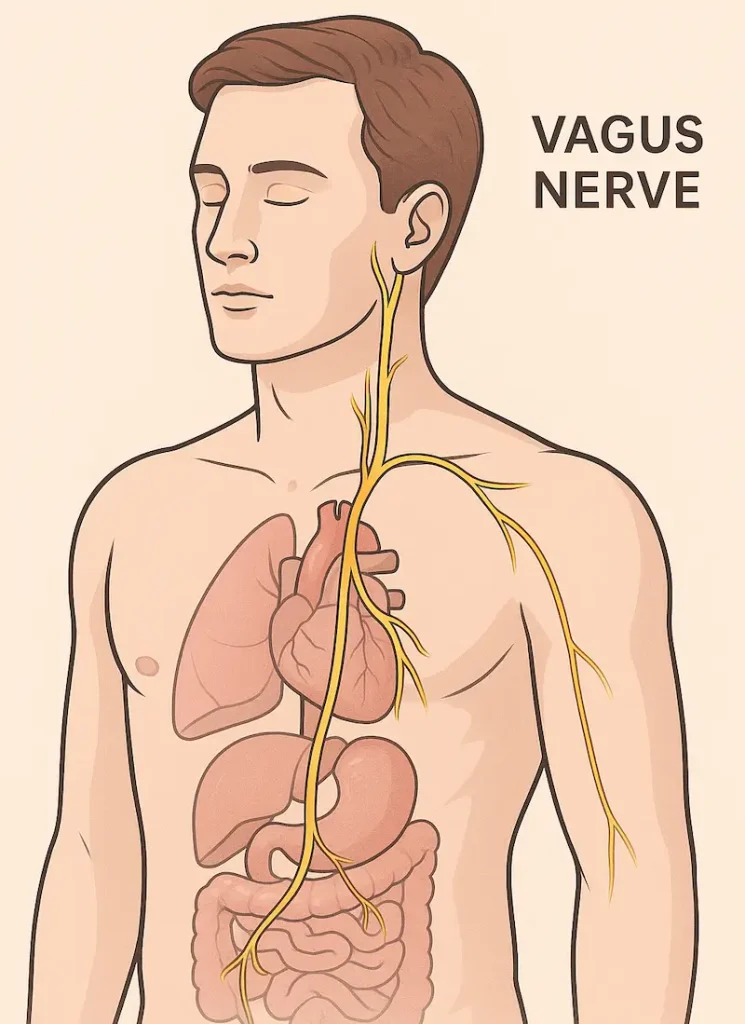
The vagus nerve is the longest parasympathetic nerve in the body. It starts at the brainstem and travels through the neck, chest, and abdomen. Almost every major organ receives signals from it:
- Heart: controls resting heart rate
- Lungs: influences breathing rhythm
- Stomach & intestines: drives digestion and motility
- Immune system: helps regulate inflammation
- Brain: sends “calm down” signals during recovery
When the vagus nerve works well, your body shifts smoothly between effort and relaxation. You stay alert but not anxious, calm but not sluggish, and digestion works the way it should.
The problem: modern lifestyles constantly push the body into sympathetic overdrive — the fight-or-flight mode — while the parasympathetic system doesn’t get enough chances to activate.
How Neck & Upper Back Tension Blocks Vagal Signaling
Even though wet cupping doesn’t touch the vagus nerve directly, the tissues around the C7–T1 junction, upper trapezius, and shoulders play a major supporting role. These areas act as “traffic zones” where:
- fascia around the nerve system connects
- lymphatic drainage flows upward
- muscle guarding increases pressure
- shallow breathing reduces calm signals
Here’s how tension builds up and affects vagal function:
Cervical Fascia Tightening
When the upper trapezius tenses for long periods, the fascia along the neck becomes stiff. This stiffness reduces the glide of nerve pathways near the thoracic inlet. Stiff fascia → more irritation → fewer calm signals reaching the brain.
Shoulder Girdle Compression
Rounded shoulders reduce space for lymph drainage and increase pressure on the structures surrounding the vagus. This creates a subtle inflammatory environment that slows recovery.
Reduced Chest Expansion
Tight traps pull the rib cage upward, making breathing shallow. Since vagus activation increases during slow, full exhalation, poor breathing means the parasympathetic system stays weak.
Sympathetic Overdrive
Chronic tension sends continuous “danger signals” to the brainstem. The body becomes stuck in a loop: tight muscles → stress response → even tighter muscles.
This is where wet cupping becomes useful — not because it manipulates the nerve directly, but because it unloads the tissues that influence vagus performance.
Why the C7–T1 and Upper Trapezius Region Are Important “Vagal Support Zones”
The area many people call the “hump” (C7–T1) is more than a postural landmark. Anatomically, it’s a junction where:
- cervical fascia meets thoracic fascia
- lymph flows toward the neck
- accessory nerve signaling interacts with shoulder muscles
- blood flow can stagnate due to poor posture
Any compression here creates a choke point for circulation and nervous-system balance.
Wet cupping on this zone helps by:
- Decompressing thick fascia
- Improving microcirculation
- Reducing chronic muscle guarding
- Supporting lymphatic flow
- Lowering irritants that interfere with nerve glide
This creates a better environment for vagal signaling to travel smoothly.
How Wet Cupping Stimulates a Vagal Reset
Wet cupping influences the vagus nerve in four main ways — indirectly but meaningfully.
Negative Pressure Lowers Nociceptive Input
Chronic tension generates pain signals that push the body into sympathetic mode. The suction from wet cupping reduces this input by pulling tissues away from tight compression. Less pain = fewer stress signals.
Gentle Blood Removal Reduces Local Inflammatory Load
The extracted blood often contains metabolic waste byproducts that accumulate in stagnant tissue. Removing them reduces micro-irritation, allowing the parasympathetic system to activate more easily.
Reflex Parasympathetic Activation
Many people feel warmth, heaviness, or a wave of calm after wet cupping. This is a sign of a parasympathetic shift — not mystical, but a physiological reflex triggered by decompression and pressure relief.
Better Thoracic Inlet Circulation
Improved flow around the thoracic inlet reduces stiffness around the pathways that influence vagal performance. Even subtle changes can shift the body into a recovery mode.
What People Commonly Feel After a Vagal Reset
The sensations vary from person to person, but many report:
- Deep relaxation or sleepiness
- Warm, loosened muscles around the neck and shoulders
- Less “brain fog”
- More fluid, effortless breathing
- A mild drop in heart rate
- Clearer head and better focus
This is consistent with the body re-entering a parasympathetic state.
Conditions That May Improve When Vagal Function Gets Better
Again, wet cupping is not a replacement for medical treatment, but supporting the vagus nerve may help with:
- Stress-related tension
- Mild anxiety-like tightness in the chest or throat
- Poor sleep quality
- Mini headaches
- Fatigue from sympathetic overdrive
- Neck and shoulder stiffness
- Slow recovery after long sitting or staring at screens
The mechanism is simple: better circulation + less stagnation → better signaling → more balanced stress response.
Best Habits to Pair With Wet Cupping for Vagus Activation
- Wet cupping becomes even more effective when paired with simple daily habits that keep the parasympathetic system active.
- Slow diaphragmatic breathing with long exhalations naturally boosts vagal tone.
- Add gentle neck mobility—rotations, side bends, and chin tucks—to maintain healthy nerve glide.
- Keep the jaw relaxed, because TMJ tension often tightens the upper trapezius.
- Support recovery with good hydration, and take micro-movement breaks to prevent stagnation.
These small routines help maintain openness in the vagal pathways and extend the calming effects of wet cupping.
Download the Natural Reset: Wet Cupping Made Easy free e-book tutorial and learn simple, evidence-informed steps to calm your vagus nerve, reduce micro-inflammation, and support daily resilience.