
Wet cupping is known for delivering noticeable relief—many people feel lighter, clearer, and less tense after just one session. But it’s also true that for others, progress feels slower. This doesn’t mean the method “failed.” Instead, the body is simply adjusting, reorganizing circulation, and recalibrating its internal balance.
Just like exercise, nutrition changes, or posture correction, wet cupping works best as a process. The results build, layer by layer, depending on your tension patterns, vascular congestion, and daily habits.
Below is a clear, evidence-informed explanation of why improvements aren’t always immediate—and how to make each session more effective.
Understanding How the Body Responds
Wet cupping affects multiple physiological networks at once: circulation, lymphatic flow, muscle tone, and the stress-tension axis. Because each person carries a different combination of blockages and lifestyle stressors, the response time varies.
Your tension map matters
Some people have migraines linked to SCM tension, neck stiffness, or upper-back congestion. Others have symptoms tied to sleep deficiency, hormonal patterns, digestive load, or chronic inflammation.
If your tension network is complex—or has been building for years—the first session may only “unlock the door” rather than fully clear the pathway.
Blood stagnation doesn’t normalize instantly
Wet cupping helps release micro-stagnation and improve perfusion. But the body still needs time to re-oxygenate tissues, drain metabolites, and adjust pressure gradients. Think of the first session as opening a channel; the subsequent sessions help widen and stabilize it.
Your nervous system is recalibrating
If your body lives in a long-term stress state, your muscles and vessels may not relax deeply during the first session. Once your nervous system learns the pattern of release, later sessions work faster and more effectively.
Why Frequency and Patience Matter
Each session builds on the previous one
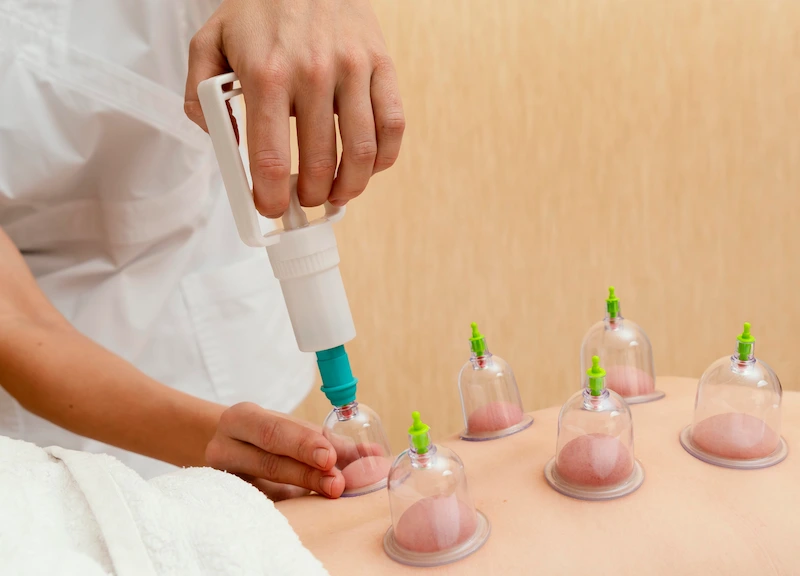
Wet cupping is cumulative, not one-time magic. The first session identifies where congestion sits. The second reduces its intensity. The third improves deeper circulation. Many people start feeling clearer results around the second or third visit because the body finally has enough circulation “momentum.”
This layered response is common in people with:
- chronic migraines
- hormonal-related headaches
- insomnia
- high muscle tension
- stress-driven neck and shoulder tightness
Ideal frequency for effective results
Most practitioners recommend:
- Once every 2 weeks for therapeutic progress.
- Once every 4–6 weeks for maintenance after improvements stabilize.
Too much spacing between early sessions slows progress; too frequent sessions may overwhelm recovery. The sweet spot is consistent—but balanced—repetition.
Patience helps your biology settle
Just as physical therapy doesn’t fix posture in a single day, wet cupping needs time for tissue remodeling, circulation shifts, and nervous-system recalibration. Patience isn’t passive—it’s part of the therapeutic design.
Supporting Habits and Routines
Even the best wet cupping protocol can only work as well as your daily habits allow. Symptoms like migraines, tension, or insomnia often come from lifestyle patterns that silently rebuild congestion.
Here’s how to make your wet cupping results stronger and longer-lasting.
Posture and micro-movement
Small daily corrections—lifting the chest, relaxing shoulders, gentle neck mobility—keep blood flow open between sessions. Stagnation quickly returns if your head stays forward for hours each day.
Hydration and mineral balance
Water, electrolytes, and steady nutrition help maintain the improved circulation that cupping creates. Dehydration thickens blood and slows recovery.
Stress-recovery practices
Slow breathing, light stretching, sunlight exposure, and consistent sleep ease the nervous system. This makes your muscles more responsive and prevents tension from re-accumulating.
Sleep quality matters
Deep sleep stabilizes hormonal rhythms and reduces inflammatory load, which directly influences how well you respond to wet cupping—especially for migraines, PMS tension, or stress-related headaches.
Consistency beats intensity
It’s not about doing everything perfectly. It’s about small, repeatable habits—the very things that allow the benefits of wet cupping to continue working long after each session ends.
Putting It All Together
Wet cupping does work—often powerfully—but not always instantly. Some people feel immediate relief; others need several sessions before changes become noticeable. This is normal, expected, and rooted in how the body heals.
When you combine:
- a well-designed cupping protocol,
- the right frequency, and
- supportive daily habits,
you give your body the best environment to respond, recover, and rebuild healthier patterns.
Wet cupping is a partnership between what happens on the table and what you do in between sessions. With patience and consistency, the results become clearer, deeper, and longer-lasting.