
Chest Tightness but Not Cardiac: The Overlooked Tension Pattern Around the Upper Back
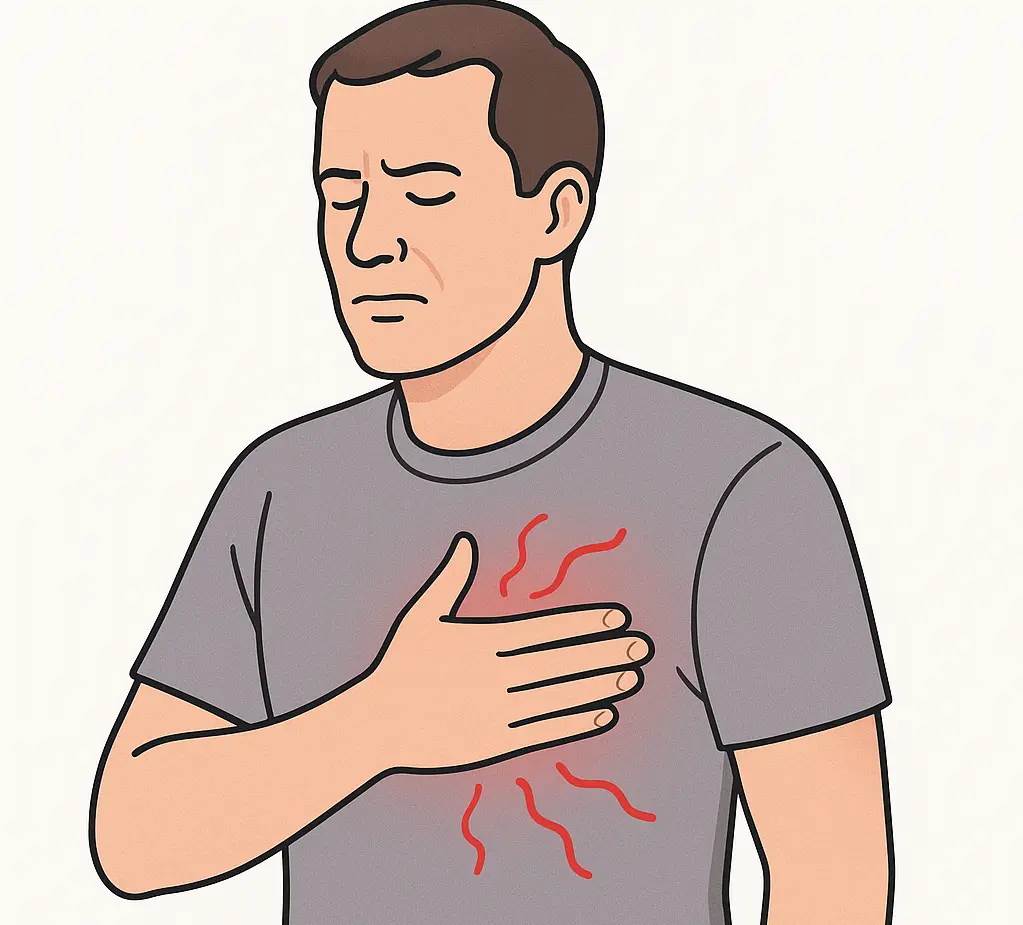
Many people feel chest tightness and immediately worry about the heart. But in a huge number of cases, the sensation doesn’t come from the heart at all. Instead, it comes from tension patterns around the upper back, rib cage, breathing muscles, and the shoulder girdle that create a pressure-like feeling across the chest. This non-cardiac chest tightness is surprisingly common—especially in people with heavy stress, long sitting hours, shallow breathing habits, and micro-inflammation around the upper back. Here’s how it works and what you can do to ease it naturally. Add Your Heading Text HWhy Chest Tightness Can Happen Even When the Heart Is Fineere Non Cardian Chest Tightness When the heart is not the source, the tightness often comes from: Rib cage stiffness The ribs expand and rotate every time you breathe. If the muscles between them become tight, you can feel pressure in the front of the chest. Upper back micro-inflammation Small pockets of stagnation around the upper spine—especially around the area that stabilizes your rib cage—can disrupt normal movement and create a “band-like” tightness across the front. Overactive upper chest breathing Stress shifts the body into shallow breathing. This activates the upper chest and neck muscles, causing sensations like: hard to take a full breath tight band across sternum chest feels heavy or squeezed Emotional stress patterns Stress can tighten the diaphragm and rib cage without you realizing it, making the chest feel constricted even when physically nothing is wrong. The Upper-Back Connection: The Core of Non-Cardiac Chest Tightness Most people are surprised that the feeling in the front of the body actually starts from the back. Here’s the overlooked mechanism: The upper back stabilizes the ribs. When this area becomes stiff or inflamed, the ribs stop moving smoothly. When the ribs lose mobility, the front of the chest compensates. The muscles in the front tighten to “hold everything together,” creating pressure or heaviness. This is why many people feel: tight chest + tight mid-upper back chest pressure when sitting relief when stretching the back And this is also why many cases improve when the rear tension is addressed first, not the front Breathing Muscles Often Cause Chest Pressure The diaphragm, intercostals (rib muscles), and small chest muscles can all mimic cardiac symptoms when they’re tight. Signs the tightness is muscular—not cardiac: improves when stretching worse with long sitting triggered by stress or anxiety feels like you can’t “complete a breath” disappears when lying on the side If you can reproduce the sensation by pressing your chest, rib cage, or upper-back muscles, it’s usually a mechanical (not cardiac) issue. How Wet Cupping Helps the Upper-Back Mechanism Wet cupping isn’t a replacement for medical care—but for non-cardiac chest tightness caused by muscular and fascial tension, many people report relief because of how it affects the upper back. How it helps: reduces stagnant tension around the upper spine improves circulation in the rib-supporting muscles helps restore fluid glide between tissues triggers deeper breathing by relaxing the rib cage improves parasympathetic activation (calming response) When the upper-back “traffic jam” eases, the front of the chest naturally relaxes without forcing it. Simple Daily Techniques to Reduce Chest Tightness You can support recovery with: Gentle rib-expansion breathing. Place hands on the sides of your ribs.Breathe into your palms for 4 seconds → exhale for 6 seconds. This retrains the diaphragm and reduces upper-chest tension. Upper-back mobility. Cat–cow, thoracic rotations, and wall extensions help restore rib cage glide. Hydration for fascia fluidity. Many people with chronic chest and rib tightness are mildly dehydrated, which reduces fascia elasticity. Break up long sitting. Every 30 minutes, do; shoulder rolls, rib mobilization, deep breath + back extension The goal isn’t stretching harder—it’s restoring smooth rib and spine movement. When to Seek Medical Evaluation Although non-cardiac chest tightness is common, seek medical care if you experience: sudden severe chest pain pain spreading to jaw or left arm dizziness or fainting shortness of breath unrelated to anxiety chest pressure during exercise If a doctor clears your heart, the upper-back + rib cage mechanism is the next most likely source. If your chest tightness keeps returning even after doctor clearance, learn the simple upper-back wet cupping approach that helps restore rib mobility, improve breathing depth, and reduce daily pressure sensations — and while you’re at it, explore wet cupping for heart-health support to ease chest discomfort from two angles at once.
Wet Cupping for Shoulder Pain: The Hidden Role of Upper Back Micro-Inflammation
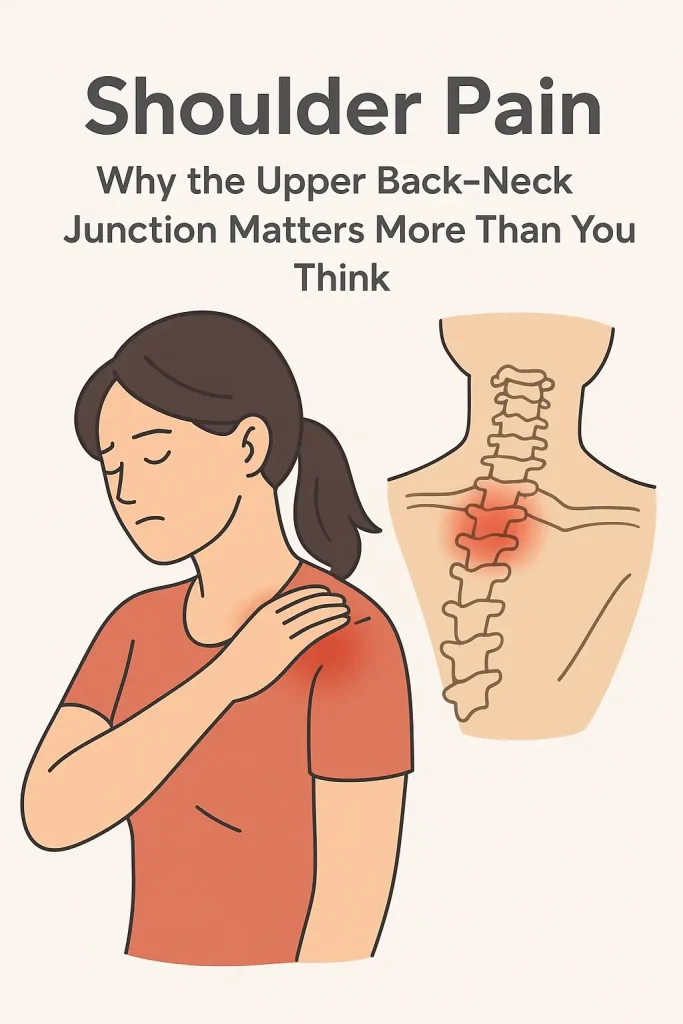
Many people assume shoulder pain comes from the shoulder itself. But in modern daily life—long sitting, computers, phones, and low activity—the shoulder often becomes the “victim” of deeper tension patterns coming from the upper back–neck junction. When this high-traffic area becomes overloaded, circulation slows, tissues tighten, and the shoulder begins to feel heavy, stiff, or painful. Even after massage, stretching, or rest, the discomfort often returns because the deeper source was never addressed. This article explores why shoulder pain is often linked to the upper back, how this tension spreads into the shoulder, and how wet cupping can help improve circulation and tissue comfort. Why the Pain Often Starts Above the Shoulder Although the ache is felt in the shoulder, the chain reaction usually begins higher up. Three key mechanisms explain this pattern Postural overload at the neck–upper back transition This area works like a structural “bridge.”When the head sits slightly forward—common with screens—the tissues at this junction absorb more load. Over time, this can lead to: tightness at the base of the neck stiffness spreading into the upper shoulder a sense of heaviness around the shoulder blade Because this region anchors many shoulder-supporting muscles, even mild congestion here can make the shoulder feel fatigued quickly. Reduced circulation in the upper back When the upper back becomes tense, blood flow and fluid movement slow down.Tissues under low circulation tend to feel: dense tired swollen or “full” easily irritated by small movements The shoulder sits directly downstream from this area.So when circulation drops above it, the shoulder loses its natural glide and becomes more sensitive to stress. Fascial pathways that link the neck, upper back, and shoulder The fascia behind the shoulder is interconnected with the base of the neck and upper spine.When the upper back stiffens, the shoulder blade often loses its smooth motion.You may feel this as: a pulling sensation difficulty raising the arm fully tension that moves from the neck into the shoulder This explains why people often say:“My shoulder hurts, but the center of the tension is actually above it.” How Wet Cupping Helps Reduce Upper-Back Stagnation and Shoulder Heaviness Wet cupping can be helpful for shoulder discomfort because it targets the areas where congestion builds before it reaches the shoulder. wet cupping and shoulder pain Improving circulation at the neck–upper back junction Applying cups here helps draw blood to the surface and release congested tissue layers that strain the shoulder.Once fluid movement improves, the shoulder often feels: lighter looser more mobile This is not because the shoulder magically heals, but because the “traffic jam” upstream begins to clear. Releasing tension in the upper trapezius The upper trapezius is usually the first muscle to react when posture becomes stressed.It tightens quickly, compresses the upper back, and increases the load on the shoulder. Wet cupping over the upper trapezius can help: reduce muscle density soften chronic tightness restore comfort when turning or lifting the arm Many people report that their shoulder mobility improves immediately after tension in this area decreases. Supporting smoother motion around the shoulder joint When shoulder cups are added, they help clear local stagnation that forms after weeks or months of compensating for upper-back overload. People often notice: better range of motion less pulling under the shoulder blade reduced discomfort when reaching overhead The combination of clearing upstream congestion + local stagnation gives a more complete benefit. Signs Your Shoulder Pain Is Coming From the Upper Back If you feel any of the symptoms below, the root is likely above the shoulder: shoulder heaviness that gets worse with sitting upper trapezius tightness that keeps returning discomfort when turning your head tension that feels like it “climbs” between neck and shoulder a stiff or tight feeling behind the shoulder blade pain that improves when you stretch your upper back These patterns indicate that shoulder structures are reacting to something happening in the region above them—not failing on their own. Habits That Support Better Shoulder Comfort Wet cupping becomes much more effective when combined with small daily habits. Keep your head aligned over your shoulders This reduces compression at the neck–upper back junction, lowering the load on the shoulder. Add gentle upper-back and shoulder mobility Simple movements (30–45 seconds): shoulder rolls scapular retraction slow thoracic extension These micro-movements help circulate fluids throughout the upper back. Stay hydrated Well-hydrated tissues are more elastic and respond better to circulation-focused treatments. When to Seek Medical Advice Consult a professional if your shoulder pain includes: sudden weakness persistent numbness severe night pain history of trauma or accident chest-related symptoms For everyday tension, posture, and mild movement discomfort, improving circulation in the upper back is often enough to bring meaningful relief. Ready to restore lighter, freer shoulder movement? Learn the safest way to perform wet cupping at home and support better circulation starting today.
Micro-Inflammation Around the Upper Back — The Hidden Driver of Fatigue and Shoulder Heaviness

If your upper back often feels heavy, tight, or tired—even on days when you don’t do much—there’s a good chance you’re dealing with something called micro-inflammation. It’s subtle, easy to miss, and rarely reaches the level of obvious pain. But its impact on energy, posture, and daily comfort can be surprisingly big. For many people, the C7–T1 region (the small “hump” area at the base of the neck) becomes the main location where this slow-burning irritation builds up. And when it stays there too long, everything from shoulder mobility to stress levels can be affected. Here’s what’s actually happening inside those tissues—and how wet cupping helps reset the system. What Micro-Inflammation Actually Is Micro-inflammation is a low-grade, chronic form of inflammation that develops slowly over time. It doesn’t cause the classic signs of injury—no swelling, no sharp pain, no dramatic heat. Instead, it sits beneath the surface, quietly affecting circulation, fascia, and muscle function. Unlike acute inflammation, which appears after injury and brings strong, noticeable symptoms, micro-inflammation is more like a persistent “background irritation.”It: reduces local oxygenation disrupts microcirculation increases tissue density and stiffness triggers protective muscle guarding Because it doesn’t shout, most people ignore it for months or years. Yet its effects accumulate: heavier shoulders, more fatigue, more stiffness, and slower recovery after sitting or working for long periods. Sign of micro inflammation Why the Hump (C7–T1) Region Is So Prone to Micro-Inflammation Forward Head Posture Overloads This Area For every centimeter your head moves forward, the load on C7–T1 increases dramatically—sometimes up to three or four times its normal stress. This constant pressure irritates the tissues around the base of the neck. Stagnant Fascia and Lymph Flow The upper back is a major intersection of fascia layers and small lymph vessels. When movement is minimal (such as hours of sitting), these fluids move slower: fascia becomes dense lymph collects metabolic waste accumulates This stagnation directly fuels micro-inflammation. Static Load from Long Sitting Even if you’re not lifting anything heavy, sitting for long periods places a static workload on the upper trapezius, levator scapulae, and thoracic muscles. Static load means the muscles contract slightly but continuously, preventing proper blood flow. Stress-Driven Muscle Guarding The upper trapezius is one of the first muscles to tighten during stress, anxiety, or lack of sleep. Chronic guarding irritates small fibers and creates low-grade inflammation in the C7–T1 region. Signs You Might Have Micro-Inflammation Even without major pain, the symptoms can be surprisingly clear when you know what to look for: Shoulder Heaviness A dull heaviness, especially after sitting or looking down at a phone. Easy Fatigue in the Neck and Upper Back The tissues become inefficient, so they fatigue faster than usual. Mini Headaches The irritation around C7–T1 can affect nerve pathways toward the head, creating brief headaches that come and go. Warm or Tender Spots Pressing certain points produces mild soreness or warmth—typical signs of low-grade inflammation. Slow Recovery After Sitting Standing up after long sitting feels stiff, tight, or “compressed,” and it takes a while before you feel normal again. How Wet Cupping Helps Reduce Micro-Inflammation Wet cupping is uniquely effective for this region because it acts on both the fluid systems (blood + lymph) and the fascial layers—two major components behind micro-inflammation. Negative Pressure Improves Microcirculation The gentle suction lifts the skin and superficial fascia, increasing blood flow to areas that are usually compressed or stagnant.This brings: new oxygen fresh nutrients better waste removal It’s a direct reset for microcirculation. Gentle Blood Removal Reduces Local Irritants Removing a small amount of superficial blood helps decrease: inflammatory mediators metabolic waste local heat buildup Many people describe a “lighter” feeling after cupping for this reason. Fascia Decompression Reduces Pain Signals When the fascia becomes stiff, it compresses nerves and sends constant low-level pain signals.Cupping: lifts the fascia restores glide reduces compression calms pain receptors This helps muscles stop overprotecting themselves. Why Upper Traps, C7, T1, and Shoulder Points Matter These points are strategic because they sit right on: major lymphatic drainage pathways cervical–thoracic nerve glide routes the postural “crossroads” that carry head weight areas of maximum daily stiffness Releasing them makes the entire neck-shoulder complex feel lighter and more balanced. Complementary Habits to Keep Micro-Inflammation Low Wet cupping gives a strong reset, but daily habits determine whether the tissues stay healthy or return to stiffness. Hydration Fluid balance improves lymph flow and helps prevent tissue stagnation. Micro-Movement Breaks Standing up, rolling shoulders, or extending the spine for 10–20 seconds every 30–45 minutes acts as a natural pump that prevents inflammation from building. Thoracic Extension Opening the chest and upper back reduces the load on C7–T1 and improves posture-related strain. Breathing Patterns Slow diaphragmatic breathing lowers sympathetic tension, reduces muscle guarding, and supports recovery. Relieve upper back tension and boost energy—explore simple wet cupping steps you can safely try at home!
How Wet Cupping Supports Vagus Nerve Function — A Natural Way to Reset Calm, Energy, and Stress Recovery
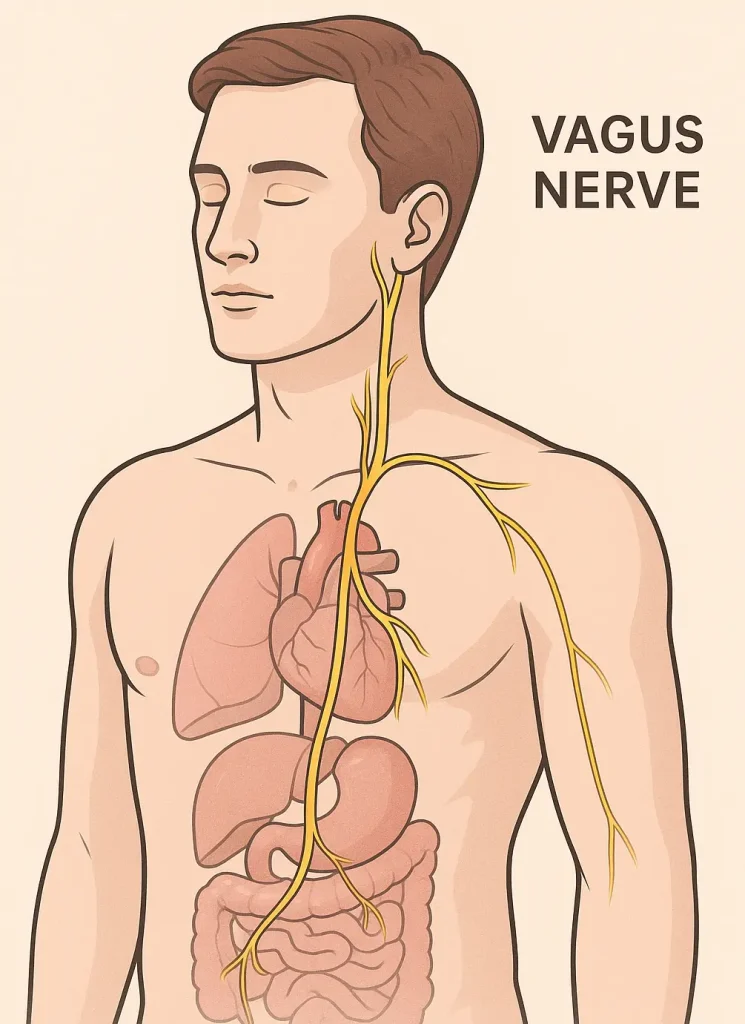
Modern stress makes the body feel “always on,” especially when the neck and upper back stay tight for long hours. What many people don’t realize is that this tension doesn’t just cause discomfort — it also interferes with the vagus nerve, the major pathway that controls your calm, digestion, energy reset, and heart-rate balance. Wet cupping, when applied to the upper trapezius, C7–T1 region, and shoulder points, offers a gentle but powerful way to release this tension and support a more balanced parasympathetic response. The effect isn’t direct stimulation of the nerve, but rather an improvement of the soft-tissue environment that surrounds its functional pathways. Below is the full explanation of how it works — and why many people describe feeling lighter, calmer, and mentally clearer after a proper wet cupping session. What the Vagus Nerve Actually Does (In Simple Terms) Vagus Nerve Illustration The vagus nerve is the longest parasympathetic nerve in the body. It starts at the brainstem and travels through the neck, chest, and abdomen. Almost every major organ receives signals from it: Heart: controls resting heart rate Lungs: influences breathing rhythm Stomach & intestines: drives digestion and motility Immune system: helps regulate inflammation Brain: sends “calm down” signals during recovery When the vagus nerve works well, your body shifts smoothly between effort and relaxation. You stay alert but not anxious, calm but not sluggish, and digestion works the way it should. The problem: modern lifestyles constantly push the body into sympathetic overdrive — the fight-or-flight mode — while the parasympathetic system doesn’t get enough chances to activate. How Neck & Upper Back Tension Blocks Vagal Signaling Even though wet cupping doesn’t touch the vagus nerve directly, the tissues around the C7–T1 junction, upper trapezius, and shoulders play a major supporting role. These areas act as “traffic zones” where: fascia around the nerve system connects lymphatic drainage flows upward muscle guarding increases pressure shallow breathing reduces calm signals Here’s how tension builds up and affects vagal function: Cervical Fascia Tightening When the upper trapezius tenses for long periods, the fascia along the neck becomes stiff. This stiffness reduces the glide of nerve pathways near the thoracic inlet. Stiff fascia → more irritation → fewer calm signals reaching the brain. Shoulder Girdle Compression Rounded shoulders reduce space for lymph drainage and increase pressure on the structures surrounding the vagus. This creates a subtle inflammatory environment that slows recovery. Reduced Chest Expansion Tight traps pull the rib cage upward, making breathing shallow. Since vagus activation increases during slow, full exhalation, poor breathing means the parasympathetic system stays weak. Sympathetic Overdrive Chronic tension sends continuous “danger signals” to the brainstem. The body becomes stuck in a loop: tight muscles → stress response → even tighter muscles. This is where wet cupping becomes useful — not because it manipulates the nerve directly, but because it unloads the tissues that influence vagus performance. Why the C7–T1 and Upper Trapezius Region Are Important “Vagal Support Zones” The area many people call the “hump” (C7–T1) is more than a postural landmark. Anatomically, it’s a junction where: cervical fascia meets thoracic fascia lymph flows toward the neck accessory nerve signaling interacts with shoulder muscles blood flow can stagnate due to poor posture Any compression here creates a choke point for circulation and nervous-system balance. Wet cupping on this zone helps by: Decompressing thick fascia Improving microcirculation Reducing chronic muscle guarding Supporting lymphatic flow Lowering irritants that interfere with nerve glide This creates a better environment for vagal signaling to travel smoothly. How Wet Cupping Stimulates a Vagal Reset Wet cupping influences the vagus nerve in four main ways — indirectly but meaningfully. Negative Pressure Lowers Nociceptive Input Chronic tension generates pain signals that push the body into sympathetic mode. The suction from wet cupping reduces this input by pulling tissues away from tight compression. Less pain = fewer stress signals. Gentle Blood Removal Reduces Local Inflammatory Load The extracted blood often contains metabolic waste byproducts that accumulate in stagnant tissue. Removing them reduces micro-irritation, allowing the parasympathetic system to activate more easily. Reflex Parasympathetic Activation Many people feel warmth, heaviness, or a wave of calm after wet cupping. This is a sign of a parasympathetic shift — not mystical, but a physiological reflex triggered by decompression and pressure relief. Better Thoracic Inlet Circulation Improved flow around the thoracic inlet reduces stiffness around the pathways that influence vagal performance. Even subtle changes can shift the body into a recovery mode. What People Commonly Feel After a Vagal Reset The sensations vary from person to person, but many report: Deep relaxation or sleepiness Warm, loosened muscles around the neck and shoulders Less “brain fog” More fluid, effortless breathing A mild drop in heart rate Clearer head and better focus This is consistent with the body re-entering a parasympathetic state. Conditions That May Improve When Vagal Function Gets Better Again, wet cupping is not a replacement for medical treatment, but supporting the vagus nerve may help with: Stress-related tension Mild anxiety-like tightness in the chest or throat Poor sleep quality Mini headaches Fatigue from sympathetic overdrive Neck and shoulder stiffness Slow recovery after long sitting or staring at screens The mechanism is simple: better circulation + less stagnation → better signaling → more balanced stress response. Best Habits to Pair With Wet Cupping for Vagus Activation Wet cupping becomes even more effective when paired with simple daily habits that keep the parasympathetic system active. Slow diaphragmatic breathing with long exhalations naturally boosts vagal tone. Add gentle neck mobility—rotations, side bends, and chin tucks—to maintain healthy nerve glide. Keep the jaw relaxed, because TMJ tension often tightens the upper trapezius. Support recovery with good hydration, and take micro-movement breaks to prevent stagnation. These small routines help maintain openness in the vagal pathways and extend the calming effects of wet cupping. Download the Natural Reset: Wet Cupping Made Easy free e-book tutorial and learn simple, evidence-informed steps to calm your vagus nerve, reduce micro-inflammation, and support daily resilience.
Jaw Tension and Stress Hormones — How Wet Cupping Can Ease TMJ & Restore Mental Clarity
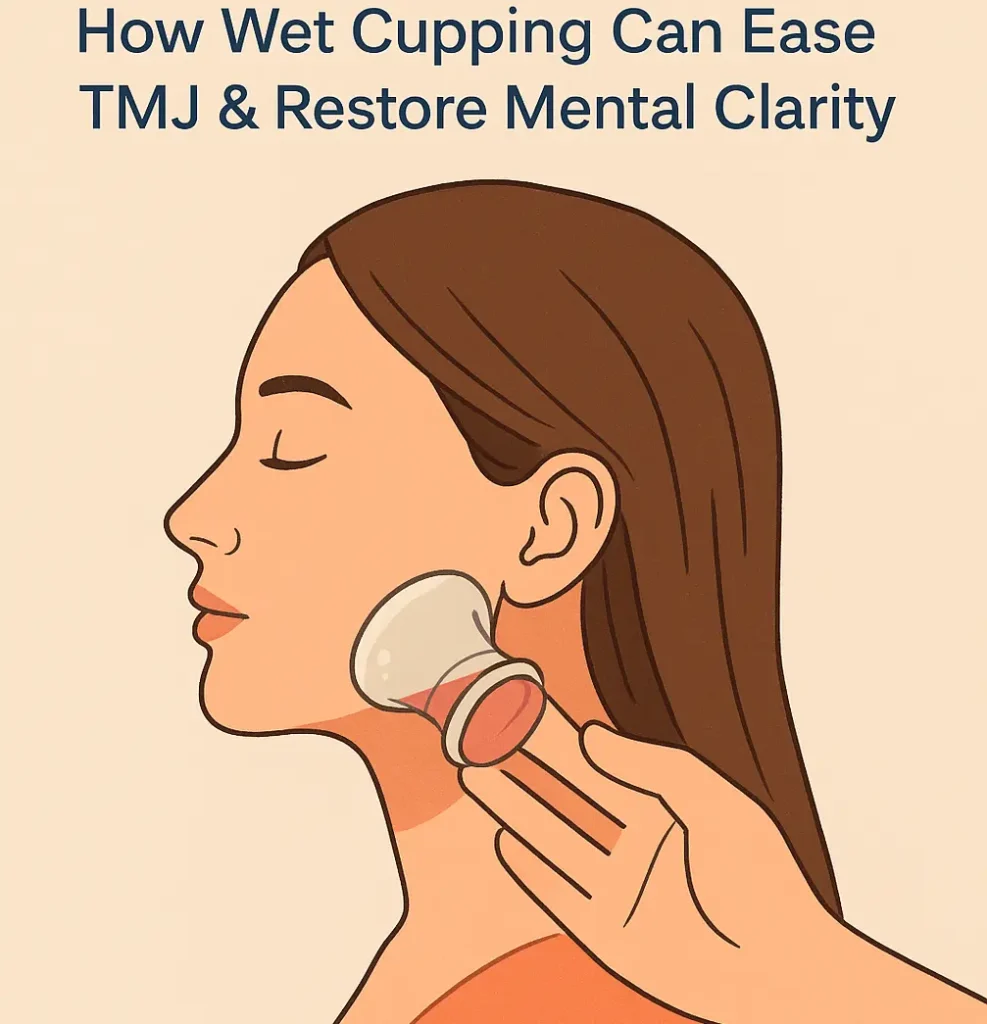
Jaw tension—commonly linked to TMJ (temporomandibular joint) dysfunction—affects more than just your jaw. Many people experience stiffness, clenching, or even discomfort around the ears and neck. While occasional tension is normal, chronic jaw tightness can contribute to stress hormone imbalance and decreased mental clarity. Emerging evidence suggests that wet cupping can play a supportive role in easing jaw tension, improving circulation, and enhancing cognitive focus. Understanding Jaw Tension and Its Impact wet cupping for jaw tension illustration The jaw is tightly connected to the neck, shoulders, and upper spine. Stress, poor posture, or teeth grinding often cause the masseter, temporalis, and surrounding muscles to tighten. This tension can trigger: Headaches or migraines Neck and shoulder stiffness Difficulty concentrating Elevated cortisol levels When muscles around the jaw remain contracted, the body interprets this as a stress signal, activating the HPA axis (hypothalamic-pituitary-adrenal axis). Over time, chronic HPA axis activation leads to persistent stress, fatigue, and reduced mental clarity. How Wet Cupping Helps Jaw Tension Wet cupping involves placing cups on specific points and creating mild suction while allowing a small amount of blood to be drawn. Though primarily known for shoulder or neck applications, wet cupping can indirectly benefit jaw tension by targeting: Neck and Upper Trapezius Relieves stiffness that contributes to jaw clenching. Improves lymphatic and blood flow to the upper head and face. C7–T1 and Shoulder Points Reduces accumulated muscular stress along the spine. Promotes relaxation signals that travel to the jaw muscles. By addressing these supporting areas, wet cupping can reduce overall muscle tension, which in turn decreases stress hormone activation and improves mental clarity. Practical Tips to Enhance Results While wet cupping can help, combining it with mindful movement and lifestyle adjustments maximizes its benefits: Jaw Mobility Exercises: Gentle stretches for the masseter and temporalis muscles before or after cupping. Postural Awareness: Keeping shoulders relaxed and head aligned over the spine prevents unnecessary jaw strain. Stress Management: Deep breathing, meditation, or short breaks during work reduce HPA axis activation. Hydration and Micro-Movements: Drinking water and taking short movement breaks improve circulation and support tissue recovery. Even small adjustments can amplify the effects of wet cupping, making the jaw and associated muscles more responsive to therapy. Why This Approach Works for Mental Clarity Muscle tension doesn’t just cause physical discomfort—it impacts cognitive performance. Restricted blood and lymph flow can reduce oxygen and nutrient delivery to the brain. By alleviating tension in the neck, shoulders, and upper spine, wet cupping encourages better circulation. This: Supports nutrient delivery to neural tissue Reduces stress hormone overload Enhances alertness, focus, and clarity Combined with regular posture awareness and mindful breaks, this approach provides a natural boost to cognitive sharpness, especially for people who experience jaw clenching from work stress or long hours of screen time. Who Can Benefit Most Individuals with chronic jaw tension or TMJ discomfort People experiencing stress-related headaches or mental fatigue Those with neck and shoulder stiffness affecting jaw function Anyone looking for a natural, non-pharmaceutical way to support mental clarity Wet cupping should be applied by a trained practitioner, especially when targeting areas that influence the HPA axis. It’s safe, minimally invasive, and complements other lifestyle interventions like stretching, hydration, and mindfulness. Key Takeaways Chronic jaw tension is more than a minor discomfort—it can elevate stress hormones and impair mental clarity. Wet cupping, when applied to neck, shoulder, and upper spine points, can relieve muscle tension that indirectly affects jaw tightness. Combining wet cupping with posture correction, jaw mobility exercises, and stress management maximizes benefits. Regular practice may lead to improved focus, cognitive sharpness, and reduced HPA axis stress, supporting both mental and physical well-being. By understanding the connection between jaw tension, stress hormones, and circulation, you can take proactive steps to restore mental clarity naturally—and wet cupping can be a central part of that strategy. Want to reduce stress and boost clarity naturally? Learn more about wet cupping.
The Hidden Link Between Shoulder Tension and Stress Hormones — How Wet Cupping Helps Reset the HPA Axis
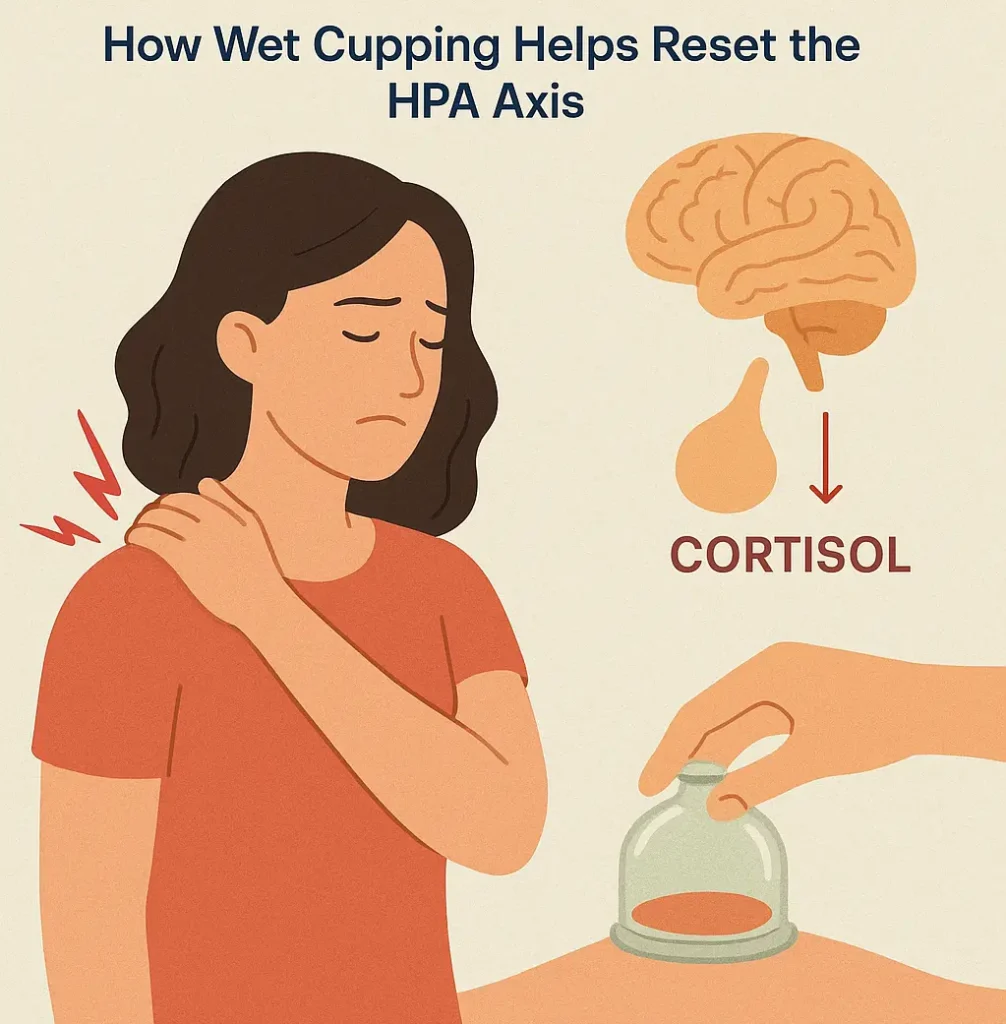
When Shoulder Tension Goes Beyond Muscles Many people associate shoulder tension with posture or overuse, but the impact goes far deeper. Chronic tightness in the shoulders can influence the Hypothalamic-Pituitary-Adrenal (HPA) axis, the body’s central stress regulation system. Over time, this tension may subtly elevate cortisol levels, contributing to fatigue, irritability, and anxiety, even in individuals who sleep well and maintain an active lifestyle. While traditional remedies focus on stretching or massage, wet cupping has emerged as a supportive practice that can reduce shoulder tension and promote physiological balance through its effects on microcirculation and the nervous system. This article explores the physiological link between shoulder tension and stress hormones and explains how wet cupping can safely support HPA axis balance. Understanding the Shoulder–HPA Axis Connection The Role of Shoulder Muscles in Stress Physiology The upper trapezius, levator scapulae, and surrounding muscles are key postural stabilizers. Chronic tension in these areas can: restrict local blood flow compress small sensory nerves trigger a persistent low-level stress response When these muscles are tense, sensory feedback to the brain signals ongoing discomfort, prompting subtle activation of the HPA axis. Link Between Shoulders Tension and Stress Hormone Cortisol and Chronic Low-Level Stress The HPA axis regulates cortisol, a hormone essential for: metabolism immune response alertness and stress adaptation Persistent shoulder tension can lead to repeated mild HPA activation. While not immediately harmful, sustained low-level cortisol elevation can cause: daytime fatigue mild anxiety or nervousness difficulty concentrating reduced resilience to new stressors This is a physiological explanation for why people feel “drained” or tense even when external stressors are minimal. Muscle Tension as a Stress Feedback Loop Tense shoulder muscles create a feedback loop: Muscle tightness signals stress HPA axis releases cortisol Cortisol subtly primes muscles to remain tense Cycle repeats, increasing physiological fatigue This is why tension in shoulders is not merely a musculoskeletal issue—it affects systemic stress regulation. How Wet Cupping Supports HPA Axis Balance Wet cupping is not a medical treatment for hormonal disorders. However, it can be incorporated safely as a supportive physiological practice to reduce muscle tension and gently influence the HPA axis. Reducing Local Muscle Tension By creating gentle negative pressure over the upper trapezius and shoulder line, wet cupping: relaxes tight muscle fibers improves tissue pliability reduces mechanical stress on sensory nerves This decreased tension lowers continuous stress signals to the brain, which helps HPA activity normalize. Improving Microcirculation Cupping draws blood to the superficial layers of the skin and muscle, promoting: enhanced local blood flow better oxygen and nutrient delivery removal of metabolic byproducts Improved circulation supports muscle recovery and reduces physical stress, indirectly reducing HPA overactivation Supporting Nervous System Balance Relaxed muscles + improved circulation communicate through sensory pathways to the central nervous system: parasympathetic activation increases sympathetic overdrive decreases subtle recalibration of HPA axis occurs This doesn’t replace healthy sleep or stress management but supports a calmer physiological baseline. Practical Tips to Complement Wet Cupping To maximize benefits, combine wet cupping with simple daily habits: Posture Awareness Sit with shoulders relaxed and back supported Avoid forward-head tilt Micro-adjust every 30–60 minutes Gentle Stretching Shoulder rolls, scapular retractions, and neck mobility exercises 1–2 minutes per session can maintain pliability Deep Breathing Slow diaphragmatic breaths reduce sympathetic tension Encourages parasympathetic dominance, supporting HPA balance Hydration and Micro-Breaks Adequate water intake maintains circulation Standing or moving briefly every hour reduces tension accumulation When paired with wet cupping, these habits enhance comfort, circulation, and physiological resilience. Takeaway Chronic shoulder tension is more than a postural problem—it can subtly dysregulate the HPA axis, contributing to fatigue, mild anxiety, and stress vulnerability. Wet cupping offers a safe, supportive approach to: relieve muscle tightness improve local microcirculation help rebalance autonomic and stress response systems While it is not a replacement for sleep, healthy lifestyle, or medical care, wet cupping can complement a holistic stress management routine, promoting daily comfort, better focus, and resilience to physiological stress. Download “Natural Reset: Wet Cupping Made Easy” — your free guide to targeting shoulder tension and supporting stress balance through precise cupping points.
Why Poor Neck Circulation Makes You Sleepy During the Day — and How Wet Cupping Supports Better Blood Flow

When Daytime Sleepiness Isn’t About Sleep Debt Many people feel unexpectedly sleepy in the middle of the day—even after a full night’s rest. Heavy eyes, drifting focus, frequent yawning, or sudden “blank moments” often appear without warning. While most people assume this is simple fatigue, one overlooked contributor is poor neck circulation, especially around the upper trapezius, cervical muscles, and the C7 area. The neck acts as a narrow passageway for oxygen-rich blood traveling to the brain. When this region is tense or stagnant, the delivery of oxygen and nutrients can become less efficient. This creates a sensation that feels like sleepiness, even when you are not truly tired. This article explains the physiology behind daytime drowsiness and how wet cupping can be used as a supportive practice to ease neck tension and encourage better blood flow. Sleepy during working time illustration Why Neck Circulation Affects Alertness Your Brain Depends on Steady Oxygen Flow The brain uses about 20% of the body’s oxygen supply. Blood carrying this oxygen travels through vessels that pass through the neck. When the muscles surrounding these vessels become tight, oxygen delivery can become slightly reduced. It’s subtle, but enough to trigger early signs of sleepiness: heavy eyelids frequent yawning brief lapses in focus a sense of mental “fog” This is not deep fatigue—it is mild under-stimulation, a state where the brain receives less oxygen and fewer sensory inputs than it needs to stay fully alert. Tension in Cervical and Upper Trapezius Muscles Muscles such as the upper trapezius, scalene, levator scapulae, and small cervical stabilizers can become tight due to: long hours of sitting screen-focused work forward-head posture low-grade stress When these muscles tighten, they may compress small vessels (microvessels) and reduce microcirculation. With less efficient blood flow, both oxygen and nutrients reach the brain more slowly, producing a subtle sleep-like sensation. Autonomic Nervous System Overload The cervical region also houses important pathways of the autonomic nervous system. When the neck is stiff, the sympathetic system (your alertness and focus regulator) must work harder. Over time, this creates nerve fatigue, leading to: sudden drowsiness brief “micro-fade” episodes head nodding without awareness short moments of losing concentration This is sometimes mistaken for laziness or lack of willpower, but physiologically, it’s simply overloaded neck tissues sending incomplete signals to the brain. Why Daytime Sleepiness Often Starts from the Neck Many people assume daytime drowsiness is caused by bad sleep patterns. In reality, a significant percentage comes from upper-body fatigue. When the neck and shoulders remain tense for long periods: blood flow slows nerve signaling becomes less efficient sympathetic pathways stay overactivated the brain receives fewer sensory inputs The result is something that feels like “being sleepy,” even if you are mentally fine. This explains why: driving long distances causes drowsiness meetings trigger yawning sitting too long lowers alertness working at a laptop makes the head feel heavy This isn’t psychological—it’s physiological sleepiness How Wet Cupping Supports Neck Circulation Wet cupping is not a treatment for sleepiness. However, it can serve as a supportive practice for relieving tension, improving local comfort, and encouraging healthier blood flow in the neck and shoulder region. When applied to the: upper trapezius cervical muscles C7–T1 region shoulder line wet cupping may provide several supportive physiological effects. Encouraging Better Microcirculation The negative pressure created by wet cupping encourages local blood movement. This response can help: reduce tissue stagnation increase superficial circulation support nutrient delivery relax tight muscle fibers With better flow, the muscles around the neck can hold posture with less strain. Releasing Stiff Muscles Tight muscles restrict the movement of blood and can irritate surrounding nerves. Wet cupping supports the relaxation of: upper trapezius fibers cervical stabilizers shoulder-line muscles When these tissues soften, blood and nerve signals pass more efficiently. Supporting Autonomic Balance As neck and shoulder tension decreases, the autonomic nervous system can shift back toward balance. People often describe: clearer mental focus lighter head sensation reduced tension-related fatigue improved posture comfort These changes help reduce the physical contributors to daytime sleepiness. Daily Habits That Boost Neck Circulation Wet cupping becomes more effective when paired with simple daily habits. Restore Neutral Head Position. Every hour, bring your head back so it aligns with your shoulders. A 3–5 cm correction already improves circulation. Micro-Mobilization. Gentle rotations, nodding movements, and side bends help keep the neck tissues supple. Improve Breathing Depth. Shallow breathing reduces oxygen delivery.Take three deep breaths every 30 minutes. Even mild dehydration thickens the blood and slows flow. Short Movement Breaks. Standing or stretching for 30 seconds each hour prevents postural stagnation. Takeaway Daytime sleepiness isn’t always the result of poor sleep. For many people, it begins in the neck: tight cervical muscles, reduced microcirculation, stagnant tissue flow, and overstimulated nerves. These create a subtle, physiological form of sleepiness that feels like fatigue even when the mind is alert. Wet cupping can be a safe, supportive practice that helps: ease neck and shoulder tension support healthy blood flow reduce tissue stagnation encourage autonomic balance When combined with posture awareness, hydration, and gentle movement breaks, it forms a holistic approach to maintaining daily alertness and upper-body comfort. Learn the key points for improving neck comfort, supporting circulation, and helping your body feel lighter, calmer, and more focused throughout the day.
Why You Get Sleepy While Driving and How Wet Cupping Can Support Neck & Shoulder Circulation

Driving long distances can feel exhausting, even if you had a full night’s sleep. Many people notice their eyes getting heavy, frequent yawning, or even short episodes of microsleep while on the road. Understanding why this happens—and exploring subtle ways to support alertness—can make your drives safer and more comfortable. Why Driving Makes You Sleepy Several factors contribute to drowsiness while driving. It’s not always about lack of sleep; sometimes your body’s posture, muscle tension, and nervous system response play a key role. Sleepy while Driving Illustration Muscle Tension and Posture Sitting for prolonged periods, especially with your shoulders hunched or your neck slightly forward, can create tension in the upper trapezius and cervical muscles. This tension can reduce local circulation, which may slightly limit oxygen delivery to the brain. Over time, your body interprets this as fatigue, leading to sleepiness. Sympathetic Nervous System Overdrive Driving requires constant focus, making your sympathetic nervous system—the “alert and stress” branch of your autonomic nervous system—work harder. While this initially keeps you awake, prolonged overactivation can paradoxically contribute to fatigue, making you more prone to microsleep episodes or heavy eyelids Monotonic Environment and Mental Fatigue Long stretches of highway with minimal stimulation can create a low-level mental monotony. Your brain is wired to notice changes; without them, alertness drops. Even attentive drivers can feel sleepy when the environment is predictably repetitive. Lifestyle Factors Hydration, nutrition, and general sleep quality also influence how alert you feel on the road. Caffeine may help temporarily, but it doesn’t address underlying muscle tension or nervous system fatigue. How Wet Cupping Can Support Circulation While wet cupping is not a treatment for sleepiness, it can be safely incorporated as a supportive practice to reduce tension in the neck and shoulders. By creating gentle negative pressure over areas like the upper trapezius and cervical muscles, wet cupping can: Promote local circulation Encourage relaxation of tight muscle fibers Support subtle nervous system balance Improved local circulation can help muscles feel less stiff and may reduce the physical fatigue component that contributes to drowsiness during long drives. This approach is complementary—it does not replace sleep, hydration, or breaks—but it can enhance overall comfort and readiness for focused driving. Practical Tips to Stay Alert While Driving Even with supportive practices like wet cupping, it’s essential to combine them with practical strategies: Take Regular BreaksStop every 1–2 hours for a short walk or stretch. This restores circulation and gives your nervous system a reset. Adjust PostureSit upright with your shoulders relaxed, avoid hunching, and keep your head aligned with your spine. Hydrate and Fuel SmartlyEven mild dehydration or low blood sugar can intensify fatigue. Water and light, balanced snacks help maintain alertness. Mind Your BreathingDeep, steady breathing reduces sympathetic overdrive and supports oxygen delivery. Micro-Exercises or StretchingNeck rolls, shoulder shrugs, or subtle upper back stretches during stops can reduce tension accumulation. Combining these strategies with wet cupping sessions focused on the upper trapezius and cervical region can create a supportive routine for long drives. It’s about enhancing comfort and circulation—not replacing sleep or other safety practices. Takeaway Sleepiness while driving is common, influenced by muscle tension, nervous system fatigue, mental monotony, and lifestyle factors. Wet cupping can be a safe, supportive way to relieve neck and shoulder tension, improve local circulation, and help your body feel less fatigued. Pairing this with posture adjustments, micro-breaks, and hydration creates a holistic approach to staying alert on the road. Remember: Wet cupping supports comfort and circulation, but the most effective strategies remain adequate sleep, regular breaks, and safe driving habits. Want a simple guide to incorporate wet cupping for neck and shoulder support? Grab your free e-book guide: “Natural Reset with Wet Cupping Made Easy” and learn how subtle circulation support can enhance alertness and comfort.
Wet Cupping, Inflammation, and the Stress–Hormonal System: What Really Happens Inside Your Body
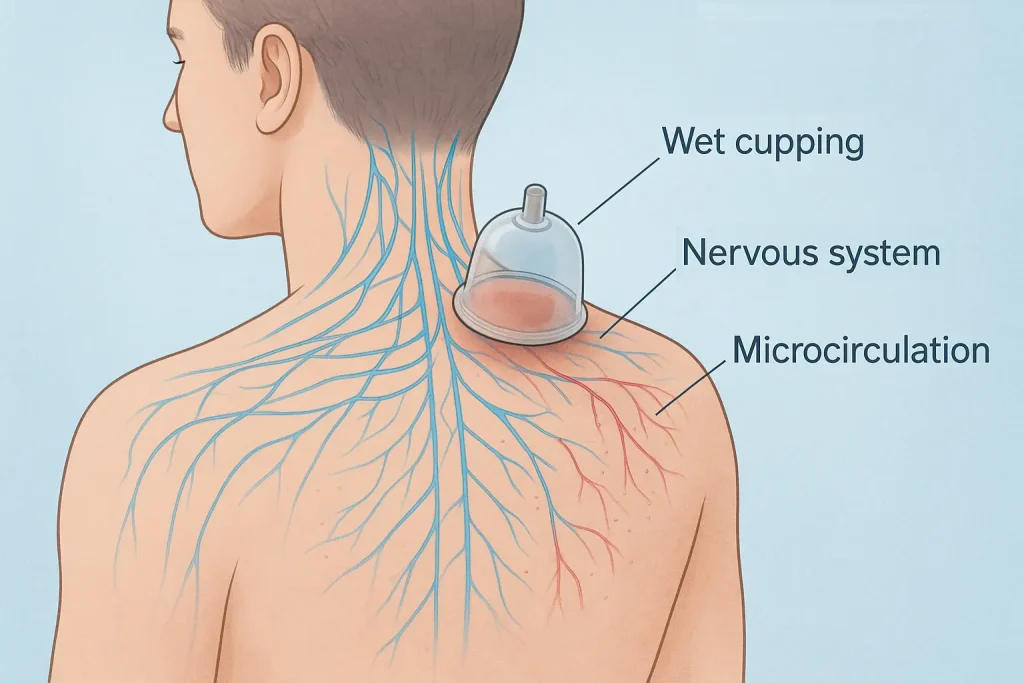
When people think of wet cupping, the focus usually stays on what we see from the outside — the cup, the marks, and the gentle release of superficial blood. But the real story lives much deeper: inside your inflammatory pathways, microcirculation networks, and the stress–hormonal system known as the HPA axis. These internal systems shape how your body feels, heals, and responds to tension or fatigue. This article explains, in simple science-based language, how wet cupping influences these internal mechanisms and why certain individuals experience measurable relief afterward. How Wet Cupping Interacts With Local Inflammatory Responses Inflammation is not always harmful. Your body uses it as a communication tool — a signal that repair, cleanup, or adaptation is needed. Many people dealing with upper-back or shoulder tension actually experience micro-inflammation, tiny pockets of irritated tissue caused by prolonged sitting, repetitive posture, or stress. Negative pressure improves fluid movement. The suction from the cup gently lifts the top layers of the skin and fascia. This decompression increases interstitial fluid mobility, allowing oxygen and nutrients to circulate more efficiently. Areas that once felt dense or stuck often begin to soften. Micro-incisions activate a controlled repair response. The small, superficial incisions trigger a mild immune response. Macrophages and other repair cells move into the area, helping to clear metabolic waste and reduce local stagnation. This process resembles the controlled inflammation seen in micro-needling or trigger-point therapies. Potential reduction of local oxidative stress. Although research is still developing, some observations suggest that removing a thin layer of metabolically stressed superficial blood may help reduce local pressure or oxidative load. Many people describe the post-session sensation as “lighter” or “less congested.” wet cupping and nervous system How Wet Cupping Affects the Stress–Hormonal System (HPA Axis) The HPA axis — the hypothalamus, pituitary gland, and adrenal glands — manages your stress response. When life is busy or the body is inflamed, this system becomes hyperactive, raising cortisol levels and keeping the nervous system in a fight-or-flight mode. Reduced muscle tension decreases sympathetic signals. Stiff muscles constantly send stress-like signals to the brain. Wet cupping can reduce this tension, lowering the frequency of signals that activate the sympathetic nervous system. This helps the body feel less alert and more grounded. Parasympathetic rebound promotes calmness. Many people feel noticeably relaxed afterward. This shift suggests the parasympathetic system — the “rest and recover” branch — becomes more active once the body receives fewer tension-driven signals. Short-term cortisol modulation. Some early studies note minor reductions in cortisol levels after cupping-based interventions. While not a treatment for hormonal disorders, this temporary shift may contribute to the calmer, clearer feeling people report. Why the Upper Back and Shoulder Region Responds Strongly The upper trapezius, levator scapulae, and cervical regions are among the most tension-prone areas in the body. These muscles carry both physical load and emotional stress. Long sitting, screen work, and poor posture compress nerves and restrict circulation around C7–T1. When wet cupping is applied here, it can: relieve nerve irritation loosen the myofascial web improve venous flow reduce pressure on cervical mechanoreceptors Because this area plays a key role in sympathetic activation, releasing tension here often leads to a broader nervous system calming effect. The Relationship Between Microcirculation and Stress Relief Microcirculation refers to the movement of blood through capillaries — the smallest vessels in the body. Chronic tightness restricts this flow, creating a low-oxygen environment that the body interprets as stress. Wet cupping supports microcirculation through: mechanical stretch temporary hyperemia (increased blood flow) improved lymph movement tissue reoxygenation When your microcirculation improves, your nervous system receives fewer danger signals, contributing to a more balanced HPA axis response. How Controlled Tissue Disruption Supports Recovery The tiny scratches made during wet cupping produce a controlled form of tissue disruption. This is mild and superficial, but it triggers the release of cytokines and growth factors responsible for repair. This mild disruption helps: restart stalled tissue healing improve fibroblast activity encourage collagen remodeling release natural analgesic compounds It is similar to how the body responds to acupuncture or micro-needling: the small disturbance encourages the body to restart its natural recovery cycle. Why People With Stress-Related Tension Often Feel Better People with chronic neck or shoulder tightness often live in a loop of muscle tension → micro-inflammation → sympathetic activation. Breaking this loop manually is difficult. Wet cupping interrupts it by reducing pressure, improving circulation, and calming the nervous system. This is why individuals often notice improvements in: stress-triggered headaches neck stiffness shoulder heaviness sleep quality tension that worsens with long sitting jaw tightness “wired but tired” sensations None of these effects replace medical care, but they fit the pattern of better tissue mechanics and a calmer stress system. Who Responds Well to This Process? Those who typically benefit share common traits: desk jobs or long hours sitting high stress or irregular routines repetitive tension in the upper back shallow breathing habits sympathetic overactivation micro-inflammation from posture or stress Wet cupping acts as a reset — mechanical, circulatory, and neurological — giving the body a chance to reestablish balance. Download the free guide “Natural Reset: Wet Cupping Made Easy” to learn safe techniques and science-backed ways to calm your nervous system naturally.
What’s Inside Wet Cupping Blood? The Real Link to Metabolic Waste and Microcirculatory Clearance

Wet cupping has a long tradition across cultures, and one question always sparks curiosity: “What exactly is in the blood that comes out during wet cupping?” Many people notice that wet cupping blood looks thicker, darker, or different from regular venous blood — and wonder whether it contains “waste” that the body has struggled to clear. Modern understanding shows that wet cupping interacts with a very specific layer of circulation: the superficial capillary–interstitial zone. This is the area where metabolic byproducts, inflammatory molecules, and microstagnation tend to build up, especially in stiff or overworked tissues. This article breaks down, in a balanced and science-informed way, what wet cupping blood contains and how this connects to local metabolic waste clearance. Wet Cupping Targets a Unique Circulatory Layer: The Microcapillary Zone When a cup is placed with negative pressure, it lifts the skin and underlying tissue. This creates a mechanical stretch that affects: superficial capillaries venules interstitial fluid pockets lymphatic capillaries After small incisions are made, the blood that emerges is not deep venous blood. Instead, it is a mixture of: superficial capillary blood interstitial fluid plasma extravasates trapped metabolic molecules This area functions like a traffic hub for blood flow, lymph movement, and metabolic exchange. When it becomes sluggish, waste buildup occurs — leading to tension, stiffness, or a “heavy” feeling in the tissue. Wet cupping directly interacts with this micro-layer. What’s Actually Inside Wet Cupping Blood? Wet cupping blood typically contains: Oxidized red blood cell fragments. Fragments of RBCs that have undergone mechanical stress or oxidative exposure in the tissue. Higher oxidative stress markers. Studies show wet cupping blood can contain more; reactive oxygen species (ROS), lipid peroxidation products, oxidized proteins compared to venous blood. Inflammatory mediators. Superficial blood often holds, prostaglandins, cytokines (IL-1β, IL-6, TNF-α), local immune signal. These molecules accumulate in areas of chronic tension or micro-inflammation. Metabolic byproducts. These include small molecules from muscle and connective tissue metabolism, lactate, hydrogen ions (H+), urea traces, creatinine fragments, degraded peptides. These substances reflect the local metabolic load of the tissue. Interstitial fluid components. Because negative pressure draws fluid from the extracellular space, the extracted blood often contains; tissue fluid,lymphatic residues, microclots, cellular debris This combination makes wet cupping blood visibly different from standard venous blood. Why the Capillary-Interstitial Layer Accumulates Waste Daily movement, posture, and stress all impact how nutrients and waste move through tissues. Three factors slow metabolic clearance: Muscle tension. Tight muscles compress small vessels and lymph channels.Common areas: upper trapezius, shoulders, neck. Poor microcirculation. When capillary flow reduces, oxygen delivery drops and waste removal slows. Chronic low-grade inflammation. Inflammation changes vessel permeability and increases local metabolic “traffic”. Together, these create metabolic bottlenecks — pockets of tissue where; lactate accumulates, inflammatory molecules persist, oxygenation drops, stiffness increases. Wet cupping interacts with this exact layer. How Wet Cupping Promotes Local Metabolic Waste Clearance Wet cupping does not replace the liver, kidneys, or other systemic detox organs, but it does influence how metabolic waste moves through areas of tissue stagnation. Negative Pressure Lifts and Decompresses Tissue When the cup creates negative pressure, the skin and underlying layers are gently lifted. This lifting decompresses the tissue, encourages microcirculation, softens tight fascia, and reduces mechanical pressure on capillaries — essentially opening the area so blood and interstitial fluid can move more freely. Superficial Blood Carries Local Metabolic Byproducts Once small incisions are made, the superficial blood that emerges carries oxidative molecules, metabolic residues, and inflammatory byproducts that tend to accumulate when circulation is sluggish. This release functions as a localized unloading of stagnant material rather than a form of whole-body detox. Fluid Shifts Transport Metabolic Molecules The negative pressure also creates a fluid shift from the interstitial space toward the cup, pulling along ions, degraded proteins, and other small metabolic molecules. This explains why wet cupping blood often appears thicker or different from regular venous blood Post-Cupping Perfusion and Tissue Recovery After the stagnant fluid and superficial blood are removed, the body naturally sends fresh blood back into the area, restoring oxygen delivery, improving nutrient transport, and enhancing lymphatic uptake. Combined, these effects reset the local metabolic environment and create conditions that help the tissue recover more efficiently. Why Wet Cupping Helps “Heavy” or Fatigued Areas Areas with high metabolic stress — especially the upper back, neck, shoulders, and lower spine — often develop a familiar mix of soreness, tightness, heaviness, and a general “stuck” feeling. These sensations usually reflect a combination of slow metabolic waste clearance, mild micro-inflammation, reduced blood perfusion, and tension within the fascia that restricts normal fluid movement. Wet cupping helps interrupt this cycle by releasing superficial stagnation, encouraging fresh circulation to re-enter the tissue, reducing local inflammatory signals, and decompressing overloaded areas. After a session, people commonly describe the treated region as lighter, more open, warmer, less stiff, and noticeably more relaxed — a sign that the accumulated metabolic load in the tissue has begun to shift. What Wet Cupping Does Not Do To remain safe and accurate, it’s important to understand that wet cupping does not detoxify organs, remove systemic toxins, cleanse the blood in a medical sense, or cure metabolic diseases. Its effects are local and mechanical, primarily influencing circulation and tissue dynamics. By targeting areas with high metabolic waste accumulation, wet cupping helps improve microcirculation, relieve tension, and support the natural clearing of byproducts in the affected tissues, without claiming systemic detoxification or disease treatment. Practical Signs of Local Metabolic Congestion If a region has accumulated waste or stagnant microcirculation, the body may signal it through: persistent tightness reduced range of motion mild swelling dull aches sensitivity to touch slower post-exercise recovery These are functional issues — not diseases — and respond well to improved microcirculation. Wet cupping helps by creating a localized reset. How This Connects to Stress and Daily Lifestyle Stress, prolonged sitting, poor screen posture, and lack of movement all negatively affect microcirculation. These factors can lead to fascia dehydration, muscle guarding, sympathetic nervous system dominance, and tension in the
How Wet Cupping Balances Your Nervous System: Upper Trapezius, C7–T1, and Shoulder Points
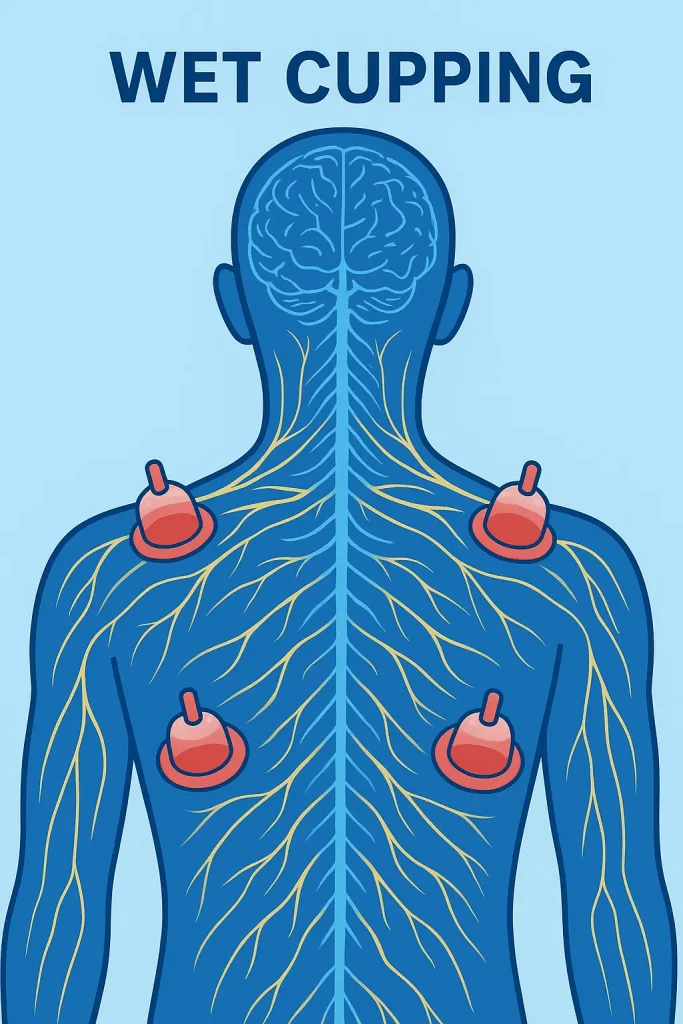
The nervous system acts like the body’s central command center, orchestrating how we respond to stress, regulate blood flow, and maintain internal balance. It consists of two main branches: the sympathetic nervous system (SNS), responsible for the “fight or flight” response, and the parasympathetic nervous system (PNS), which promotes rest, digestion, and recovery. An imbalance between these systems can contribute to tension, pain, and chronic conditions. Wet cupping—when applied strategically on the upper trapezius, C7–T1 vertebrae, and shoulders—can help restore harmony to this system. Targeted Points for Nervous System Balance Upper Trapezius (Right and Left) The upper trapezius muscles, running from the neck to the shoulders, are prone to chronic tension from poor posture, stress, or repetitive tasks. Tight trapezius muscles can stimulate sympathetic activity, causing a heightened stress response, elevated heart rate, and even headaches. Wet cupping these points encourages local blood flow and helps release stagnation in soft tissue, which in turn reduces sympathetic overdrive. wet cupping session C7–T1 Vertebrae The C7 and T1 vertebrae are crucial junctions for the cervical and upper thoracic spinal nerves. These nerves relay information to the heart, lungs, and upper limbs. Stimulation through wet cupping can improve nerve signaling efficiency, allowing a smoother balance between SNS and PNS activity. When this area is tense, signals from the PNS can be suppressed, resulting in increased stress response. Wet cupping may help reset autonomic tone, gently encouraging parasympathetic activation. Shoulders (Right and Left) The shoulder muscles, especially near the acromioclavicular junction, can store a lot of stress. Tightness here can influence sympathetic nerve activity, contributing to tension headaches, upper back pain, and even digestive disturbances. By releasing stagnated blood and relieving local pressure through wet cupping, nerve networks in this area regain flexibility, supporting better autonomic function. How Wet Cupping Interacts With the Nervous System Wet cupping involves applying suction cups to the skin and making small, controlled incisions to remove stagnant blood. This process stimulates sensory nerves, triggering several responses: Activation of Mechanoreceptors: Suction stretches skin and muscles, activating sensory fibers that communicate with the central nervous system. This can modulate both sympathetic and parasympathetic responses. Reduction of Sympathetic Hyperactivity: By relaxing tight muscles and improving circulation, wet cupping reduces the continuous stress signal sent to the sympathetic nervous system. This can lower heart rate, blood pressure, and cortisol levels. Enhanced Parasympathetic Tone: The gentle blood release triggers the body’s rest-and-digest response, promoting relaxation, improved digestion, and better sleep. Neurovascular Clearance: Removing stagnated blood reduces local inflammatory markers that might irritate nerves, improving overall nerve function. In essence, wet cupping resets the autonomic nervous system, helping the body transition from constant alertness to a state of balanced relaxation. Health Benefits of Nervous System Balance When the SNS and PNS are better balanced, several conditions may improve or become easier to manage: Chronic Neck and Shoulder Pain: Tension in trapezius and shoulder muscles is often linked to sympathetic overactivity. Wet cupping relaxes the muscles and improves blood flow, reducing pain perception. Migraines and Tension Headaches: Overactive sympathetic nerves can constrict blood vessels, contributing to headache onset. Wet cupping in the upper back and neck may reduce this hyperactivity, easing headache frequency and intensity. Stress and Anxiety: Chronic stress often corresponds to sympathetic dominance. By enhancing parasympathetic activation, wet cupping can support relaxation, lower cortisol levels, and improve mood regulation. Digestive Disorders: The autonomic nervous system directly regulates digestive function. Sympathetic dominance can slow digestion, while parasympathetic activation improves motility and nutrient absorption. Hypertension: Sympathetic overactivity contributes to elevated blood pressure. Regular wet cupping sessions on key points may assist in normalizing autonomic balance, indirectly supporting healthy blood pressure levels. Sleep Disturbances: Poor autonomic balance can disrupt sleep cycles. By promoting parasympathetic activity, wet cupping encourages deeper, more restorative sleep. Practical Considerations To maximize benefits, sessions should be performed by trained practitioners, using precise placement on trapezius, C7–T1, and shoulder points. Frequency and duration depend on individual needs, but consistency enhances nervous system regulation over time. Combining wet cupping with relaxation techniques, posture correction, and stress management strategies further amplifies outcomes. Wet cupping on the upper trapezius, C7–T1, and shoulder points provides a targeted approach to nervous system rebalancing. By modulating sympathetic overactivity and enhancing parasympathetic tone, it can support relief from chronic pain, headaches, anxiety, hypertension, and digestive disturbances. For those seeking a natural way to improve nervous system harmony, this traditional method offers both physiological and psychological benefits. Want to take control of your stress, tension, and overall nervous system balance? Grab your FREE copy of “Natural Reset: Wet Cupping Made Easy” and learn step-by-step how targeted wet cupping on the upper trapezius, C7–T1, and shoulders can help you feel calmer, more energized, and balanced—right at home.
Why My Head Feels Heavy But Not Painful
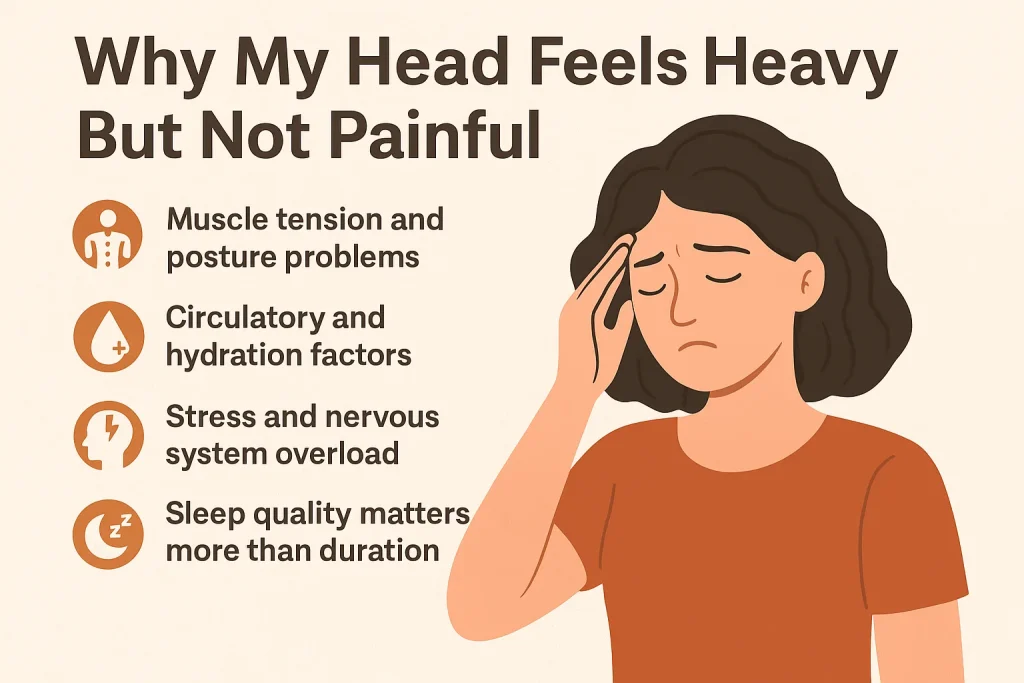
Waking up or going through the day with a heavy head sensation can be frustrating—especially when there’s no actual pain. You feel pressure, mental fog, or a sense of fullness, but no headache strikes. This phenomenon is surprisingly common and can be caused by a combination of muscular tension, circulation issues, stress, and lifestyle factors. Understanding why your head feels heavy can help you take simple steps to restore clarity, energy, and comfort. Heavy Head Sensation Muscle Tension Is a Major Culprit One of the main reasons your head feels heavy is tight muscles in the neck, shoulders, and upper back. Trapezius and Cervical Muscles Chronic tension reduces blood flow and lymph drainage. This can create pressure or heaviness in the head without causing pain. Poor Posture Forward head posture from phones or computers strains cervical muscles. Rounded shoulders and slouched sitting increase load, contributing to the sensation of a heavy head. Tip: Gentle stretching, ergonomic adjustments, and wet cupping sessions on the trapezius and cervical muscles can release tension, improve circulation, and restore comfort. Circulation and Hydration Matter Even mild dehydration or slowed blood flow can make your head feel heavy and mentally foggy, affecting focus, energy, and overall well-being. Low Hydration Mild dehydration thickens blood, reducing oxygen delivery to the brain → feelings of fogginess, mental sluggishness, or heaviness. Poor Circulation Prolonged sitting or sedentary habits slow venous return. This creates subtle pressure in the head, temples, or behind the eyes, contributing to that heavy sensation. Tip: Drink water consistently, move regularly with short walks or stretches, and consider targeted wet cupping to support microcirculation, muscle relaxation, and overall energy. Stress Keeps Your Nervous System Alert Even without feeling anxious, stress can activate the sympathetic nervous system, keeping your body in a constant “alert” state. This: Increases muscle tension Elevates cortisol Reduces parasympathetic (rest-and-digest) activity The result: your brain interprets this as heaviness, mental fog, or morning sluggishness, even after enough sleep. Tip: Practice slow breathing, meditation, or mindfulness to calm the nervous system Gentle evening stretches help release built-up tension Targeted wet cupping can further reduce nervous system stress, improve circulation, and support relaxation Sleep Quality Matters More Than Duration Sleeping 7–9 hours isn’t enough if your sleep is shallow or frequently interrupted. Factors like: Micro-awakenings Poor REM/deep sleep balance Muscle tension during sleep …all contribute to morning heaviness, mental fog, and reduced energy throughout the day. How to Improve Sleep Quality Keep consistent sleep/wake times to regulate your circadian rhythm Avoid screens one hour before bed to support natural melatonin production Use dim lighting in the evening to prepare your body for rest Incorporate gentle stretching or wet cupping to relax muscles and calm the nervous system before sleep These steps help promote restorative sleep, reduce head heaviness, and improve daytime alertness. Diet and Nutritional Factors Certain nutrient deficiencies subtly contribute to head heaviness. Magnesium: relaxes muscles and supports circulation Potassium: stabilizes blood pressure Omega-3s: reduce low-level inflammation B vitamins: support nervous system function Quick Dietary Fixes Bananas, leafy greens, seeds, nuts Salmon, eggs, yogurt Brown rice, oats, sweet potatoes Maintain hydration throughout the day These foods support both muscle relaxation and better sleep cycles, reducing head heaviness. Integrating Lifestyle Habits for Relief Small daily habits can prevent heavy-head sensations: • Regular movement: short walks, desk stretches — keeps blood flowing and muscles loose• Caffeine timing: avoid after 2 PM — prevents sleep disruption and morning fog• Screen exposure: reduce evening use — supports melatonin production and deep sleep• Evening wind-down: journaling, light stretching, or heat packs — calms nervous system and relaxes muscles Combined with targeted wet cupping, these habits help release tension, improve circulation, reset the nervous system, and support clear, energized mornings. Conclusion A heavy head without pain is common and rarely serious.It signals that your muscles, circulation, nervous system, or lifestyle need attention. Often, this feeling is an early warning that subtle imbalances are affecting overall energy, focus, and well-being. By integrating:• Muscle care (stretching, posture correction, wet cupping)• Hydration and diet• Stress management• Better sleep routines …you can relieve heaviness, restore mental clarity, improve daytime alertness, and feel energized throughout the day. If your head often feels heavy, supporting muscle relaxation and circulation can make a real difference.Download our free guide, Wet Cupping for Tension & Mental Clarity, and discover simple at-home steps to wake up lighter, clearer, and more energized every day.