
Why Your Hands Feel Tight and Hard to Move After Waking Up — Hidden Forearm Congestion Explained
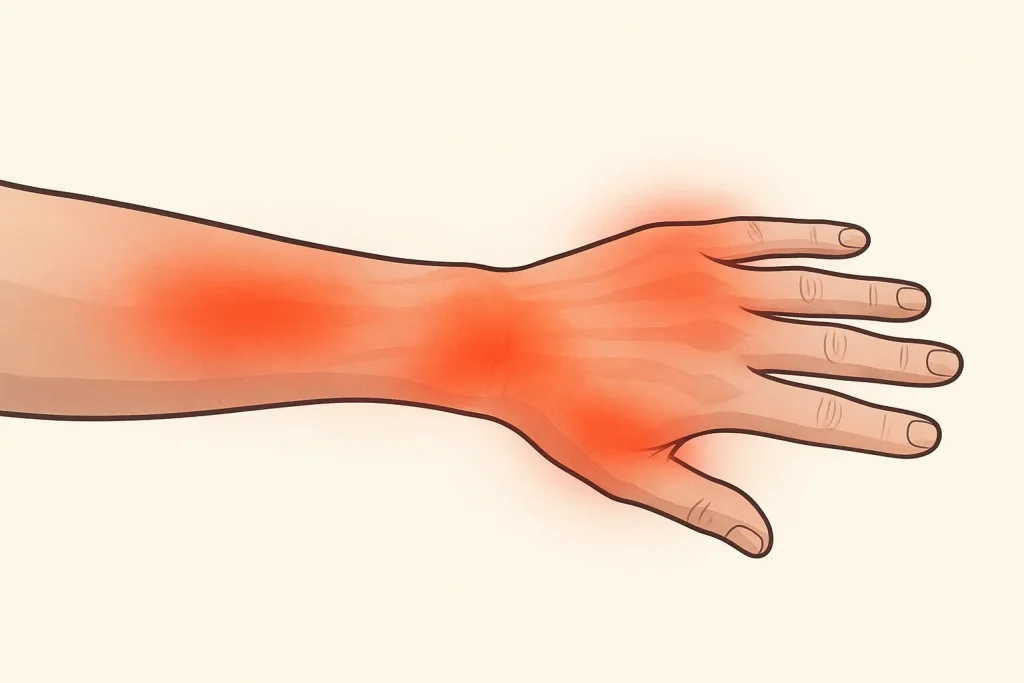
Waking up with hands that feel tight, stiff, or hard to move is far more common than most people expect. Many describe it as “morning hand stiffness,” “tight fingers,” or even “frozen hands,” where the fingers don’t immediately bend smoothly. Most people assume the problem must come from arthritis, low circulation, or sleeping position. While those can contribute, a surprisingly large portion of morning hand tightness actually begins higher up — in the soft tissues of the forearm, where nerves and tendons travel before entering the hand. This hidden congestion builds silently throughout the day and becomes most noticeable after sleeping, when circulation slows and the tissues tighten. Understanding this chain helps explain why wet cupping provides relief when stretching or wrist exercises alone fall short. This article breaks down the real physiological reasons behind morning hand stiffness — and how forearm-focused wet cupping supports smoother mobility and lighter fingers upon waking. Why Your Hands Feel Tight in the Morning: The Real Physiological Chain Wet Cupping Morning Hand Stiffness Your fingers don’t work alone. Every movement — gripping, flexing, spreading — begins in the forearm, where long tendons run through narrow tunnels toward the hand. When these tissues become congested, the hand becomes the first place you feel the effect. Here are the three main contributors: 1. Overnight Fluid Stasis in the Forearm During the day, your hands and forearms rely on constant micro-movement to push blood and lymph through the tissues. When you sleep, especially for 6–8 hours without motion: Circulation slows Fluid accumulates Tendons and fascia become “sticky” Nerve pathways lose glide This creates a stiff, tight, or mildly numb sensation when you first wake up. People who type frequently, lift objects, grip tools, or have mild inflammation in the forearm extensor or flexor regions often experience worse morning tightness. Why this matters:Tendon glide is reduced. When the tendons cannot slide smoothly inside their sheaths, the fingers feel slow, resistant, or “rusty.” 2. Hidden Congestion Around the Wrist Tunnel Just before entering the hand, all flexor and extensor tendons pass under narrow structures such as: Flexor retinaculum (palm side) Extensor retinaculum (dorsal side) These act like tight bands or tunnels. Overnight, low-grade swelling or tissue thickening reduces the available space even more. Common symptoms include: Stiff fingers Difficulty making a fist “Cement-like” hands in the morning Slow or painful first grip Clicking or resistance at the first bend This is not always carpal tunnel syndrome. Often, it is forearm-induced congestion that settles into the wrist during sleep. 3. Micro-Tightness in the Intrinsic Hand Muscles Even though the problem usually starts in the forearm, the small muscles inside the hand also contribute. These muscles tighten when: You sleep with your hands curled You grip a pillow Your wrists remain flexed or extended You type or scroll frequently during the day When the intrinsic hand muscles stiffen, the fingers lose their early-morning mobility. You might notice: Difficulty straightening the fingers Slow grip response Mild tingling at the fingertips Heavy or dense feeling in the palm These muscles respond extremely well to a combination of decompression (wet cupping) and light finger activation. How Wet Cupping Helps Morning Hand Tightness Wet cupping doesn’t treat medical disorders. But it supports tissue recovery and decompresses the soft-tissue tunnels that influence hand mobility. Here are the core mechanisms: 1. Forearm Decompression (Most Critical) Negative pressure lifts the superficial layers of fascia, releasing tension around: Tendon sheaths Nerve pathways Muscle compartments When this upper region is freed, the fingers regain natural glide and lightness. Many people experience immediate improvements the next morning. 2. Improved Microcirculation During and After Sleep Areas like the dorsal forearm and wrist naturally have low circulation at night. Wet cupping increases blood flow to: Extensor line Flexor line Wrist retinaculum Hand dorsum Better overnight circulation = less morning stiffness. 3. Reduction of Overnight Swelling Around Tendon Tunnels When tissue density decreases, the wrist tunnels reopen slightly. Even a few millimeters of decompression can dramatically improve morning finger mobility. 4. Restored Nerve Glide Compression around the superficial radial nerve and the flexor region often causes: Heavy fingers Delayed motion Occasional tingling Wet cupping softens these zones, allowing nerve signals to flow more efficiently. 5. Softer Tendons = Smoother Finger Movement Many people describe a “light,” “warm,” or “free” feeling in the hand after a proper forearm session, especially the next day. Key Takeaway Morning hand stiffness is rarely random. It is often the result of hidden forearm congestion, overnight fluid stasis, and reduced glide along the tendon–nerve pathways. Wet cupping supports these tissues by restoring circulation, decreasing pressure, and helping the forearm and wrist function more freely — leading to smoother, lighter hand movement when you wake up. Morning hand stiffness often starts in the forearm—not the fingers. Wet cupping helps decompress these hidden pathways, restore tendon glide, and bring back that light, easy morning movement.To learn the safest, precise point system and explore our upcoming e book on weak grip and morning stiffness. To Learn how to apply wet cupping safely at home read our free Natural Reset: Modern wet cupping made simple guide.
Why Your Grip Is Getting Weaker — And How Wet Cupping Helps Restore Nerve Flow
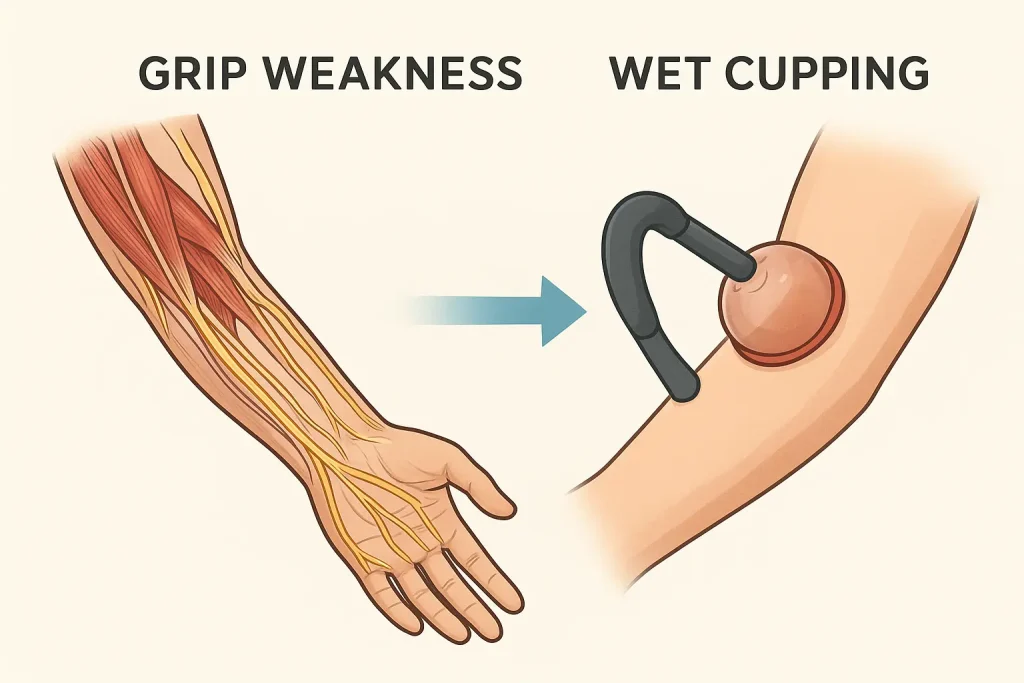
If your hands feel weaker than they used to—struggling to open jars, hold objects firmly, or maintain grip during daily tasks—you’re not alone. Grip weakness is a highly common but often misunderstood symptom. Most people assume it’s just “fatigue,” “getting older,” or “overusing the hands.” But in many cases, the real issue is hidden inside the forearm tunnels, where nerves and blood vessels travel to your wrist and fingers. When these tunnels become tight, congested, or inflamed, the brain’s signals to the hand no longer travel efficiently. This creates a subtle decline in strength, fine motor control, and endurance. The good news?With the right understanding—and targeted wet cupping—there’s a natural way to restore circulation, decompress the tunnels, and bring hand strength back online. The Hidden Mechanics of Grip Strength Grip strength depends on three major systems working together: 1. Forearm Flexor Muscles These muscles power your ability to squeeze, pinch, and hold objects. They run from the inner elbow all the way down to the wrist. 2. Tendons That Travel Through Tight Tunnels The flexor tendons pass through narrow spaces such as the: carpal tunnel Guyon’s canal flexor compartments forearm fascial lines Any swelling or inflammation here immediately weakens your grip. 3. Nerves That Fire the Muscles The median nerve, ulnar nerve, and radial nerve act like electrical cables. If they are compressed, grip strength drops even if the muscles are still healthy. This is why someone can feel: weak grip numbness tingling fingers “not listening” slow reaction time poor hand stamina …all without any noticeable pain. What Actually Causes Weak Grip? (The Real Culprits Most People Miss) 1. Micro-Compression in the Forearm Modern life forces your wrist into repetitive positions: typing holding the phone gripping the steering wheel lifting objects with poor wrist alignment This causes micro-swelling in the fascia that surrounds your nerves. Over time, the nerve’s conductivity decreases → grip becomes weaker. 2. Wrist Flexor Congestion Every time you grip something, the flexor muscles contract. But when they never get decompressed, blood flow becomes sluggish, leading to: tightness stiffness cold hands weak fingers 3. Carpal Tunnel Pressure Even mild pressure is enough to drop strength by up to 30%. 4. Ulnar Nerve Fatigue This nerve controls: ring finger strength pinky alignment side grip stability If it gets irritated near the elbow or wrist, grip becomes noticeably unstable. 5. Dehydration Thickens Tissues Dehydrated fascia becomes sticky. Sticky fascia traps nerves. Trapped nerves = weak grip + poor endurance. Simple hydration often improves strength within hours—but only if circulation is restored. Why Wet Cupping Helps Restore Grip Strength Wet cupping is uniquely effective for grip weakness because it targets the problem at its root: compression → stagnation → reduced nerve flow. Here’s what happens physiologically: 1. It Decompresses the Forearm Tunnels By lifting the skin and fascia upward, wet cupping: creates space reduces mechanical pressure frees the nerves softens the tendon pathways This is something stretching alone cannot achieve. 2. It Improves Microcirculation A congested forearm = slow blood flow = weaker muscle activation. Wet cupping pulls out stagnant fluid and boosts fresh circulation. 3. It Resets Nerve Signaling When pressure decreases around the median and ulnar nerves, their conduction improves.As a result: grip strength increases fingers respond faster hand endurance improves tingling decreases 4. It Removes Local Inflammatory Byproducts Forearm overuse accumulates inflammatory metabolites. Wet cupping clears these residues and reduces local irritation. 5. It Restores Flexor–Extensor Balance Many people have dominant flexors and weak extensors. This imbalance collapses the wrist and weakens the entire grip chain. Wet cupping helps reset tissue tension so both groups can function properly. The Best Wet Cupping Points for Grip Weakness Main Forearm Line (Voluntary Grip Power) Flexor digitorum area Pronator teres zone Median nerve pathway Ulnar Nerve Line (Finger Stability & Side Grip) Medial forearm Near Guyon’s canal and ulnar tunnel (safe areas only) Dorsal Wrist Line (Finger Extension & Coordination) Extensor digitorum compartments Tendon retinaculum Supplemental Point Between thumb and index metacarpals (for pinching strength) These points decompress the nerve + tendon pathways that determine how strong and stable your grip feels. Recovery Tips to Boost Results Hydrate 1–1.5 liters in short intervals. Helps thin the fascia and improve nerve glide. Gentle wrist extension & tendon gliding. Prevents re-congestion of tunnels. Posture reset. Forward shoulders increase nerve traction all the way down to the wrist. Avoid tight gripping for 24 hours. Let the decompressed tissue settle. Conclusion Grip weakness isn’t random and it’s rarely “just aging.” Most cases come from hidden compression in the forearm tunnels that interferes with nerve flow and blocks proper muscle activation. Wet cupping directly addresses these root causes by decompressing, clearing inflammation, and restoring smooth circulation along the nerve pathways. As nerve conductivity improves, strength returns, finger coordination becomes sharper, and the hand finally feels alive again. A weakening grip isn’t random — it’s often caused by hidden forearm tension and subtle nerve compression that most people never notice. Wet cupping helps decompress these pathways and restore the natural strength in your fingers and hand. Rebuild your grip strength, lighten your forearm, and support healthier nerve function the natural way in our upcoming e-book. Get free Natural Reset: Modern wet cupping made simple e-Book and discover how to perform wet cupping safely at home.
Hand Tingling in the Morning: Overnight Compression and Forearm Release with Wet Cupping
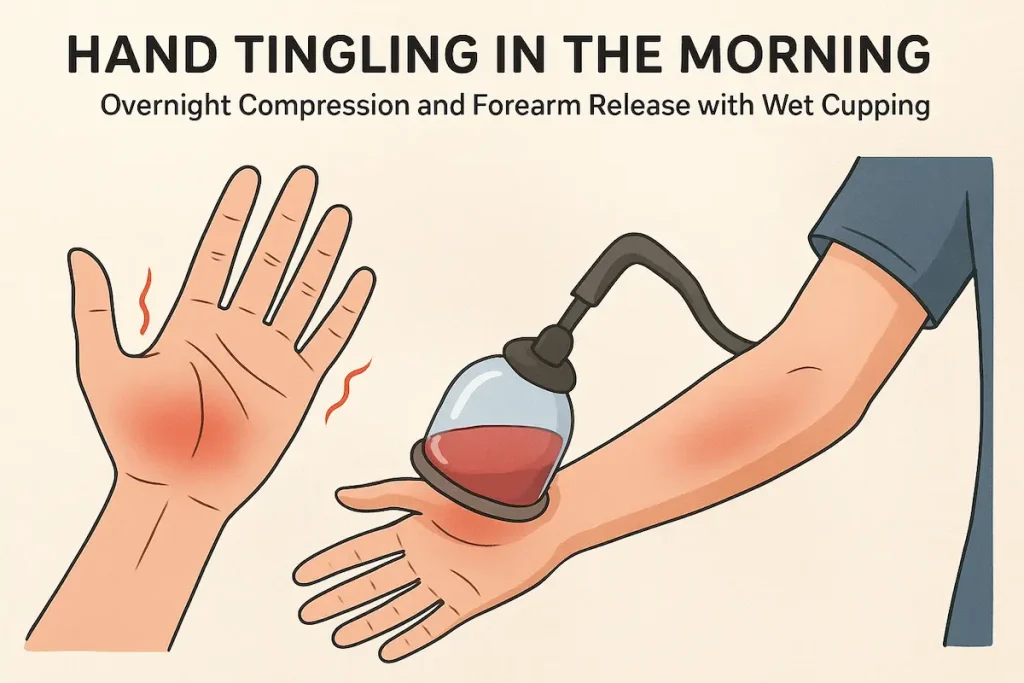
Waking up with tingling hands—whether it feels like buzzing, light numbness, or “electric dust” in the fingers—is one of the most common complaints among adults who spend long hours typing, gripping, or sleeping in curled positions. Many people assume it’s always a nerve issue in the neck or carpal tunnel, but the real cause is often much simpler: overnight compression of the forearm tissues and wrist structures, especially along the extensor line where crucial sensory nerves travel toward the fingers. Morning tingling is a sign that certain tissues became restricted during sleep and are temporarily compressing nerve pathways. The good news? This type of tingling is highly responsive to decompressive techniques—especially wet cupping, which improves circulation, softens tense fascia, and restores the natural glide of the nerves. This article breaks down why morning hand tingling happens and how wet cupping helps relieve it safely and effectively. Why Morning Hand Tingling Happens: The Overnight Compression Chain During sleep, the hand, wrist, and forearm often remain in a fixed position for hours. Even mild pressure is enough to irritate nerve branches, especially when combined with daytime muscle fatigue. Below are the most common physiological reasons behind morning hand tingling. 1. Forearm Stiffness at the Radial Side (Brachioradialis Region) The upper forearm, particularly near the brachioradialis, plays a major role in wrist positioning during sleep. When this region becomes tight from daytime computer use or gripping tasks, the superficial radial nerve loses mobility. Sleeping with the wrist bent or the forearm tucked can increase the pressure, leading to tingling upon waking. Typical symptoms: Tingling on the thumb side Light numbness on the back of the hand Forearm tightness when making a fist Sharp “electric” sensations when extending the wrist Morning tingling usually means this nerve got “stuck” overnight and needs decompression. 2. Mid-Forearm Congestion Along the Extensor Line Typing and repetitive wrist movements cause the extensor digitorum and ECU to accumulate micro-tension. During sleep, these already-tight tissues become even more compressed. Because several sensory nerves run beneath this muscular “tunnel,” any extra nighttime pressure can trigger tingling in the fingers. Common signs: Heaviness in the wrist when waking Diffuse tingling across 2–4 fingers Stiffness when flexing or extending the wrist This region responds especially well to negative-pressure therapy. 3. Tight Wrist Position While Sleeping (Extensor Retinaculum Compression) The dorsal wrist band—the extensor retinaculum—is a firm, non-stretching structure. If the wrist stays flexed or curled beneath a pillow, the pressure increases dramatically. Overnight, this can compress the nerve branches that supply the palm and fingers. Symptoms include: Tingling that fades after shaking the hand Morning weakness or “slow fingers” A tight band sensation at the wrist This is one of the main reasons hand tingling disappears after a few minutes of movement. 4. Circulation Restriction Across the Dorsal Hand Blood flow naturally slows during sleep. If the dorsal hand already has fascial tightness from daytime strain, the reduced circulation amplifies the “pins and needles” effect. This is especially common in: People who sleep on their hands Side sleepers with arms tucked Those who use phones extensively before bed The lumbrical region becomes congested, causing tingling at the base of the fingers. How Wet Cupping Helps Reduce Morning Hand Tingling Wet cupping relieves morning hand tingling by targeting the exact tissues that became compressed overnight. Instead of stretching or massage—which may not reach deep fascial layers—wet cupping uses decompression to lift and separate tight structures. Here’s how it works: 1. Decompressing Nerve Pathways The negative pressure reduces mechanical stress around the superficial radial nerve and other sensory branches. Once these pathways regain space, nerve flow improves and tingling decreases. 2. Improving Microcirculation After Overnight Stagnation During sleep, blood flow slows naturally. Wet cupping restores circulation quickly, providing oxygen and nutrients to irritated nerve endings. Improved circulation = faster recovery from overnight compression. 3. Releasing Deep Fascia That Pulls on the Wrist and Fingers Typing, gripping, and scrolling create layers of invisible stiffness. Overnight, these layers restrict even more. Wet cupping releases the stiffness at the source, allowing the tissues to glide smoothly again. 4. Reducing Wrist Band Tension When applied to the correct zones around the dorsal wrist, wet cupping reduces the pressure under the extensor retinaculum. This is one of the most effective ways to ease morning “pins and needles.” 5. Restoring Finger Mobility After Sleep After decompression, the dorsal hand feels lighter and finger movement becomes easier. Tingling fades as nerve conduction normalizes. Best Habits to Prevent Morning Tingling Avoid sleeping with wrists bent Keep elbows slightly open instead of tucked Hydrate 1–1.5 liters after cupping Perform gentle wrist circles before bed Reduce late-night gripping or phone use Conclusion Morning hand tingling is not always a sign of nerve disease — in most cases, it’s a mechanical problem caused by hours of overnight compression in the wrist, forearm, or elbow. When circulation slows and pressure builds around the median or ulnar nerve, the fingers “wake up” feeling numb, electric, or buzzing. Hydration, gentle forearm mobility, and pressure-free sleeping positions support recovery, but when tissue congestion becomes chronic, wet cupping provides an additional release.By improving micro-circulation, reducing fascial stiffness, and decompressing the nerve pathway around the forearm and upper back, wet cupping helps break the cycle of compression → stagnation → morning tingling. When combined with daily ergonomic habits, this approach can restore hand comfort, reduce flare-ups, and help your mornings feel normal again. Hand tingling in the morning often comes from overnight compression along the forearm and wrist. Wet cupping helps decompress these pathways, restore circulation, and ease the buzzing sensations when you wake up. To learn the precise, safe point system, check it out in our upcoming e-book and explore how to practice wet cupping safely at home inside our free Natural Reset: modern wet cupping made simple book.”
Tingling in the Fingers: Hidden Forearm Compression and the Wet Cupping Fix
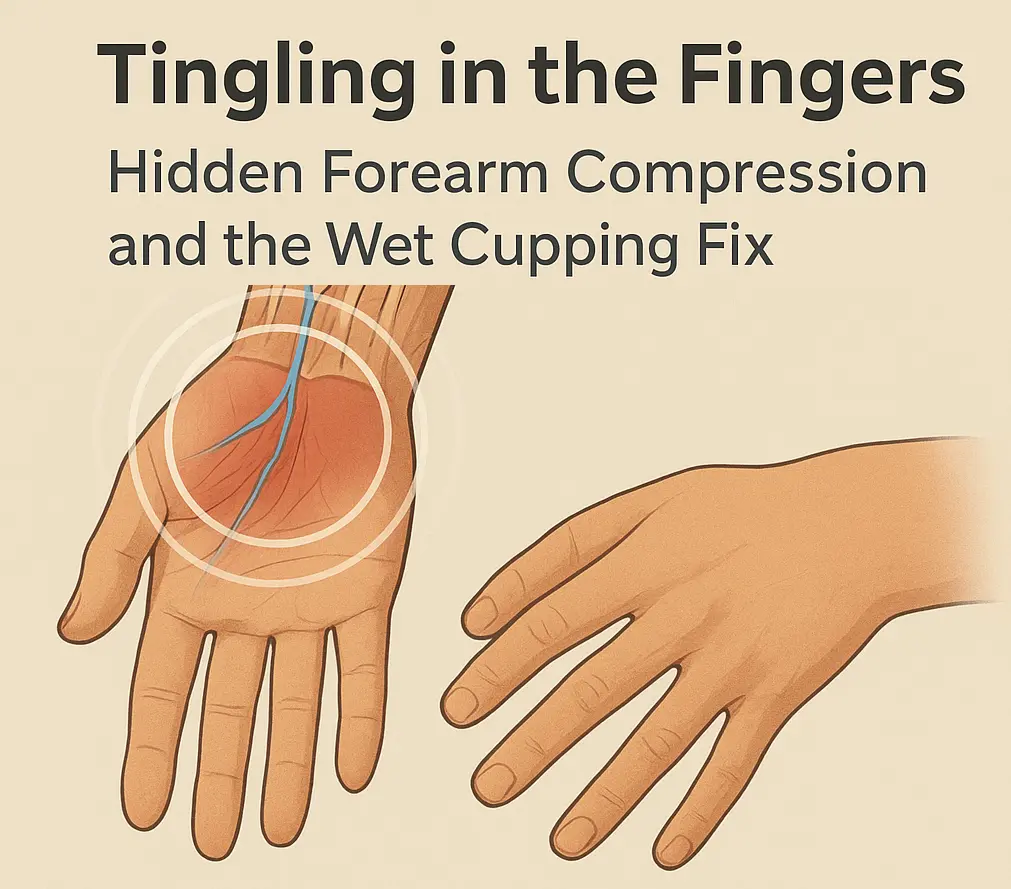
Finger tingling—whether it feels like buzzing, pins and needles, light numbness, or a mild electrical sensation—can interfere with typing, gripping, scrolling, and everyday hand movement. Most people assume finger tingling always comes from the neck or carpal tunnel, but in many real-world cases, the source sits much closer: the forearm, wrist, and dorsal hand tissues that surround the small sensory nerves. These tissues can tighten, thicken, or lose glide over time, especially in people who type for long hours, grip objects repetitively, or work with tools. When this happens, the delicate nerve branches that travel toward the fingers become irritated, causing the familiar tingling sensations. Wet cupping offers a decompression-based solution that helps restore nerve flow, improve microcirculation, and release areas of hidden pressure more effectively than stretching or massage alone. This article explains the physiological chain behind finger tingling and how wet cupping helps reduce the symptoms naturally. Why Finger Tingling Happens: The Real Physiological Chain Fingers Tingling Illustration Finger sensation is supplied by branches of the median, radial, and ulnar nerves. Before reaching the fingers, these nerves travel through narrow corridors in the forearm and wrist—zones that easily tighten due to repetitive strain, posture, or micro-congestion. Here are the most common contributors that create tingling in everyday cases. 1. Hidden Tightness in the Upper Forearm (Brachioradialis Region) One of the most overlooked drivers of finger tingling is tension in the brachioradialis area—located on the thumb-side of the upper forearm. The superficial radial nerve passes through this region, and even a slight increase in tissue density can irritate its pathway. Common symptoms include: Tingling on the back of the hand Electric sensations toward the thumb or index finger Forearm heaviness after typing Discomfort when extending the wrist Because this region acts as an upstream “gateway,” releasing it often reduces downstream symptoms quickly. 2. Mid-Forearm Congestion Along the Extensor Line The mid-forearm houses the extensor digitorum and extensor carpi ulnaris, two muscles essential for finger lifting and wrist stabilization. When these muscles tighten or lose glide, they create friction around the small nerve branches running alongside them. This usually causes: Diffuse tingling down the forearm A tired, heavy wrist Stiffness that worsens after gripping Slower recovery after repetitive tasks This region responds well to decompression because blood flow is often limited here despite continuous daily use. 3. Compression at the Wrist Band (Extensor Retinaculum) The extensor retinaculum is a thick band that anchors the tendons at the back of the wrist. Because it is a rigid tunnel with little room for swelling, even mild tension or inflammation can irritate the nerves beneath it. Typical symptoms include: Tingling during typing or phone use Numbness in the morning Reduced grip comfort A “tight strap” feeling across the wrist This is one of the fastest-responding regions when wet cupping is applied correctly. 4. Micro-Restriction Across the Dorsal Hand Between the bones of the back of the hand run the lumbrical and interosseous muscles—small structures responsible for finger coordination and stability. They often tighten from fine motor work such as typing, texting, drawing, or instrument playing. Signs of restriction include: Tingling at the base of the fingers Subtle numbness A “dusting of electricity” feeling Discomfort spreading between the knuckles Although small, these tissues heavily influence finger sensation and respond well to gentle decompression. How Wet Cupping Helps Finger Tingling Wet cupping does not treat nerve diseases directly, but it helps reduce the local mechanical issues that trigger nerve irritation. Its benefits come from a combination of negative pressure, improved microcirculation, and fascial decompression. Here’s how it helps: 1. Decompressing Tight Nerve Pathways Negative pressure lifts superficial tissue layers, decreasing the pressure on sensitive nerve branches. When the soft tissues unload, nerve signaling becomes smoother and less irritated. 2. Increasing Microcirculation in Congested Zones The wrist and forearm are often poorly perfused, especially in people with sedentary or repetitive tasks. Wet cupping increases local blood flow, oxygenation, and nutrient delivery—supporting nerve health. Better circulation = fewer tingling sensations. 3. Releasing Deep, Hidden Muscle Tension Typing and gripping create chronic tension that stretching rarely reaches. Wet cupping targets deeper layers, softening stiffness around the nerve pathways. 4. Reducing Friction at the Wrist Band Since the extensor retinaculum cannot stretch, decompression is one of the most effective ways to reduce pressure beneath it. This leads to fast relief in many finger-tingling cases. 5. Improving Finger Mobility and “Lightness” When the dorsal hand tissues relax and circulation improves, finger movement becomes smoother. Tingling decreases as the nerve endings regain better flow. Key Recovery Habits Drink 1–1.5 liters of water after the session Avoid prolonged wrist extension or flexion Use gentle wrist circles and finger-spread exercises Reduce gripping-heavy tasks temporarily Conclusion Finger tingling is often not a nerve problem in the neck — but a compression issue hidden along the forearm, wrist band, and dorsal hand. When these tissues tighten, they narrow the spaces where superficial nerves travel, creating buzzing, pins-and-needles, or mild numbness. Wet cupping offers a natural decompression method that improves microcirculation, softens tight fascia, and restores smoother nerve signaling. With the right points—upper forearm, mid-extensor line, wrist retinaculum, and dorsal hand spaces—many people experience noticeable relief and better finger mobility. Finger tingling often comes from subtle compression along the forearm and wrist. Wet cupping helps release these tight pathways, restore microcirculation, and calm the buzzing sensations in your fingers.Explore the full technique in our upcoming next e-book and learn how to perform wet cupping safely at home in our free Natural Reset: Modern wet cupping made simple book.
Tingling in the Toes (Toe Numbness): Why It Happens and How Wet Cupping Helps the Digital Nerve Pathway
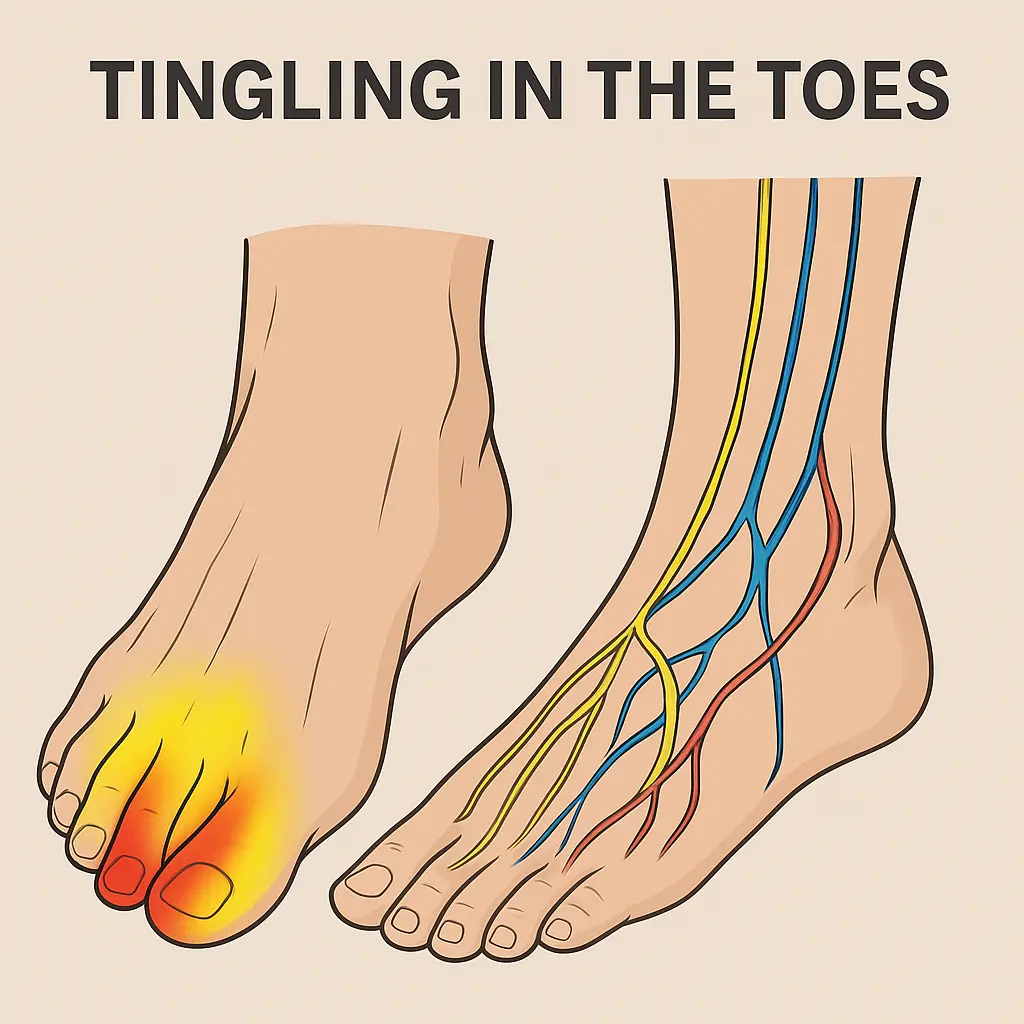
Toe tingling—whether it feels like tiny sparks, light pins and needles, or mild numbness—may seem like a small problem, but for many people it becomes surprisingly distracting. It affects balance, walking comfort, and even the ability to stand for long periods. While some assume it comes from nerve issues in the lower back, a large portion of toe tingling actually originates locally, especially across the top of the foot and the narrow space around the ankle where key digital nerves pass. Wet cupping provides a decompressive, circulation-boosting approach that helps reduce the micro-compression responsible for toe tingling. Unlike stretching or massage—often too superficial for the tight dorsal tissues—wet cupping creates a negative-pressure lift that restores space around irritated nerves and helps the toes feel lighter and more responsive. This article explains why toe tingling happens and how wet cupping helps restore nerve glide and digital comfort. Why Toe Tingling Happens: The Physiological Chain Behind the Sensation Toe sensation depends on small branches of the deep peroneal nerve and digital nerves that travel across tight anatomical zones. Along this pathway, three common problem areas frequently interrupt nerve flow. Wet cupping for Toes Tingling Micro-Compression Along the Digital Nerves (Top of Foot) The dorsal foot contains a dense network of tiny nerves responsible for sensation in the toes. Tight footwear, prolonged standing, or walking on hard surfaces can create localized pressure throughout this region. Because the digital nerves are small and situated just beneath the skin and fascia, even mild congestion can trigger buzzing or numbness. Typical symptoms include: Tingling spreading across the toes Light numbness when wearing shoes “Electric dust” sensations when wiggling the toes Difficulty sensing toe position during movement Most people overlook this area because discomfort feels “in the toes,” even though the compression is occurring farther up the nerve line. Tight Footwear Causing Dorsal Foot Congestion Shoes that compress the midfoot—such as narrow sneakers, safety shoes, and high-performance athletic footwear—often lead to dorsal compression. Over time, the fascia and soft tissues stiffen, limiting circulation and irritating the nerve branches. This mechanical pressure is one of the most common everyday causes of toe tingling. Signs this is the culprit: Relief after removing shoes Tingling when walking downhill Numbness after long work shifts Pressure marks across the top of the foot This compression rarely resolves with stretching alone because the dorsal fascia is thick and non-elastic. Narrow Anatomical Tunnel at the Ankle (Extensor Retinaculum) The extensor retinaculum is a natural strap that holds tendons and nerves in place as they cross the ankle. When tissue fluid increases—even slightly from inflammation, fluid retention, or repetitive strain—the deep peroneal nerve becomes irritated. Symptoms include: Tingling between the big toe and second toe Numbness when flexing or pointing the foot Electric sensations when stepping or climbing stairs Increased sensitivity during long walks This area responds extremely well to negative pressure because even a small decompressive change opens space for the nerves. How Wet Cupping Helps Relieve Toe Tingling Wet cupping does not claim to cure nerve disorders, but it helps reduce the mechanical and circulatory factors that irritate the digital nerves. When applied safely to the ankle area and dorsal foot, it produces four main physiological benefits: Decompressing the Digital Nerve Pathway Negative pressure lifts the fascia and soft tissues around the nerve branches. When congestion is reduced, nerve conduction becomes smoother, decreasing buzzing and pins-and-needles sensations. Patients often describe a sudden return of “toe clarity” after the session. Improving Microcirculation Across the Dorsal Foot The top of the foot is an area with naturally sluggish circulation—especially under tight shoes or prolonged standing. Wet cupping improves oxygen delivery and supports tissue recovery. Better circulation → calmer nerves → lighter toes. Releasing Fascial Tightness Near the Ankle Retinaculum Because the extensor retinaculum is a firm, non-stretching structure, tension in this zone easily irritates the deep peroneal nerve. Wet cupping helps soften the surrounding tissues, restoring glide and reducing mechanical pressure. This is why many people notice immediate improvement in toe movement. Enhancing Toe Mobility and Foot Lightness After decompression, the digital nerves fire more efficiently. People commonly report: Easier toe spreading Better ground sensation Reduced “foot heaviness” Increased walking comfort Toe tingling becomes less frequent—or disappears entirely—with consistent sessions and good foot habits. Best Recovery Habits to Support Nerve Flow Wear wider toe-box shoes Avoid tight laces across the midfoot Hydrate well after sessions (1–1.5 liters) Do gentle toe waves and ankle circles Limit prolonged standing during flare-ups Key Takeaways Toe tingling commonly comes from local compression at the dorsal foot and ankle—not only nerve issues in the spine. Tight footwear, anterior shin tension, and congestion around the extensor retinaculum are the leading triggers. Wet cupping helps by decompressing digital nerves, boosting microcirculation, relaxing fascia, and restoring natural toe mobility. Most people experience lighter toes, reduced buzzing, and improved walking comfort when combining sessions with proper footwear and hydration. Toe tingling often comes from tension and nerve compression along the ankle and top of the foot. Wet cupping helps decompress these pathways, boost microcirculation, and ease the buzzing sensations in your toes. Learn the safe, precise point system in our upcoming e-book, and discover how to practice wet cupping safely at home inside our free Natural Reset: Modern wet cupping made simple guide.
Foot Tingling: Why It Happens and How Wet Cupping Helps Restore Nerve Flow and Lightness
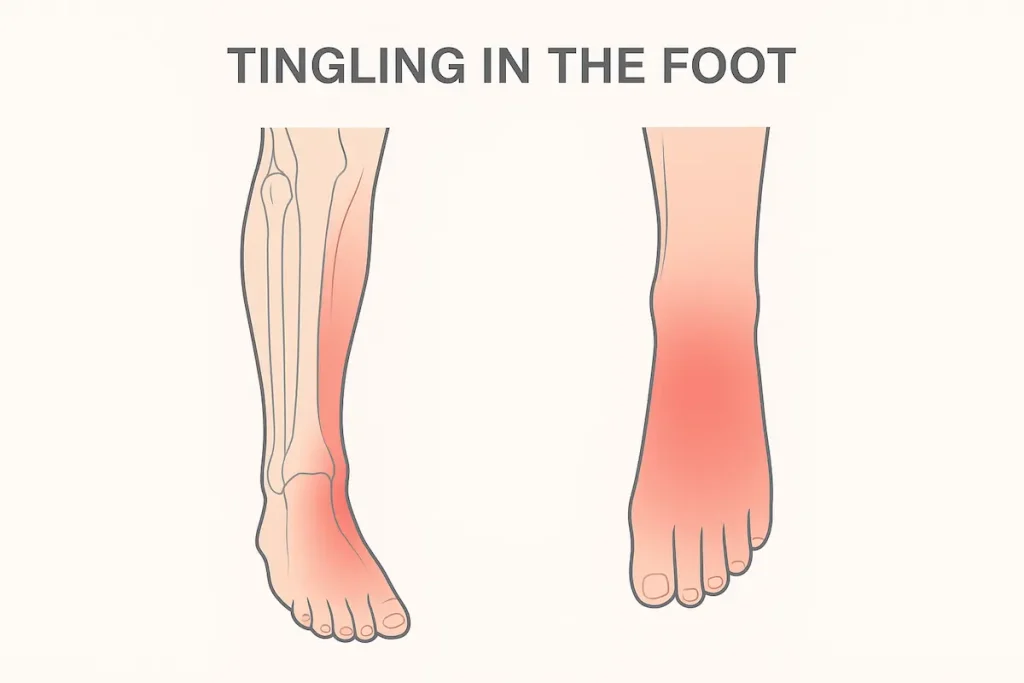
Tingling in the foot—whether it feels like pins and needles, electric zaps, or intermittent numbness—can be deeply distracting. For many people, the sensation seems harmless at first, but over time it becomes bothersome, especially when standing, walking, or waking up in the morning. While most people assume it comes from a pinched nerve in the lower back, a large portion of foot tingling actually begins locally, especially along the front of the shin and the top of the foot where critical nerves pass through narrow anatomical tunnels. Wet cupping offers a unique, physiologically grounded approach to easing this tingling by releasing tension, improving microcirculation, and reducing nerve irritation in the areas that commonly trigger these sensations. The technique does not treat nerve disorders directly—but it supports tissue relaxation and fluid movement in a way that reduces compression along the peroneal–tibial pathway, often delivering relief faster than stretching or massage alone. Why Tingling Happens: The Physiological Chain Behind the Sensation To understand why wet cupping helps, it’s important to look at what causes tingling in the first place. The foot depends on a network of nerves—especially branches of the deep peroneal nerve—that travel down the shin, through a tight band near the front of the ankle, and spread out across the top of the foot. Along this route, several structures can become tense or congested, interrupting nerve signaling. Here are the three most common physiological contributors to foot tingling: Tingling in the Foot Tightness in the Anterior Shin Muscles The muscle group that lifts your foot during walking is often under constant low-grade tension. When these muscles become overly tight—due to standing long hours, running, uphill or downhill walking, or even prolonged sitting with your ankles bent—they create mechanical pressure around the nerve branches. This tension is enough to cause: Irritated nerve pathways Delayed microcirculation Localized inflammation Electrical sensations toward the toes For many people, this is the true source of the “mysterious tingling” they assume comes from the spine. Compression Near the Front of the Ankle The front of the ankle contains a rigid anatomical structure that functions like a strap, guiding several tendons and nerves into the foot. Because the space is narrow, even slight swelling, tightness, or mechanical congestion can create a “pinched” feeling along the deep peroneal nerve. Symptoms often include: Tingling between the big toe and second toe Numbness that worsens when pointing or flexing the foot Electric sensations during walking or stair climbing This area is extremely responsive to decompression-based therapies like wet cupping. Circulation Restriction on the Top of the Foot The dorsal side of the foot is packed with small nerves and blood vessels that can easily become irritated by: Tight footwear Standing for long periods Reduced venous return Micro-inflammation in the connective tissues This often results in a “light numbness” that spreads across the toes or central foot. Wet cupping helps restore fluid movement here, allowing both the nerves and soft tissue to recover. How Wet Cupping Helps Relieve Foot Tingling Wet cupping works through a combination of negative pressure, microcirculatory activation, and fascial release. When applied to the shin, ankle, or dorsal foot (with proper knowledge of safe, precise points), it supports recovery through several physiological mechanisms: Reducing Pressure on Local Nerves Gentle blood release plus suction creates a decompressive effect that reduces stiffness in the surrounding tissues.This helps ease mechanical irritation around the nerve branches responsible for tingling sensations. Improving Blood Flow Along Congested Zones The technique increases microcirculation in areas where blood flow is typically slow—especially the front of the shin and the top of the foot.More circulation = better oxygenation = less nerve irritation. Releasing Chronic Muscle Tension The anterior shin often holds tension that normal stretching cannot reach. Wet cupping helps soften this region deeply, relieving the “pulling” effect on the nerves. Supporting Natural Nerve Recovery When tight tissues relax and circulation improves, the nerves can fire more normally, reducing: Pins and needles Buzzing sensations Foot heaviness Intermittent numbness Enhancing Ankle and Foot Mobility Restricted mobility can worsen tingling. By releasing congestion, wet cupping improves the glide of the soft tissues—making the foot feel lighter and more responsive. Keys Takeaway Foot tingling is rarely random—it almost always follows a specific mechanical and physiological chain involving tension along the anterior shin, compression at the front of the ankle, and restricted microcirculation across the top of the foot. These areas form narrow passages where the deep peroneal nerve becomes susceptible to irritation, especially in people who walk long distances, stand for hours, or wear tight footwear. Wet cupping helps not by masking symptoms but by directly addressing the tissue stiffness and fluid stagnation that irritate these nerve pathways. Through decompression, improved microcirculation, and deep fascial release, it restores lightness, reduces buzzing sensations, and supports healthier nerve flow throughout the lower leg and foot. For many individuals, this combination delivers relief faster than stretching or massage alone—especially when paired with hydration and gentle ankle mobility. In short: when the shin, ankle, and dorsal foot relax, tingling naturally fades. Wet cupping simply accelerates that process. Foot tingling often comes from tension along the shin and compression at the front of the ankle. Wet cupping helps decompress these pathways, restore microcirculation, and bring lightness back to your step. Discover the precise point system in our upcoming e-book — and learn how to perform wet cupping safely at home in our free Natural Reset: Modern wet cupping made simple guide.
Hand Tingling: Why It Happens and How Wet Cupping Helps Restore Nerve Flow and Finger Comfort
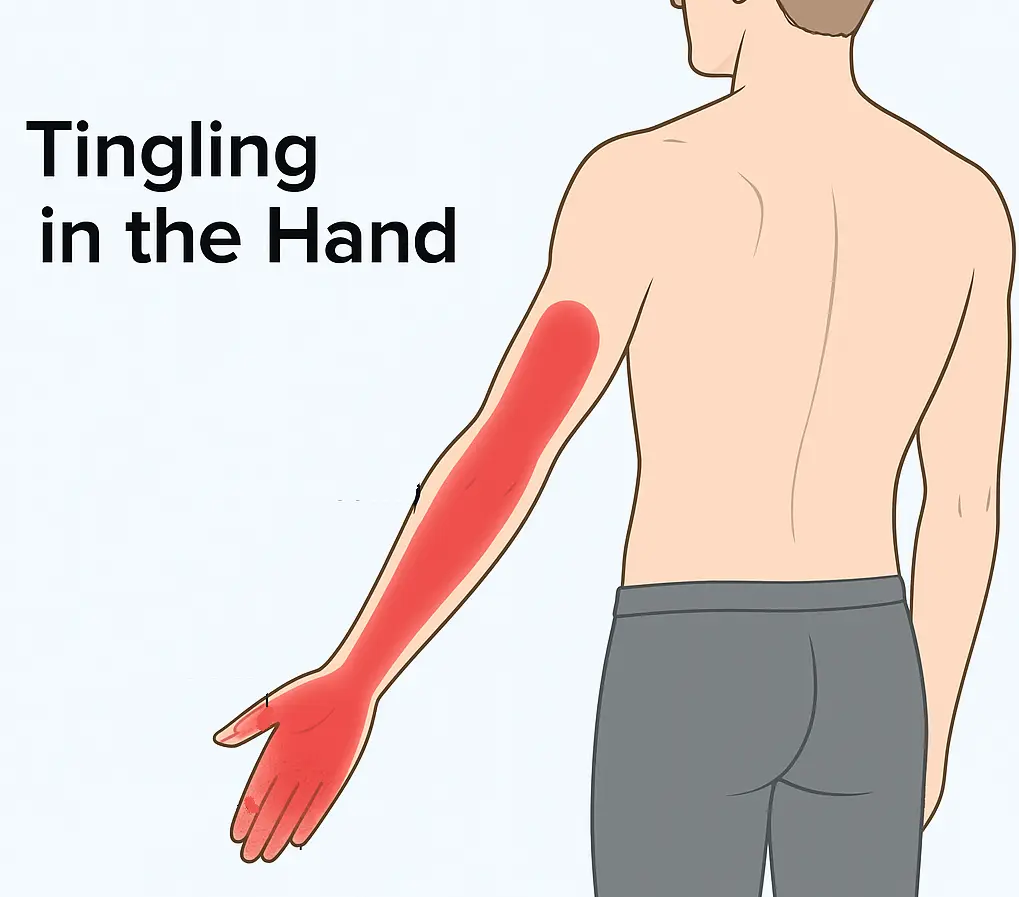
Hand tingling—whether it feels like light buzzing, pins and needles, or intermittent numbness—can interfere with everything from typing to gripping objects. Many people assume the sensation is always caused by a pinched nerve in the neck or wrist, but in real practice, the source often lies in the forearm’s soft tissue mechanics, especially along the extensor line where multiple nerve branches travel toward the hand. Wet cupping offers a structured way to reduce tension, improve microcirculation, and decompress nerve pathways that commonly trigger the tingling sensation. Instead of forcing the muscles to stretch or relying on massage, wet cupping creates a decompressive effect that restores glide between tissues—something particularly helpful for people who type all day, grip tools repeatedly, or experience repetitive strain. This article explains the physiological chain behind hand tingling and how wet cupping helps relieve it. Why Hand Tingling Happens: The Physiological Chain Tingling in the hand is almost always a sign that a nerve is being irritated somewhere along its path. The hand receives sensation from multiple nerves—including the median, ulnar, and superficial radial nerve—and each of these can experience subtle compression along the forearm or wrist. Here are the main physiological contributors: Forearm Tightness Around the Radial Side (Brachioradialis Region) The upper forearm, particularly on the radial (thumb-side), is one of the most overlooked sources of hand tingling. The superficial radial nerve passes through this region, and when the tissues around it become tight—often from repetitive gripping, lifting, or using a mouse—nerve signaling becomes disrupted. Symptoms often include: Tingling on the back of the hand Electric sensations around the thumb or index finger Forearm heaviness after computer work Increased discomfort when extending the wrist When the brachioradialis region is relieved, the entire nerve line downstream becomes smoother and less irritated. Mid-Forearm Congestion Along the Extensor Line The extensor digitorum and the extensor carpi ulnaris (ECU) help lift the fingers and stabilize the wrist. These muscles often tighten in people who type for long periods, lift weights, or perform repetitive hand tasks. When they become dense or congested, they place mechanical stress on the nerve and tendon pathways running through the dorsal forearm. This does not always cause intense pain; instead, it produces: Diffuse tingling Forearm stiffness “Tired wrist” sensations Delayed recovery after gripping activities Releasing this region helps extend tissue glide from the upper forearm down toward the wrist. Compression at the Dorsal Wrist Band (Extensor Retinaculum) Perhaps the most common cause of hand tingling is compression at the dorsal wrist. The extensor retinaculum is a thick ligament-like band that holds the extensor tendons in place. Because it is a tight, narrow anatomical “tunnel,” even mild inflammation or soft-tissue congestion can irritate the nerve branches running underneath. Typical symptoms include: Tingling that worsens during typing Numbness upon waking Reduced grip comfort A wrapped or “tight-band” sensation around the wrist This area responds extremely well to decompression-style therapy. Micro-Restriction Across the Dorsal Hand (Lumbrical Region) The lumbrical muscles are small but essential for finger coordination. Repetitive typing, fine motor tasks, and instrument playing often cause mild tightening in this region, which subtly restricts blood flow and irritates the tiny nerve endings across the dorsal hand. Symptoms include: Tingling at the base of the fingers Subtle numbness A feeling of “electric dust” on the hand Discomfort spreading between the knuckles Wet cupping can help open these web spaces and restore circulation. How Wet Cupping Helps Relieve Hand Tingling Wet cupping reduces tingling through three primary physiological mechanisms: Decompression of Nerve Pathways Negative pressure lifts the superficial layers of fascia, reducing the mechanical stress placed on the superficial radial nerve and other small sensory branches. Once the compressed tissues soften, nerve conduction becomes smoother. Improved Microcirculation Across the Forearm and Dorsal Hand Stagnation in the forearm and wrist reduces oxygen delivery and slows tissue recovery. Wet cupping improves blood flow—especially in areas where movement does not naturally create circulation, such as the dorsal forearm or wrist band. Better circulation = better nerve health. Deep Release of Stubborn Muscle Tension Typing, gripping, and repetitive movements create “silent stiffness.” Stretching often does not reach the deep layers where tension accumulates.Wet cupping releases this layer effectively, allowing tissues to glide rather than compress the nerves. Reduced Fascial Friction at the Wrist Because the extensor retinaculum is a fixed, non-stretching structure, even a small increase in tissue pressure creates a big effect on the nerves passing beneath it.Wet cupping helps reduce the local congestion and soft-tissue density that contribute to this entrapment. Restored Finger Mobility and Hand Lightness When the dorsal hand and lumbrical region are decompressed, finger movement feels smoother and more coordinated. Tingling decreases as blood flow normalizes. How Wet cupping can relieve hand tingling Key Takeaways: Hand Tingling & Wet Cupping Hand tingling is rarely random—it almost always comes from subtle compression along the forearm and wrist, especially around the radial side, the extensor line, the dorsal wrist band, and the lumbrical region of the hand. These areas often tighten from typing, gripping tools, lifting, or repetitive strain, creating mechanical pressure that irritates nerve pathways. Wet cupping provides a decompression-based approach that directly addresses these underlying issues. By lifting the fascia, improving microcirculation, and softening deep muscular tension, wet cupping helps restore smoother nerve conduction and reduces the “buzzing,” “electric,” or “pins and needles” sensations many people feel in their hands. The main physiological benefits include: Releasing nerve compression along the brachioradialis and extensor line Improving blood flow in areas with natural circulation bottlenecks Softening deep, stubborn tension that stretching or massage often cannot reach Reducing fascial pressure at the wrist’s extensor retinaculum Restoring finger coordination and hand lightness through dorsal hand decompression Most people feel improvement after the first session, especially when tingling is caused by soft-tissue tension rather than major nerve entrapment. Additional sessions further improve nerve glide, reduce stiffness, and normalize hand sensation. Bottom line:Hand tingling often comes from local soft-tissue tension, not just neck or wrist problems. Wet cupping helps by decompressing the exact
Hunchback Posture Fix: Why It Happens and How to Reverse It Naturally
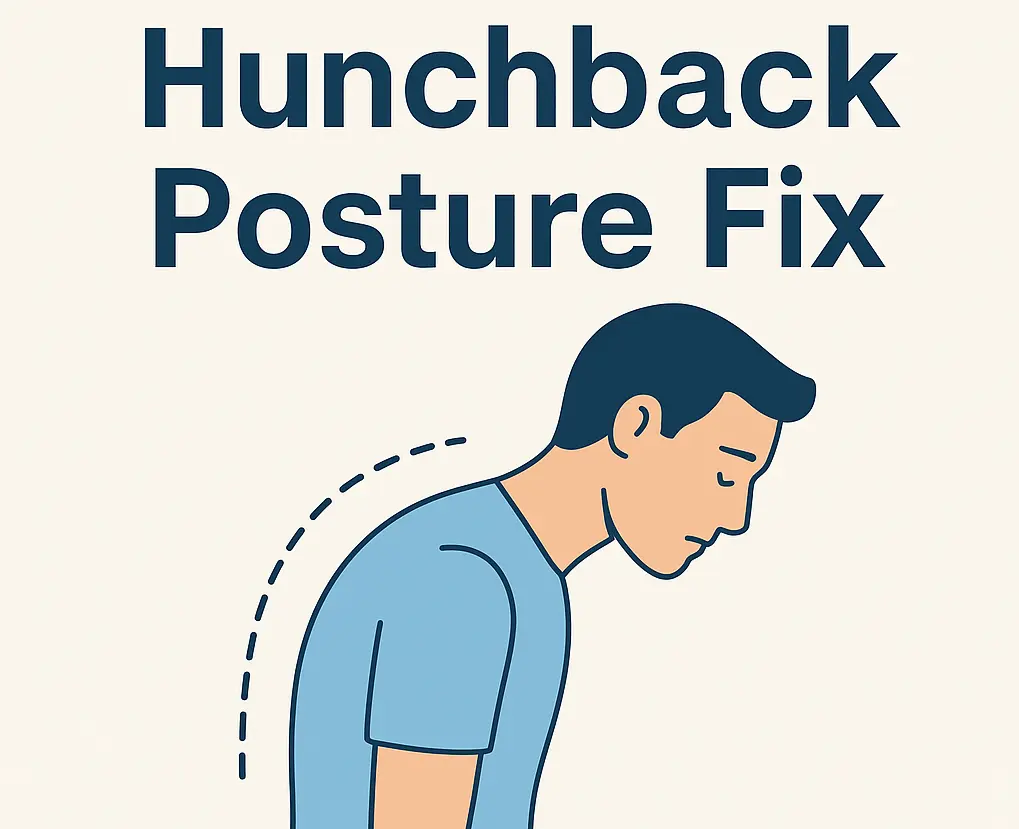
If you’ve started noticing a rounded upper back, a forward-jutting head, or that “hunched” look in photos, you’re not alone. Modern lifestyle habits—long hours at a screen, shallow breathing, stress, weak postural muscles—push the upper back into a rounded curve that becomes harder to reverse the longer it stays. The good news? Hunchback posture isn’t permanent. With the right combination of mobility work, targeted strengthening, rib expansion, and restoring proper upper-back circulation, you can gradually reshape the area and reduce the heaviness, stiffness, and fatigue that usually accompany it. Below is a simple, science-aligned breakdown of why hunchback posture happens and how to start correcting it safely from home. Hunchback Posture Why You Develop a Hunched Posture Forward-Head Habits When the head is positioned even a few centimeters in front of the shoulders, your upper-back muscles must work overtime to hold it up. Over weeks and months, these muscles stiffen, weaken, and eventually adapt into a rounded shape. Tight Chest + Weak Mid-Back Muscles People with hunched posture almost always have: Tight chest muscles (pulling the shoulders forward) Weak upper-back stabilizers (unable to counterbalance that pull) This imbalance compresses the front of the rib cage and overstretches the tissues behind it, creating the classic rounding. Reduced Rib Mobility The rib cage expands when you breathe deeply.But shallow, stress-driven breathing makes the ribs move less than they should. Over time: The spaces between ribs stiffen Upper-back tissues lose glide Circulation slows The whole area becomes rigid This rigidity pushes the back into a “stuck” rounded shape. Screen and Sitting Posture Most people don’t slump because their posture is “bad”—they slump because gravity slowly wins when the body is inactive for long periods. Long sitting compresses: The upper back The shoulder-blade region The tissues that help you hold your chest open Eventually the posture becomes the new default. Stress and Breath Locking When stressed, people unknowingly lift their shoulders, tighten the neck, and restrict their upper-back breathing.This creates: Micro-tension behind the shoulder blades Reduced oxygenation A “heavy” upper-back sensation If repeated daily, the curve deepens. How to Fix Hunchback Posture (At Home, Gradually) Open the Chest Undo the tension that pulls your shoulders forward. Two simple releases: Doorway chest stretch (20–30 seconds) Foam roller thoracic extension (slow, controlled) These stretches help restore rib opening and ease front-body compression. Strengthen the Mid-Back Without strength, posture will collapse again even after stretching. Focus on: Scapular retractions Prone Y-T-W movements Rowing motions (resistance band works great) These exercises reactivate the muscles that hold your shoulder blades down and back—your natural “anti-hunch” system. Restore Rib Mobility Through Deep Breathing This is one of the most overlooked elements. Try slow, deep rib expansion: Hand on the sides of the ribs Inhale by expanding the ribs outward and backward Exhale slowly This helps: Reopen stiff tissue between ribs Improve upper-back circulation Reduce the tight, heavy feeling behind the shoulders Micro-Movement Breaks (Every 45–60 Minutes) Posture isn’t fixed by one big session—it’s fixed by hundreds of tiny resets. Do this simple reset: Stand tall Roll shoulders back Lift your chest slightly Take three slow deep breaths Repeat throughout the day. Wet Cupping for the Upper Back (Optional Boost) Many people with hunchback posture experience: Tightness behind the shoulder blades Heaviness in the upper back Poor circulation around the area that should help hold posture upright Wet cupping along the upper-back region can help: Reduce trapped tension Improve blood flow Restore mobility Relieve heaviness that worsens rounding While not a substitute for strengthening, it enhances tissue flexibility so exercises work faster. Strengthen the Core and Lower Rib Support Your spine can’t maintain alignment if your core is too weak to support the rib cage. Simple core work like planks or dead bug variations helps maintain the chest-up, rib-lifted posture you need for a straighter back. If your upper back feels heavy, stiff, or rounded, learn the simple home routine that combines posture training, rib mobility, and strategic wet cupping to help restore your natural alignment. Read the free full guide in our e-book: Wet Cupping Made Simple
Heart Palpitations From Anxiety — Why It Happens and How Upper-Back Wet Cupping Helps You Feel Calmer
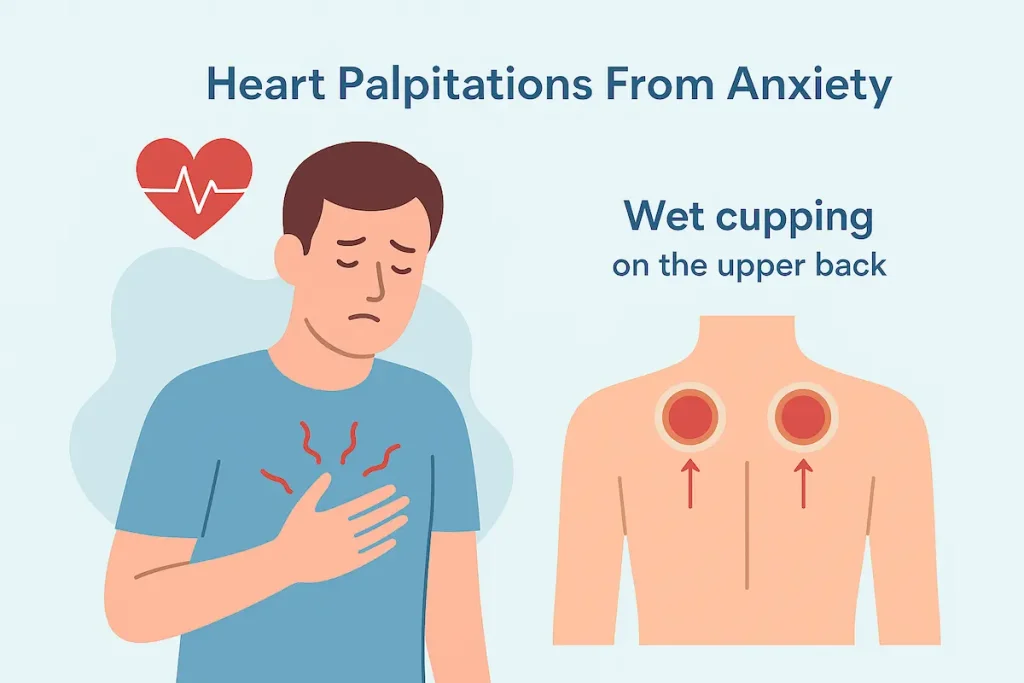
Heart palpitations are one of the most disturbing symptoms of anxiety. They can feel like: fast, fluttering, or pounding heartbeat a sudden “kick” in the chest a strong thump when inhaling a heartbeat you suddenly become overly aware of The good news: when doctors have confirmed that your heart is healthy, anxiety-related palpitations are generally harmless. But understanding why they happen is the key to calming them. Anxiety activates the sympathetic nervous system, the same system responsible for “fight or flight.” When this switches on, adrenaline rises, breathing becomes shallow, and your brain becomes hypersensitive to internal sensations—including your heartbeat. Upper-Back Tension: The Hidden Trigger Nobody Talks About heart palpation from anxiety Most people think heart palpitations come purely from “stress in the mind,” but the body plays an equally big role—especially the upper-back area, which is deeply connected to breathing efficiency and stress signaling. When this region becomes tight from prolonged sitting, screen posture, or worry, three things happen: Breathing becomes shallow without realizing it Tight muscles around the ribs reduce the freedom of rib movement. The result? You breathe higher in the chest instead of deeper into the diaphragm. This sends a message to the brain that the body is under stress—even if you’re not. Restricted breathing increases heart awareness When the upper back or rib cage is tight, the heart has less “space” to move freely with each breath. This can make each heartbeat feel louder, sharper, or more noticeable. You feel the same beat—but your brain perceives it as stronger. Stress signals rise through the sympathetic chain Upper-back tension increases the load on nerves that regulate stress response. This keeps the body in “alert mode,” making palpitations easier to trigger during anxiety episodes. Why Palpitations Get Worse During Anxiety Anxiety pushes your breathing rhythm and heart rhythm out of sync. This is why: you breathe faster carbon dioxide drops your chest tightens your heartbeat feels erratic Even though the heart itself is healthy, the interaction between breath, posture, and stress hormones becomes disrupted. This explains why some people feel palpitations even when sitting still, lying in bed, or trying to relax. How Wet Cupping on the Upper Back Helps (After Medical Clearance) Once a doctor confirms that palpitations are non-cardiac, wet cupping may help by targeting the physical tension patterns that make anxiety symptoms worse. Reduces deep-seated upper-back tightness Wet cupping helps release stagnant tension around the region that influences breathing mechanics. This supports rib mobility, making each breath smoother and deeper. Improves micro-circulation in stressed tissues Better blood flow helps the muscles around the rib cage relax. When breathing muscles ease up, the whole chest area feels lighter and less compressed. Helps regulate the stress response Upper-back cupping indirectly reduces sympathetic overactivity—the same system that fires during anxiety. This creates: calmer breathing slower heart rhythm perception less internal “alarm” Helps break the cycle of anxiety → shallow breathing → palpitations By improving upper-back openness and rib expansion, wet cupping can reduce how often anxiety snowballs into heart sensations. Again, this is not a treatment for heart disease.Wet cupping only supports the body after the heart has been medically confirmed to be normal. When to Seek Medical Care First Even if you’re certain your palpitations are anxiety-related, get checked if you experience: palpitations accompanied by chest pain fainting or near-fainting shortness of breath at rest a family history of heart conditions new palpitations that feel different from usual Once the heart is cleared, you can confidently work on reducing the structural and stress-related factors behind the sensations. Takeaway Anxiety can make your heart feel loud, fast, or irregular—even when your heart is perfectly healthy. Tightness in the upper back, restricted breathing, and heightened stress response all play major roles in intensifying palpitations. Supporting this region through wet cupping, posture awareness, and deeper breathing can significantly reduce how often these sensations occur. Want to learn the simple home-based upper-back wet cupping method that helps reduce chest tightness, improve rib movement, and calm anxiety-driven palpitations?Read: Wet Cupping for Heart Health
Why Am I Always Tired? The Hidden Role of Upper-Back Micro-Inflammation — and How Wet Cupping Helps Reset Your Energy
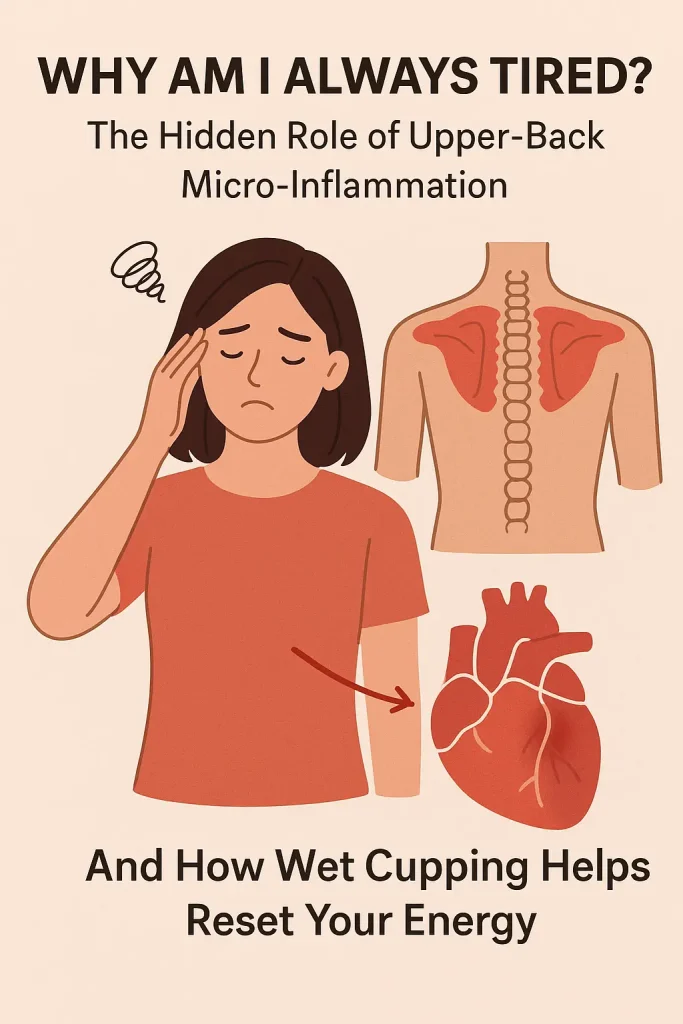
If you wake up tired, feel drained by afternoon, or move through the day with a “low-battery” sensation, you’re not alone. Millions of people search for “why am I always tired” every month, hoping to find one clear explanation. While many factors can influence daily energy—sleep quality, stress, lifestyle habits—there’s a lesser-known contributor that often flies under the radar: Micro-inflammation and tension buildup around the upper back. This area includes the base of the neck, the shoulder tops, and the mid-upper back zone where posture stress tends to accumulate. When these tissues tighten, circulation slows, nerves become irritated, and your body shifts into a subtle stress response. The result? A constant feeling of fatigue—even on days when you don’t do much. Below is the breakdown of how this mechanism drains your energy, and how wet cupping can help support natural recovery. Tiredness and wet cupping The Upper-Back “Energy Hub” — Why Tension Here Makes You Tired Many people assume fatigue only comes from internal factors like poor sleep or stress hormones. But your upper back is one of the body’s most important structural hubs: It supports the weight of your head It stabilizes breathing-related muscles It houses numerous blood vessels that feed the brain and shoulders It influences the nervous system’s stress-relax balance When this area becomes tight or overloaded from sitting, screen use, or forward-head posture, the tissues around it switch into “protection mode.” This triggers: low-grade micro-inflammation reduced blood flow stiffness along the neck–shoulder line compensatory muscle activation All these signals create a background stress on the body. Even if you’re mentally calm, your physiology is working harder than you think—leading to persistent, unexplained tiredness. Daily Stress and Cortisol Disruption You don’t need clinical hormonal problems for cortisol to influence your energy. Everyday stressors are enough: multitasking shallow breathing long sitting hours emotional pressure poor recovery habits These factors make cortisol fluctuate more than it should. When this “stress rhythm” becomes irregular, people commonly describe: afternoon crashes brain fog unrefreshing sleep low motivation feeling tired despite resting Upper-back tightness amplifies this effect. Tight muscles around the neck and shoulders signal the brain to stay in alert mode, keeping your stress chemistry slightly elevated. It’s a loop:Stress → upper back tight → more stress → more fatigue. Poor Circulation: The Most Overlooked Reason for Daily Fatigue When the upper back becomes stiff, micro-circulation slows down. This affects: the small vessels feeding the neck oxygen delivery to local tissues lymphatic flow around the shoulders mobility of the thoracic region Poor circulation in this area often feels like: heaviness behind the neck shoulders that tire quickly a “foggy” or “sluggish” sensation reduced stamina constant need to stretch This circulation issue doesn’t just affect the muscles—it influences how energised your whole body feels. How Wet Cupping Helps Reset the Upper-Back System Wet cupping works on three key mechanisms that directly relate to daily fatigue: Releasing stagnation in the upper-back hub By targeting the base of the neck, the shoulder tops, and the upper-back tension zone, wet cupping helps ease tissue congestion that forms from prolonged sitting or poor posture. Improving micro-circulation The gentle negative pressure increases local blood movement, allowing the tissues to receive more oxygen and nutrients. Many people describe a “lighter” feeling immediately after the session. Supporting the body’s natural relaxation response When tension in the neck–shoulder complex decreases, the nervous system shifts from “fight or flight” toward “rest and recovery.” This supports more stable energy throughout the day. Wet cupping is not a medical treatment for disease—but it is a supportive recovery method for lifestyle-related fatigue tied to posture, stagnation, and daily stress. When to Consider Upper-Back Wet Cupping for Fatigue You may benefit from focusing on this area if you often feel: tired despite 7–8 hours of sleep heaviness at the base of the neck tight shoulders after using your phone or laptop tension spreading to the upper chest or back low-grade fatigue that worsens during long sitting “tired but wired” at night If these patterns sound familiar, your fatigue may be coming from the physical stress stored in your upper-back hub. If constant tiredness keeps slowing you down, supporting your upper-back health may be the easiest first step.Learn how to perform safe wet cupping at home—including exact positions, timing, and hydration support—so you can boost circulation and reset daily energy naturally.
How Tissue Stagnation Around Hump (C7 and T1) Disrupts Cognitive Sharpness — and the Role of Wet Cupping in Supporting Neural Flow
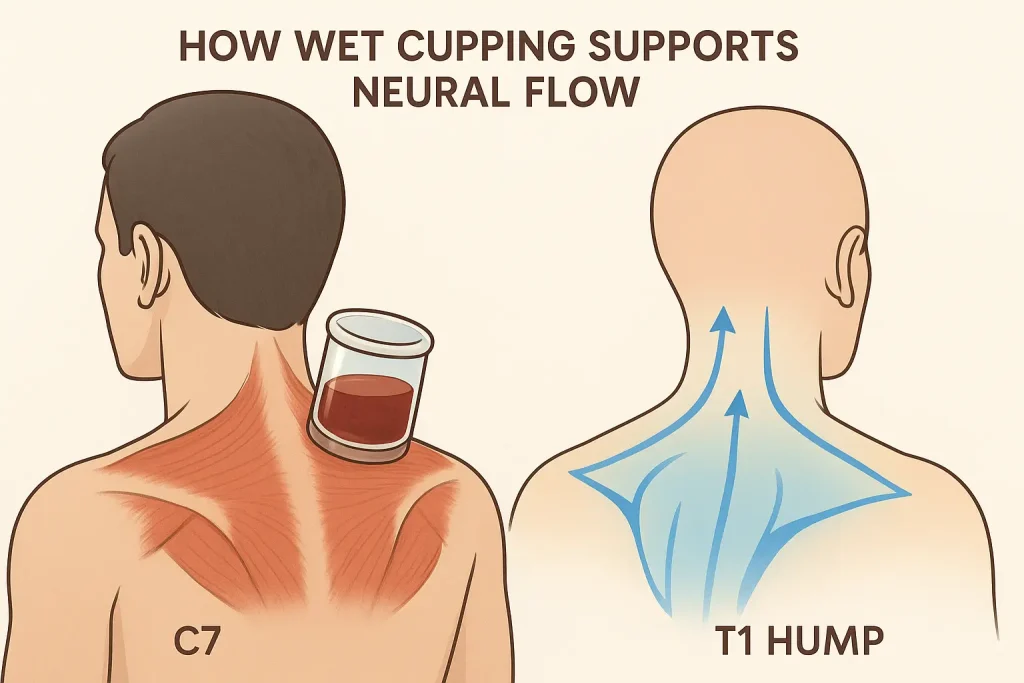
Tension around the hump (C7 vertebra and T1)—the uppermost part of the thoracic spine—can do more than create physical discomfort. This area is a key junction where spinal nerves exit to communicate with the shoulders, upper back, and parts of the brain that govern focus and alertness. When tissue stagnation occurs here—meaning blood, lymph, and interstitial fluids are not circulating optimally—it can subtly undermine cognitive sharpness, mental energy, and even reaction times. Why Tissue Stagnation Around C7 and T1 Matters The C7-T1 junction marks the transition from the flexible cervical spine to the more rigid thoracic spine. Poor posture, prolonged sitting, or chronic stress often leads to a hump-like rounding in this area, which compresses muscles, fascia, and nerves. Consequences include: Muscle and fascial congestion: Tight trapezius, levator scapulae, and paraspinal muscles restrict blood flow and oxygen delivery. Nerve root compression: Minor pressure on the C7 and T1 spinal nerves can alter sensory input and motor signaling, creating subtle cognitive disruptions. Micro-inflammation: Accumulated metabolic waste irritates tissues, sending “fatigue-like” signals to the brain. These combined factors may lead to brain fog, slowed cognitive processing, and perceived mental fatigue, even when overall sleep quality is adequate. Over time, the body’s stress response may increase cortisol levels, further affecting focus and alertness. How Wet Cupping Supports Neural Flow in the C7-T1 Area Wet cupping (bloodletting cupping) is a practical, evidence-informed technique to relieve tissue stagnation. By creating negative pressure on tight areas, it draws stagnant blood and interstitial fluids to the surface, improving circulation. When applied to the upper trapezius, C7, T1 hump, and adjacent shoulder points, wet cupping can: Enhance perfusion of spinal nerve roots: Better blood flow reduces compression, allowing clearer neural signals to reach the brain. Promote lymphatic drainage: Clearing metabolic waste and inflammatory byproducts reduces nerve irritation. Support sympathetic regulation: Localized reductions in tension can help modulate stress responses, indirectly improving cognitive function. Clients often report improved alertness, reduced mental fog, and enhanced focus after sessions targeting the C7-T1 junction. Integrating Wet Cupping Into a Neural Flow Routine To maximize benefits, wet cupping works best alongside mindful posture and gentle mobility practices: Postural alignment: Keeping the head properly stacked over the shoulders minimizes chronic compression at the C7-T1 hump. Maintaining awareness throughout daily activities—like sitting at a desk or using a phone—reinforces the effects of each cupping session. Gentle stretching and movement: Targeted exercises for the upper trapezius, levator scapulae, and thoracic extension before or after cupping help improve tissue flexibility, reduce stiffness, and enhance circulation in the upper back and neck. Hydration and micro-movement breaks: Regular water intake and short movement breaks support fluid dynamics and lymphatic flow, helping to sustain the benefits of wet cupping over the day. Consistency matters. With repeated sessions and mindful support practices, many notice significant improvements in neck posture, shoulder tension, and mental clarity within 2–4 weeks. Over time, these small daily habits reinforce neural and muscular balance, making each wet cupping session more effective. Beyond Neck Relief: Cognitive and Systemic Benefits While wet cupping does not replace sleep, exercise, or nutrition, it addresses a unique pathway: clearing local congestion around critical neural junctions. For those struggling with subtle cognitive slowing, brain fog, or fatigue linked to neck and upper back tension, this approach can serve as a complementary tool to restore neural flow and enhance overall brain function Feeling mentally foggy or noticing a rounded upper back? Targeted wet cupping around the (hump) C7-T1 can help reset neural flow and support sharper cognitive performance. learn our article about nervous system
Wet Cupping for Emotional Tension Headaches

Many people experience headaches triggered by emotional stress—those dull, tight pressures across the forehead, temples, or base of the skull that seem to mirror the intensity of our daily anxieties. While lifestyle adjustments and relaxation techniques help, wet cupping therapy offers a unique, evidence-informed approach to relieve the physical manifestations of emotional tension. How Stress Translates to Physical Pain Emotional stress doesn’t stay in the mind—it often manifests physically. When you are under stress, the sympathetic nervous system activates, releasing hormones like cortisol and adrenaline. These hormones prepare the body for “fight or flight,” causing muscles, particularly in the neck, shoulders, and upper back, to tighten. Over time, chronic muscle contraction can: Compress blood vessels, reducing oxygen supply to surrounding tissues Irritate nerve endings, triggering headache sensations Contribute to poor posture, which reinforces tension patterns Research shows that people who experience frequent stress-related headaches often have increased sternocleidomastoid (SCM) and trapezius muscle tension, linking mental stress directly to head and neck pain (Dommerholt & Huijbregts, 2010). Headaches Target Points for Calming Tension Wet cupping can strategically relieve areas where emotional stress “settles.” Key points include: Upper Trapezius: The top of the shoulders where tension frequently accumulates Suboccipital Region: Just below the base of the skull, often tight in stress-induced headaches Mastoid and SCM Areas: Behind the ears and along the side of the neck, critical for cranial circulation and tension release Applying wet cupping at these points mechanically draws out stagnant blood, reduces inflammation, and relaxes tight muscles. The controlled suction stimulates microcirculation, encouraging oxygen and nutrient flow while activating parasympathetic pathways that signal the body it is safe to relax. Lifestyle Tips for Emotional Balance While wet cupping addresses muscular and circulatory components of tension headaches, integrating daily habits enhances results: Short, Focused Breaks: Step away from work or screens for a few minutes to stretch or move your neck and shoulders. Posture Awareness: Maintaining a neutral spine during work or study reduces stress on SCM and trapezius muscles. Gentle Movement: Simple walking, stretching, or light movement keeps circulation flowing and prevents stagnation. Sleep Consistency: Adequate, regular sleep supports nervous system regulation, making the body less reactive to stress. Hydration and Nutrition: Balanced fluids and magnesium-rich foods, like leafy greens and nuts, support muscle relaxation and nerve function. By combining wet cupping with these lifestyle practices, the frequency and intensity of emotional tension headaches often decrease significantly How Wet Cupping Works on Emotional Tension Wet cupping does more than temporarily relieve tightness; it actively encourages neurophysiological and circulatory recalibration: Mechanical Release: The suction lifts the skin and fascia, loosening adhesions and easing blood stagnation. Parasympathetic Activation: The gentle discomfort followed by relaxation signals the nervous system to downshift from fight-or-flight mode. Micro-Inflammatory Response: A controlled local reaction triggers the body’s healing pathways, supporting muscular repair and circulation improvement. Users often report a sense of lightness, warmth, and mental clarity immediately after a session, a physiological doorway to reduced headache severity and better stress resilience. Practical Considerations and Safety For optimal results and safety: Ensure sterile equipment and proper hygiene. Limit suction intensity to comfort levels to avoid excessive bruising. Space sessions according to individual tolerance—typically weekly sessions initially, adjusting based on response. Combine with gentle stretches and light movement post-session for sustained benefits. Wet cupping is not a substitute for medical advice but is a complementary approach supported by centuries of traditional practice and growing clinical evidence. The Bigger Picture: Emotional Health and Physical Relief Emotional tension headaches are often a signal that the body and mind are out of balance. Wet cupping provides both a physical reset and an opportunity for individuals to reconnect with bodily sensations. When paired with habitual stress management, proper sleep, and gentle movement, this therapy helps break the cycle of recurring tension, offering long-term relief and improved overall well-being.